
International
Researchers say fossil shows humans, dogs lived in C. America in 10,000 BC
AFP
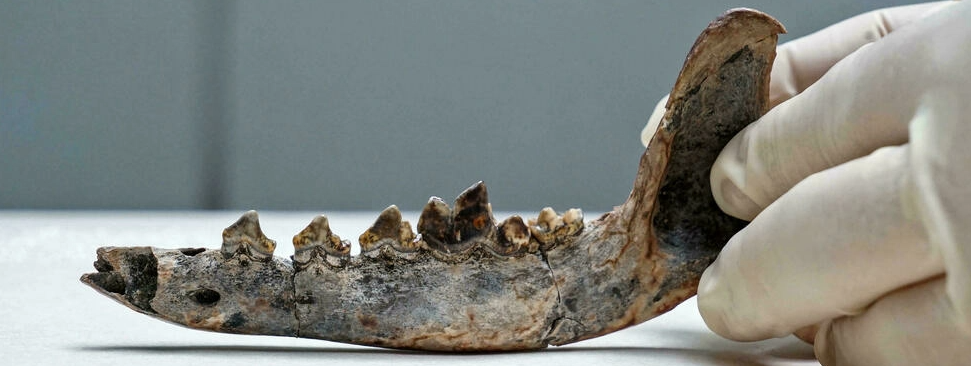
The fossil of a jaw bone could prove that domesticated dogs lived in Central America as far back as 12,000 years ago, according to a study by Latin American scientists.
The dogs, and their masters, potentially lived alongside giant animals, researchers say.
A 1978 dig in Nacaome, northeast Costa Rica, found bone remains from the Late Pleistocene.
Excavations began in the 1990s and produced the remains of a giant horse, Equus sp, a glyptodon (a large armadillo), a mastodon (an ancestor of the modern elephant) and a piece of jaw from what was originally thought to be a coyote skull.











“We thought it was very strange to have a coyote in the Pleistocene, that is to say 12,000 years ago,” Costa Rican researcher Guillermo Vargas told AFP.
“When we started looking at the bone fragments, we started to see characteristics that could have been from a dog.
“So we kept looking, we scanned it… and it showed that it was a dog living with humans 12,000 years ago in Costa Rica.”
The presence of dogs is a sign that humans were also living in a place.
“We thought it was strange that a sample was classified as a coyote because they only arrived in Costa Rica in the 20th century.”
– First of its kind –
The coyote is a relative of the domestic dog, although with a different jaw and more pointed teeth.
“The dog eats the leftovers from human food. Its teeth are not so determinant in its survival,” said Vargas.
“It hunts large prey with its human companions. This sample reflects that difference.”
Humans are believed to have emigrated to the Americas across the Bering Strait from Siberia to Alaska during the last great ice age.
“The first domesticated dogs entered the continent about 15,000 years ago, a product of Asians migrating across the Bering Strait,” said Raul Valadez, a biologist and zooarcheologist from the National Autonomous University of Mexico.
“There have never been dogs without people,” Valadez told AFP by telephone.
The presence of humans during the Pleistocene has been attested in Mexico, Chile and Patagonia, but never in Central America, until now.
“This could be the oldest dog in the Americas,” said Vargas.
So far, the oldest attested dog remains were found in Alaska and are 10,150 years old.
Oxford University has offered to perform DNA and carbon dating tests on the sample to discover more genetic information about the animal and its age.
The fossil is currently held at Costa Rica’s national museum but the sample cannot be re-identified as a dog without validation by a specialist magazine.
“This dog discovery would be the first evidence of humans in Costa Rica during a period much earlier” than currently thought, said Vargas.
“It would show us that there were societies that could keep dogs, that had food surpluses, that had dogs out of desire and that these weren’t war dogs that could cause damage.”










International
Ten Bodies Found in Mexico’s Zacatecas State Amid Security Operation
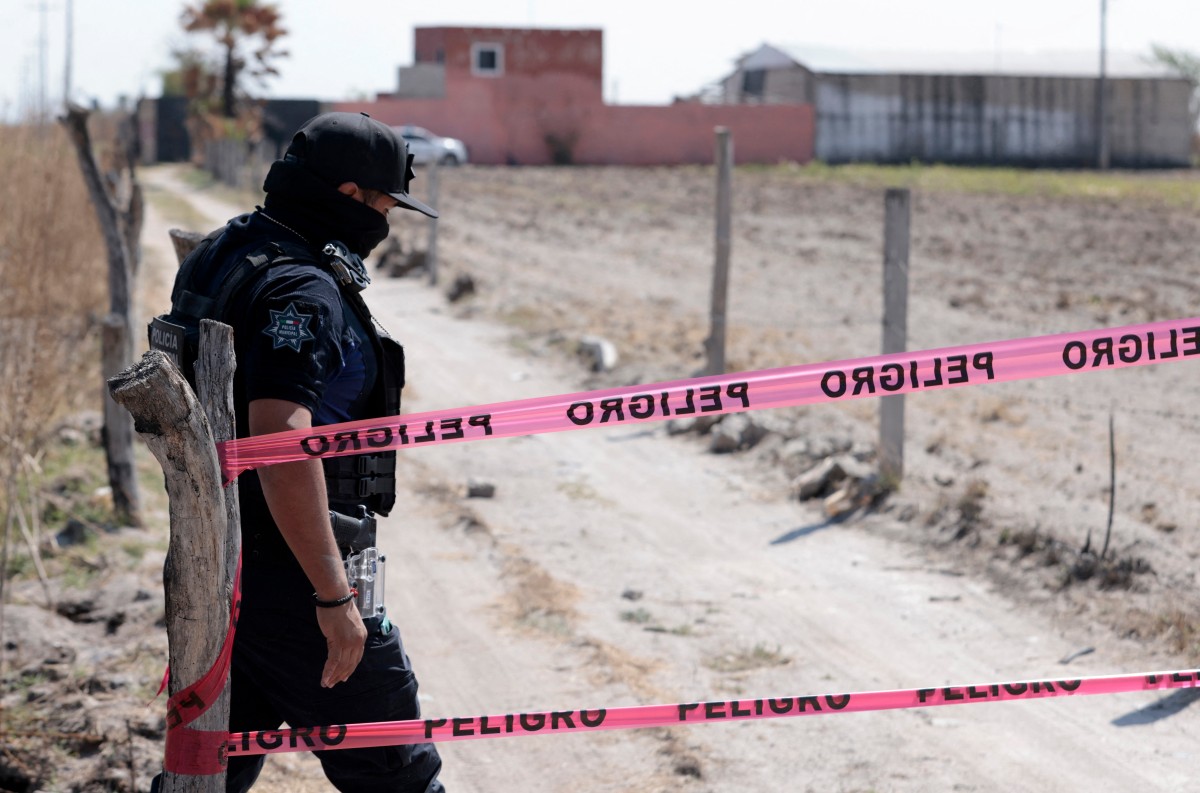
Mexican authorities discovered the bodies of 10 people on Saturday in the central state of Zacatecas, a region that was heavily affected by organized crime violence just a few years ago.
The victims were found in different municipalities across the state, which experienced a surge in violence between 2021 and 2022 as rival criminal groups fought for control of key drug trafficking routes.
Rodrigo Reyes, secretary general of the Zacatecas state government, said on social media that the bodies were located in the municipalities of Morelos, Pánuco, and Sain Alto.
Authorities have not yet disclosed the causes of death or identified those responsible for the killings.
Reyes said security forces have launched a coordinated operation to locate those behind the crimes and strengthen the police presence in the affected areas as the investigation continues.
International
U.S. to Limit Visa Duration for Foreign Students and Journalists

The United States has announced new limits on the legal length of stay for foreign students and journalists, marking the latest tightening of immigration policies under President Donald Trump.
The changes, outlined in an administrative rule published on Thursday, are expected to take effect in September, unless Congress blocks the measure.
Under the new policy, holders of student visas will be allowed to remain in the United States for no more than four years.
Foreign journalists will be limited to 240-day stays—approximately eight months—with the possibility of applying for extensions of the same duration.
The policy imposes even stricter rules on Chinese journalists, whose visas will be capped at 90 days.
More than 100 international news organizations and press freedom groups, including Agence France-Presse (AFP), criticized the measure in an open letter, arguing that it would reduce both the quantity and quality of international coverage of events in the United States.
The Republican Party, led by President Trump, currently holds a majority in Congress and has pledged to curb both illegal immigration and certain forms of legal immigration.
Previously, the United States generally issued student visas for the full duration of an academic program, while foreign journalists could receive visas valid for up to five years.
Central America
Nicaragua Cuts Diplomatic Ties With Italy Over Red Brigades Dispute

The Nicaraguan government announced on Thursday that it is severing diplomatic relations with Italy following criticism from the Italian government over Nicaragua’s long-standing decision to shelter Alessio Casimirri, a former member of the Red Brigades convicted in Italy for the 1978 kidnapping and murder of former Prime Minister Aldo Moro.
Italian Foreign Minister Antonio Tajani criticized the administration of co-presidents Daniel Ortega and Rosario Murillo on Wednesday for continuing to provide refuge to Casimirri, who was sentenced in Italy to six life terms for his role in Moro’s abduction and killing.
In a statement issued Thursday, Nicaragua’s Foreign Ministry said it was ending all diplomatic relations with Italy, describing Tajani’s remarks as “unjustified, aggressive, and irresponsible.”
Tajani made the comments during a gathering of conservative leaders from Europe and Latin America held in Madrid.
“We have absolutely nothing in common with the positions of extremist governments such as Nicaragua, a country that continues to harbor dangerous Red Brigades terrorists like Alessio Casimirri,” Tajani said, according to Italian media.
The diplomatic break marks a new escalation in tensions between the two countries over the decades-old case involving Casimirri, who has lived in Nicaragua for many years despite repeated calls from Italy for his extradition.

Ten Bodies Found in Mexico’s Zacatecas State Amid Security Operation

U.S. to Limit Visa Duration for Foreign Students and Journalists

Nicaragua Cuts Diplomatic Ties With Italy Over Red Brigades Dispute
Tec de Monterrey honors one of its students for his contribution to nanotechnology in medicine

Defense Minister commends salvadoran soldier for Central American Cross Country victory

Extension of the state of emergency approved in southern Chile
-

 International3 days ago
U.S. Strikes Hit Areas Near Strait of Hormuz as Tensions With Iran Escalate
-

 International5 days ago
France Holds Largest Bastille Day Military Parade as Europe Highlights Strategic Defense
-

 International5 days ago
President Noboa Declares New Security Strategy as Ecuador Faces Record Violence Levels
-

 International4 days ago
Latin Music Stars Unite in Miami to Raise Aid for Victims of Venezuela’s Devastating Earthquake
-

 International5 days ago
Foreign Medical Teams Race to Prevent Health Crisis in Venezuela Earthquake Camps
-
 International3 days ago
U.S. to Limit Visa Duration for Foreign Students and Journalists
-

 International3 days ago
El Salvador Sends Eighth Humanitarian Flight to Earthquake-Hit Venezuela
-
 Central America3 days ago
Nicaragua Cuts Diplomatic Ties With Italy Over Red Brigades Dispute
-

 International4 days ago
Trump Administration Seeks Global Action Against “Resurgent” Left-Wing Terrorism
-
 International14 hours ago
Ten Bodies Found in Mexico’s Zacatecas State Amid Security Operation