
International
UN high-level meet and proof of vaccination explained

AFP
The high-level 76th session of the United Nations General Assembly gets underway next week amid confusion about whether all delegates, including world leaders, have to be vaccinated against Covid-19 to attend.
Here, AFP answers the key questions surrounding the snafu, which started when New York issued a vaccine directive that the assembly initially supported, before reversing course after complaints from members.
– Where are we now? –
It appears delegates will not have to show proof of vaccination to enter the UN headquarters but they should have their vaccine cards ready if they want to eat or drink in any of New York’s many bars and restaurants.
The Big Apple began enforcing a vaccine mandate on Monday, requiring proof of at least one shot for many indoor activities, including dining, entertainment venues and gyms.









But UN officials say the city’s jurisdiction does not extend to the UN headquarters itself.
The United States does not require proof of vaccination to enter the country, only negative tests from some countries, so there is no enforcement at airports.
– How did this all start? –
In a letter dated September 9, the city government told the General Assembly president that “all persons” entering the UN headquarters for the purposes of attending the debate in the main hall would have to show proof of vaccination.
The mayor’s office cited its local vaccine mandate law and said the UN debate hall was classified as a “convention center,” meaning all attendees must be vaccinated.
“They must also show proof of vaccination prior to dining, drinking or exercising indoors on the UN campus, and in order to partake in all of New York City’s wonderful entertainment, dining and fitness activities,” it said.
– What was the UN’s response? –
On September 14, assembly president Abdulla Shahid of the Maldives wrote to members saying he “strongly supported” the proof of vaccination requirement laid out by the city authorities.
That was met with a quick backlash, led by Russia’s ambassador to the UN, who disputed that New York had the authority to enforce the mandate.
Vassily Nebenzia wrote to Shahid on September 15, saying the agreement between the United States and the UN about the headquarters prohibited US actors from regulating the running of the world body.
He added that preventing delegates to access the hall was a “clear violation of the UN charter” and that the directive failed to take into account the “rights of people who have received vaccines that are not approved by the CDC.”
Russia’s Sputnik V has not received approval from the World Health Organization, meaning it is not recognized in New York.
– Then what happened? –
United Nations Secretary General Antonio Guterres said he no authority to issue a vaccine mandate for entry into the high-level dialogue.
But all public-facing UN staff are subject to a vaccine mandate, his spokesman added.
“Member states will have to come to a resolution amongst themselves,” his spokesman said Thursday.
That day, Shahid wrote to member states again, this time assuring them that entry to the UN headquarters for the debate will be based on an “honor system” regarding their vaccination status.
The city will host a vaccine pop-up site outside UN HQ next week to try to tempt anyone who hasn’t been vaccinated with a single-shot Johnson & Johnson vaccine.






International
Mexico, Brazil and Colombia left out of Trump’s “Shield of the Americas” summit
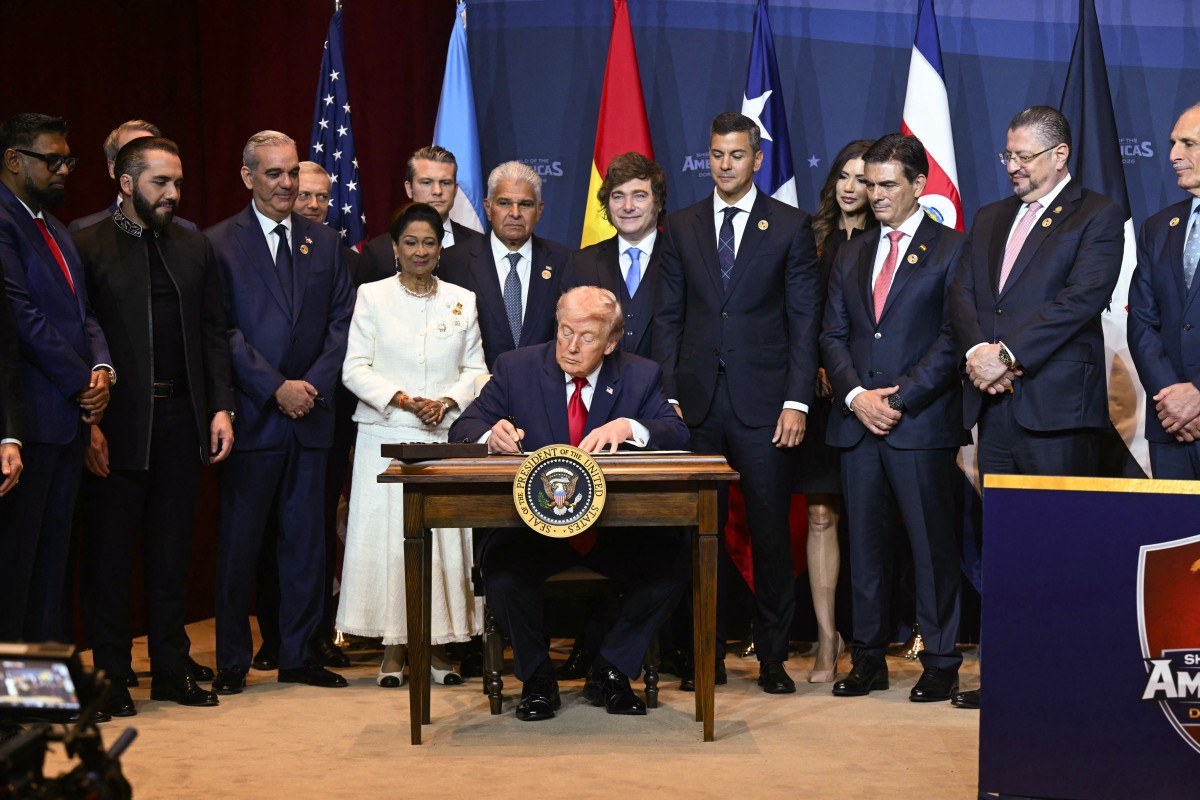
Left-wing governments in Latin America, including Mexico, Brazil and Colombia, were excluded from the “Shield of the Americas” summit convened by U.S. President Donald Trump.
The meeting, held in Miami, Florida, brought together 12 presidents from across the continent to discuss strategies to combat drug cartels and organized crime.
In Mexico’s case, President Claudia Sheinbaum had recently rejected the use of military force as a solution to the drug trafficking problem. She has argued that her administration’s security strategy is producing results and emphasized that force alone is not the answer.
During the summit, Trump said that most narcotics entering the United States come through Mexico and referred to his previous conversations with Sheinbaum on the issue.
“I like the president very much, she’s a very good person,” Trump said. “But I told her: ‘Let me eradicate the cartels.’ And she said, ‘No, no, no, please, president.’ We have to eradicate them. We have to finish them.”
The remarks highlighted ongoing differences between Washington and Mexico over how to confront drug trafficking networks operating across the region.
International
Trump announces 17-nation alliance in the Americas to “destroy” drug cartels
U.S. President Donald Trump announced on Saturday the creation of a 17-nation alliance across the Americas aimed at dismantling drug cartels, during a regional summit held at his golf club in Doral.
Speaking to a group of allied leaders at the Shield of the Americas Summit, Trump said the initiative would rely on military force to eliminate powerful criminal networks operating throughout the hemisphere.
“The heart of our agreement is the commitment to use lethal military force to destroy these sinister cartels and terrorist networks. Once and for all, we will put an end to them,” Trump told the assembled heads of state.
The Republican leader argued that large portions of territory in the Western Hemisphere have fallen under the control of transnational gangs and pledged U.S. support to governments seeking to confront them. He even suggested the potential use of highly precise missiles against cartel leaders.
Before making the announcement, Trump greeted the roughly twelve leaders attending the summit, including close allies such as Javier Milei, Daniel Noboa and Nayib Bukele, whom he described as a “great president.”
The meeting forms part of Trump’s broader regional strategy inspired by his reinterpretation of the Monroe Doctrine, which seeks to reinforce Washington’s influence in the Americas, strengthen security cooperation and counter the growing presence of powers such as China.
Trump pointed to recent U.S. actions in the region as examples of his administration’s approach, including the operation that led to the capture of former Venezuelan president Nicolás Maduro earlier this year.
The summit also takes place amid escalating international tensions following the conflict launched last week by the United States and Israel against Iran.
International
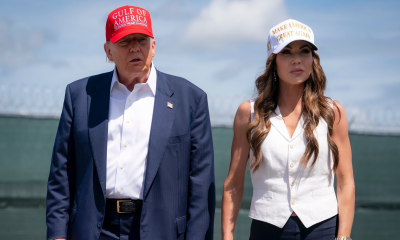
Trump replaces Homeland Security Secretary Kristi Noem with Senator Markwayne Mullin
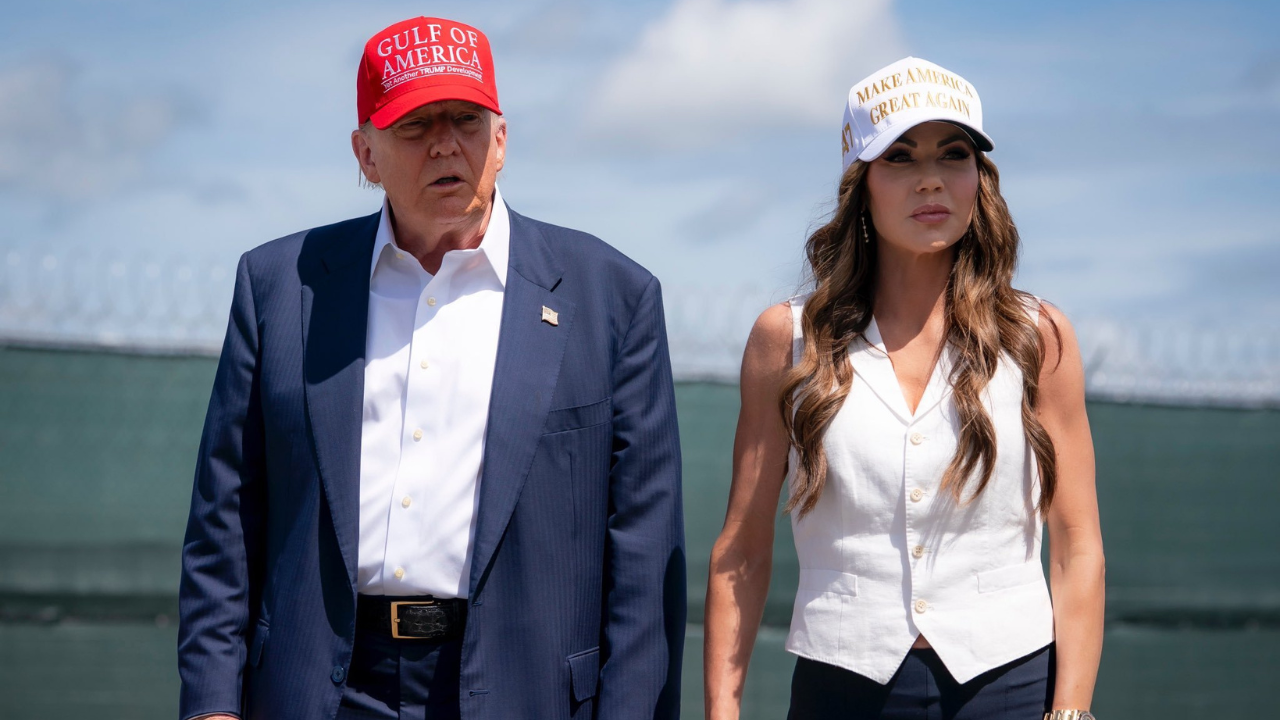
U.S. President Donald Trump announced Thursday the departure of Kristi Noem as Secretary of Homeland Security, one of the key architects of the administration’s policy of deporting undocumented immigrants.
Noem, who has been assigned a new role as a “special envoy” to Latin America, will be replaced starting March 31 by Republican Senator Markwayne Mullin, the president said in a message posted on his social media platform Truth Social.
According to media reports, Trump made the decision after Noem’s recent hearings in Congress, during which she faced tough questions regarding the awarding of a major public contract.

Mexico, Brazil and Colombia left out of Trump’s “Shield of the Americas” summit
Trump announces 17-nation alliance in the Americas to “destroy” drug cartels

Trump replaces Homeland Security Secretary Kristi Noem with Senator Markwayne Mullin
Tec de Monterrey honors one of its students for his contribution to nanotechnology in medicine

Defense Minister commends salvadoran soldier for Central American Cross Country victory

Extension of the state of emergency approved in southern Chile
-
 International3 days ago
Trump announces 17-nation alliance in the Americas to “destroy” drug cartels
-
 International4 days ago
Young Woman Will Represent Mexico at 2026 World Cup Opener, Says President Sheinbaum
-
International2 days ago
Mexico, Brazil and Colombia left out of Trump’s “Shield of the Americas” summit
-
 International4 days ago
Trump replaces Homeland Security Secretary Kristi Noem with Senator Markwayne Mullin