
International
Ex-president Anez of Bolivia seeks international legal help

AFP
Lawyers for Bolivian ex-president Jeanine Anez, in jail since March, said Friday they were appealing to a regional UN rights body for her.
Attorney Luis Guillen said the appeal to the Inter-American Commission on Human Rights (IACHR) was made because Anez’s legal team “exhausted the legal and court bodies (to which they could appeal) in Bolivia.”
Anez, 54, has been charged with “genocide” over protesters’ deaths in 2019; she made an attempt on her life while suffering from “severe depression” due to her prolonged imprisonment, her family has said.
Anez’s family has repeatedly asked the government to transfer her to a hospital for treatment of hypertension and other conditions.









The conservative Anez came to power in November 2019 after then-president Evo Morales resigned and fled the country following weeks of violent protests over his controversial re-election to an unconstitutional fourth term.
The specific accusation against Anez relates to two incidents in November 2019 in which a total 22 people died.
Attorney General Juan Lanchipa has said he presented documents against her in which the incidents were “provisionally classified as genocide, serious and minor injury and injury followed by death.”
After Morales resigned, Anez, as the most senior parliamentarian left, was sworn in as interim president, but her political opponents denounced this as a coup.
Under Anez’s administration, Bolivia held peaceful, transparent elections in October 2020 in which Morales’s leftist protege Luis Arce won a landslide victory.
Arce subsequently vowed to pursue those he accused of staging a coup.
Anez, arrested in March on accusations of leading a coup, also faces charges of terrorism, sedition and conspiracy.
Bolivia’s opposition has decried the lack of separation of powers in the country, saying the courts, electoral body and public prosecutor’s office are all loyal to Arce.
Guillen said the legal team’s appeal was motivated by “threats, harassment and attacks against the life and personal integrity of the ex-president.”
He also denounced “the lack of access to adequate medical treatment… to restore (Anez’s) health.”






International
New York Announces First 2,000 Seats in Universal 2-K Program
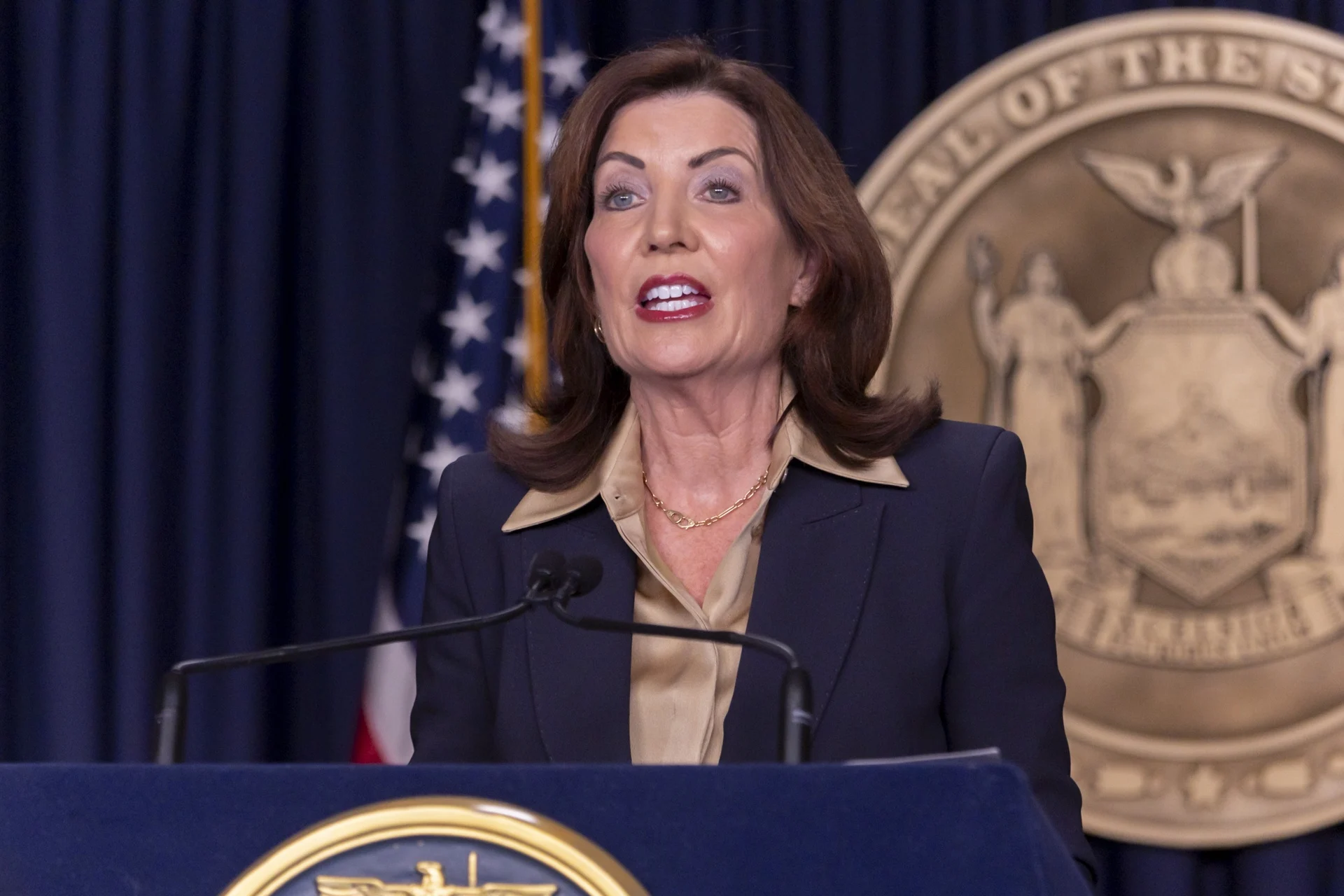
The Governor of New York, Kathy Hochul, and New York City Mayor Zohran Mamdani took another step today in their universal early education agenda by announcing the communities that will have access to the first 2,000 seats in the new 2-K program this fall — an initiative backed by a $73 million investment.
The funding is part of the $1.2 billion package previously unveiled by Hochul to strengthen child care and early childhood education across the city, one of the key campaign promises of the now Social Democratic mayor.
At the time of the announcement, the governor also outlined additional funds to reinforce the existing 3-K early education infrastructure, a program launched under former Mayor Bill de Blasio (2014–2021).
When the 2-K initiative was introduced in January, Mayor Mamdani explained that its first phase would offer 2,000 seats, with the goal of eventually expanding into a universal program — a commitment supported by the governor.
State investment in child care and preschool services is expected to increase to $4.5 billion by fiscal year 2027.
Among the first communities set to benefit from the 2,000 seats are Upper Manhattan and Inwood — areas with large Dominican populations — as well as Fordham and Kingsbridge in the Bronx, a borough with a Latino majority.
In East Brooklyn, Canarsie, Brownsville, and Ocean Hill will also be included. Meanwhile, Ozone Park and the Rockaways are among the neighborhoods that will see the rollout of the 2-K program.
International
Warner Bros. Developing First ‘Game of Thrones’ Movie With ‘Andor’ Writer

Warner Bros. is developing the first feature film based on the hit saga Game of Thrones, with Beau Willimon — screenwriter of Andor — attached to direct, according to a report published Tuesday by Page Six.
The project, currently in early development, will focus on the conquest of King Aegon I Targaryen. A separate television adaptation centered on the same historical storyline within the franchise is also in early stages at HBO.
However, the outlet noted that it remains unclear whether the film will move forward following the recent acquisition of Warner Bros. Discovery by Paramount Skydance.
If the merger is finalized, the movie could potentially be shelved, although that scenario appears unlikely given that the Game of Thrones franchise remains one of HBO’s most valuable and beloved properties.
After six seasons adapting the work of George R. R. Martin, the platform expanded the universe with House of the Dragon, a prequel series set 200 years before the events of Game of Thrones that explores the history of House Targaryen.
International
Spain’s Prime Minister to Address Nation Amid Trump’s Trade Threats
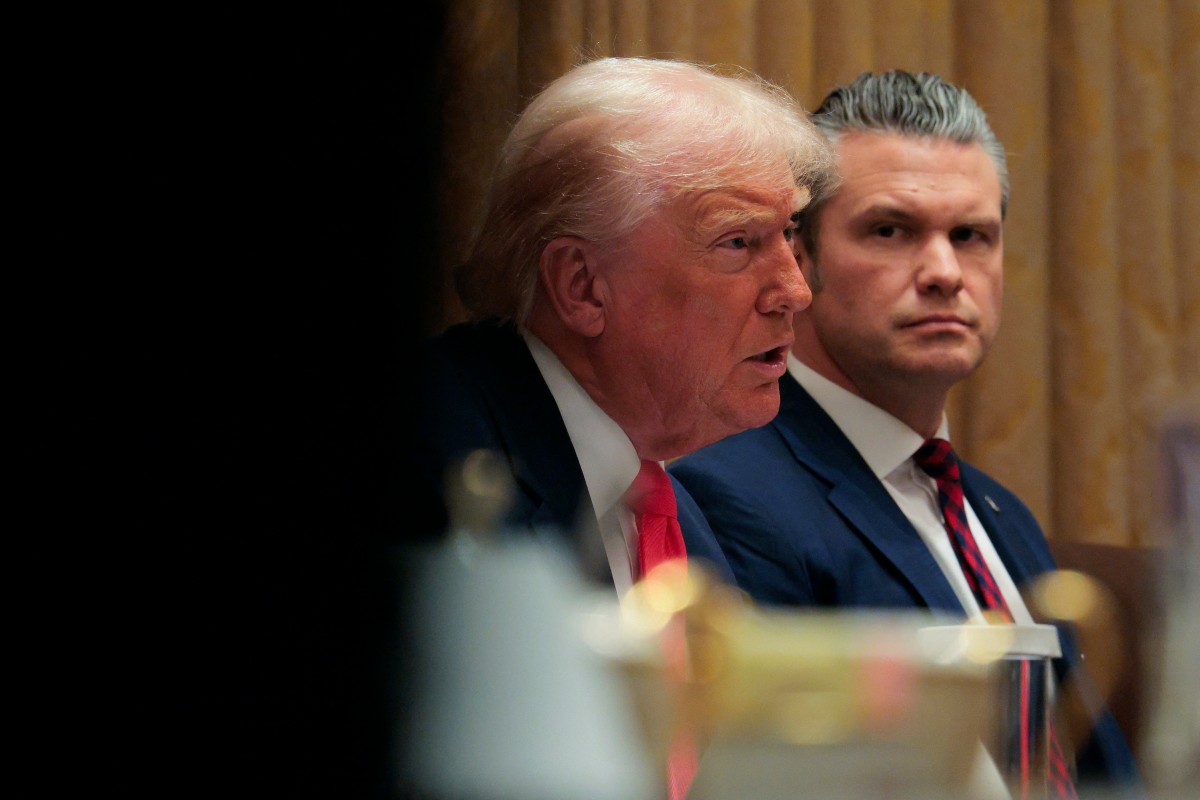
The Prime Minister of Spain, Pedro Sánchez, will deliver an institutional address this Wednesday at the Moncloa Palace regarding the escalating situation in the Middle East and recent threats directed at Spain by U.S. President Donald Trump.
The Spanish government announced that Sánchez will make a statement at 9:00 a.m. local time to outline his position on the latest developments following the U.S. and Israeli attacks on Iran.
Sánchez is expected to reiterate Spain’s reasons for opposing the use of U.S. military bases on Spanish soil in the operation—an action he has already described as being outside international law—while also expressing criticism of the Iranian regime.
Government sources indicated that the address had been planned prior to Trump’s remarks criticizing Spain’s stance. However, following those comments, Sánchez is now also expected to respond directly to the U.S. president’s statements.
Trump has threatened to “cut all trade with Spain” and said he wants “nothing to do” with the country after Madrid refused to authorize the use of the Morón and Rota military bases in southern Spain for operations against Tehran.
The U.S. president also labeled Spain “a terrible NATO partner” and warned that “no one” would tell him he could not use the facilities.
In response, the Spanish government stated that Spain fulfills its commitments to NATO and European defense. It also warned Trump that any review of bilateral trade relations must respect international law and the agreements in place between the European Union and the United States.

New York Announces First 2,000 Seats in Universal 2-K Program

Warner Bros. Developing First ‘Game of Thrones’ Movie With ‘Andor’ Writer

Guatemala’s Attorney General Fails in Bid for Top Court Seat Amid Corruption Allegations
Tec de Monterrey honors one of its students for his contribution to nanotechnology in medicine

Defense Minister commends salvadoran soldier for Central American Cross Country victory

Extension of the state of emergency approved in southern Chile
-

 International3 days ago
Iran Reports 201 Dead, 747 Injured After U.S. and Israeli Strikes
-

 International3 days ago
Pope Leo XIV Urges End to ‘Spiral of Violence’ in Middle East
-

 International4 days ago
Security Council to Hold Emergency Meeting on Middle East Crisis
-
 International2 days ago
Brazil’s Supreme Court Rejects Bolsonaro’s Bid for House Arrest
-

 International4 days ago
Trump Floats “Friendly Takeover” of Cuba Amid Rising Tensions
-
 Sin categoría4 days ago
Trump: ‘We Think It’s True’ Amid Claims Iran’s Supreme Leader Was Killed
-
 International4 days ago
Argentina’s Senate Reviews Milei-Backed Labor Overhaul
-

 International2 days ago
Anti-ICE Billboard Campaign Targets Immigration Spending in 31 U.S. Cities
-
 International2 days ago
Trump Warns of ‘Major Wave’ of Attacks as Iran Conflict Escalates
-

 International1 day ago
Mexico Calls for Immediate Probe After National Dies in ICE Custody
-

 International15 hours ago
Spain’s Prime Minister to Address Nation Amid Trump’s Trade Threats
-
 International14 hours ago
New York Announces First 2,000 Seats in Universal 2-K Program
-

 Central America1 day ago
Panama Canal Monitoring Trade as Middle East Conflict Disrupts Shipping
-
 International1 day ago
Bolivia Orders Three Investigations Into Deadly Military Plane Crash
-
 Central America15 hours ago
Guatemala’s Attorney General Fails in Bid for Top Court Seat Amid Corruption Allegations
-
 International14 hours ago
Warner Bros. Developing First ‘Game of Thrones’ Movie With ‘Andor’ Writer