
Central America
EU sanctions Nicaraguan leader’s wife, son over repression

AFP
The EU imposed sanctions Monday on Nicaraguan President Daniel Ortega’s wife Rosario Murillo, who is his vice president, as well as one of his sons and six more officials.
The measures expand a previous sanctions list to now count a total of 14 individuals held “responsible for serious human rights violations in Nicaragua and/or whose actions undermined democracy or the rule of law” over ongoing repression in the Central American country.
“The detention of a seventh potential presidential candidate… sadly illustrates the magnitude of the repression in Nicaragua and projects a grim picture for the upcoming elections,” the European Council said.
The sanctions prohibit travel and transit in the EU for those targeted, a freeze on any EU-based assets and a ban on EU businesses or citizens from doing business with them.









Ortega, 75, is expected to run for re-election in November 7 polls.
After a first stint as president between 1984 and 1990, he returned to power in 2007 and has stayed in office ever since. He made his wife his vice president in 2017.
In 2018, demonstrations against their rule were brutally put down by government forces, leaving more than 300 dead and pushing thousands into exile according to rights bodies.
In a clampdown that began on June 2, Ortega’s government has rounded up political rivals in a series of house raids and night-time arrests on charges of threatening Nicaragua’s sovereignty.
Ortega has called them seditious “criminals” and “agents of the Yankee empire”.
Seven opposition presidential hopefuls are among 31 people detained. The latest was Noel Vidaurre, seized on July 24 and put under house arrest.
Despite pressure from the European Parliament, EU member states did not add Ortega himself to the growing sanctions list.
“These measures are targeted at individuals and are designed in this way not to harm the Nicaraguan population or the Nicaraguan economy,” the EU statement said.
It added that it “firmly condemned the repression of political opponents, demonstrators, independent media and civil society” continuing in Nicaragua.
In June, the United States announced sanctions against four Nicaraguan officials allied to Ortega, including his daughter.
The EU and US are calling on Ortega to immediately release those arrested and for his government to hold dialogue with the opposition.






Central America
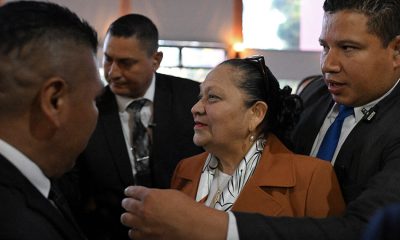
Guatemala’s Attorney General Fails in Bid for Top Court Seat Amid Corruption Allegations
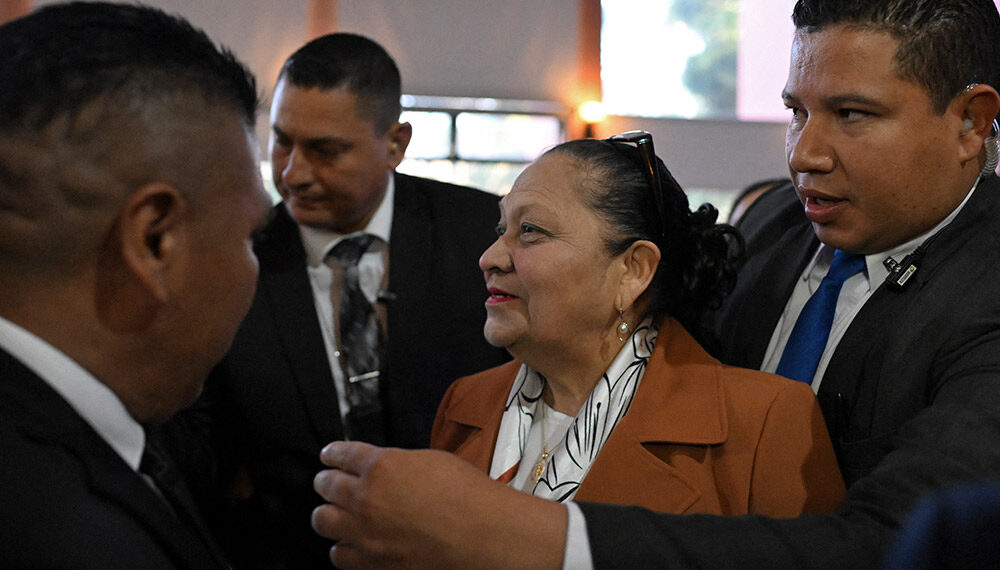
The Attorney General of Guatemala, Consuelo Porras, failed on Tuesday in her bid to join the country’s highest constitutional court, a position that would have granted her immunity from corruption allegations for which she has been sanctioned by the United States and the European Union.
Porras, whose term as attorney general ends in May, did not receive a single vote in the final round of voting to become a magistrate of the Corte de Constitucionalidad, whose rulings are final and cannot be appealed.
The Supreme Court reelected Dina Ochoa and Claudia Paniagua as its representatives to the Constitutional Court.
Ochoa is considered close to former presidents Jimmy Morales (2016–2020) and Alejandro Giammattei (2020–2024), both accused of corruption. Paniagua, like Porras, has been sanctioned by the United States.
Washington and the European Union have labeled Porras as “corrupt” and “undemocratic,” accusing her of attempting to block the inauguration of Social Democratic President Bernardo Arévalo two years ago.
In addition, the 72-year-old attorney general—who is seeking a third term—has been accused of forcing anti-corruption officials, journalists, and social leaders into exile. She denies the allegations and claims they are part of a political persecution campaign.
Porras’ chances of remaining in office, a position she has held since 2018, are considered slim, as President Arévalo is responsible for appointing the next attorney general.
Central America
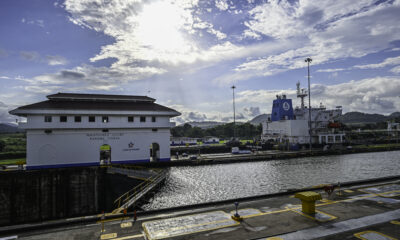
Panama Canal Monitoring Trade as Middle East Conflict Disrupts Shipping
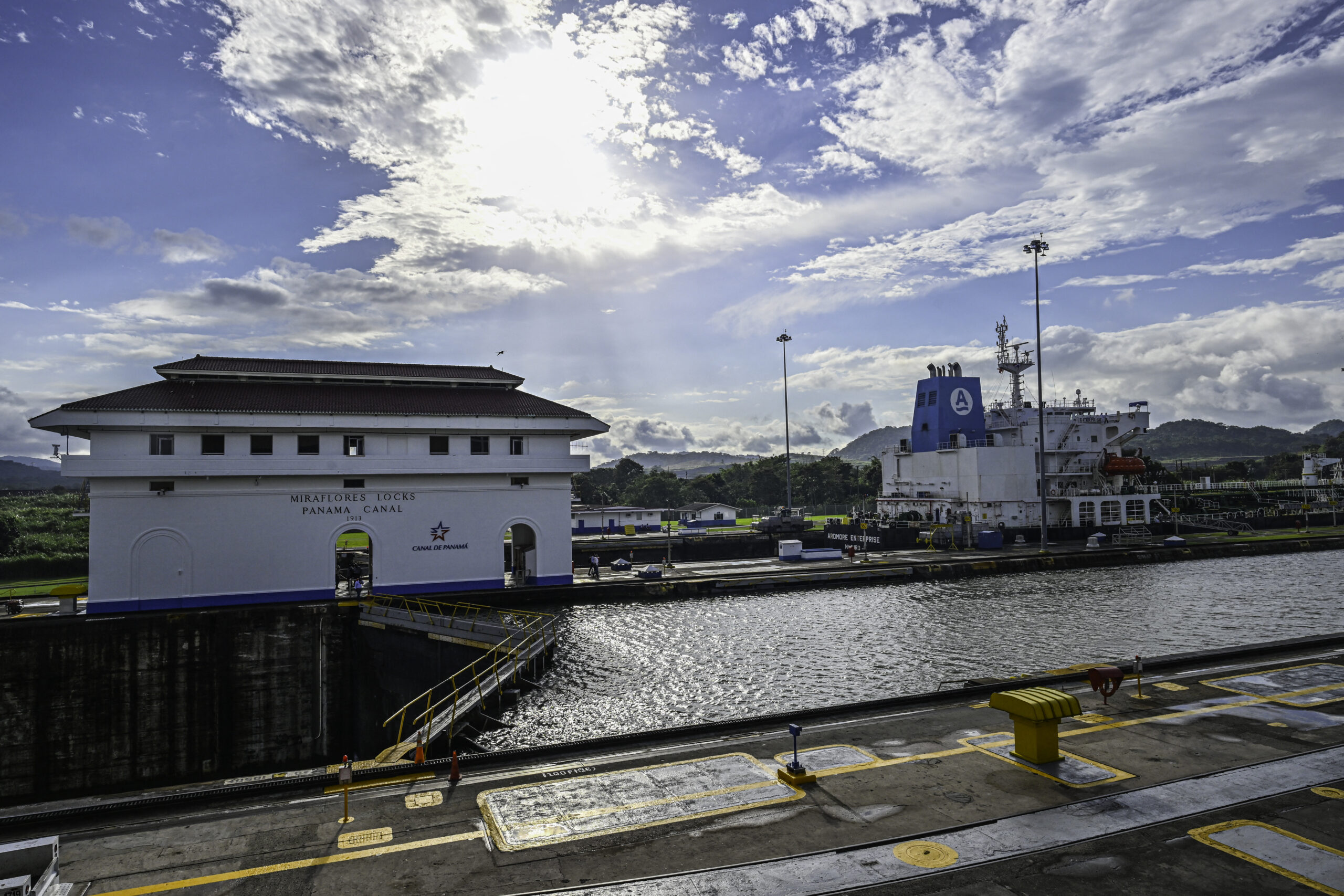
The Panama Canal Authority (ACP) said Monday it is closely monitoring global maritime trade developments following the conflict triggered by joint U.S. and Israeli strikes against Iran.
However, the ACP described it as “premature” to predict potential consequences for vessel traffic through the interoceanic waterway, which handles roughly 5% of global maritime trade.
“The Panama Canal continuously monitors the evolution of international maritime trade and the dynamics that may influence its flows,” the authority said in a statement. The canal’s main users are the United States and China, connecting primarily the U.S. East Coast with Asia, including South Korea and Japan.
The ACP emphasized that the canal “continues to operate safely, efficiently, and reliably,” providing uninterrupted service to the global maritime community.
Global Shipping Disruptions
The U.S.-Israeli military operation against Iran and Tehran’s retaliatory actions have disrupted global maritime traffic, particularly oil tanker routes.
Shipping giants Maersk and CMA CGM have suspended transits through the Strait of Hormuz as well as crossings via the Suez Canal, the key route linking the Mediterranean Sea and the Red Sea.
As a result, cargo vessels are now rerouting around Africa to reach Europe from the Middle East and Asia — a detour that adds several thousand kilometers and several days to voyages.
Central America
Washington Imposes Visa Ban on La Modelo Director Amid Crackdown in Nicaragua
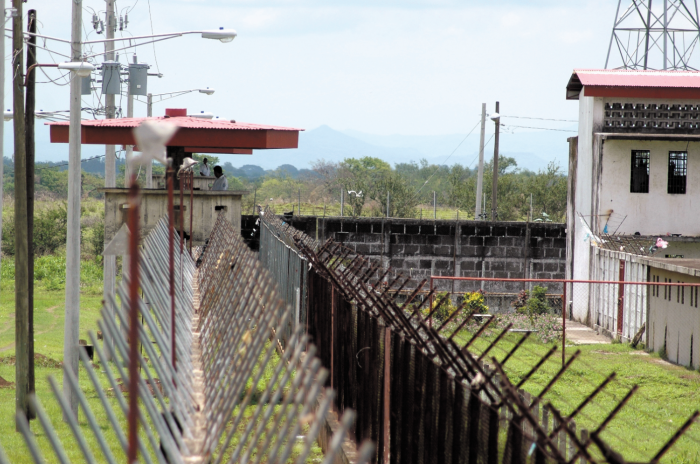
The United States government announced Wednesday that it has imposed visa restrictions on Roberto Clemente Guevara Gómez, director of Nicaragua’s largest prison, La Modelo, for his involvement in actions that violate human rights.
In a statement, U.S. Secretary of State Marco Rubio said the measure is intended to promote accountability for abuses committed under what he described as the “Murillo-Ortega dictatorship” against political prisoners.
Rubio specified that Guevara Gómez was designated for participating in “a gross violation of the human rights of a political prisoner.” The sanction was issued under the 2024 Department of State, Foreign Operations, and Related Programs Appropriations Act, which bars the sanctioned individual — and potentially immediate family members — from entering the United States.
“United States demands the immediate and unconditional release of all political prisoners unjustly detained in Nicaragua,” the statement added.
Ongoing tensions between Washington and Managua
Washington rejected Nicaragua’s November 2021 elections, in which President Daniel Ortega and his wife, now co-president Rosario Murillo, were reelected while seven potential challengers were in prison.
Relations between the two countries remain tense amid expanding U.S. sanctions and increasing diplomatic pressure on the Nicaraguan government.
On January 10, marking Ortega’s 19 years in power, Nicaragua released “dozens of detainees,” including political prisoners. The move came one day after the U.S. Embassy in Managua stated that “more than 60 people” remain “unjustly detained or disappeared” in the Central American nation.
U.S. officials have continued to push for the “unconditional release” of political prisoners rather than selective or temporary releases.
Ortega, 80, governs alongside Murillo with consolidated authority, having strengthened executive power through constitutional reforms and security measures, while the opposition has been weakened by imprisonment, exile, and the revocation of citizenship and property rights.

New York Announces First 2,000 Seats in Universal 2-K Program

Warner Bros. Developing First ‘Game of Thrones’ Movie With ‘Andor’ Writer

Guatemala’s Attorney General Fails in Bid for Top Court Seat Amid Corruption Allegations
Tec de Monterrey honors one of its students for his contribution to nanotechnology in medicine

Defense Minister commends salvadoran soldier for Central American Cross Country victory

Extension of the state of emergency approved in southern Chile
-
 International3 days ago
Iran Reports 201 Dead, 747 Injured After U.S. and Israeli Strikes
-
 International3 days ago
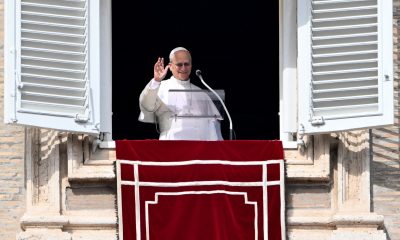
Pope Leo XIV Urges End to ‘Spiral of Violence’ in Middle East
-
 International4 days ago
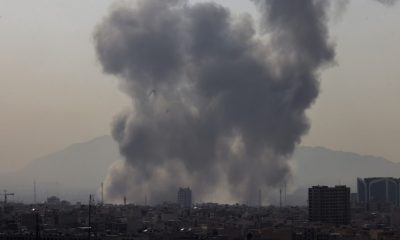
Security Council to Hold Emergency Meeting on Middle East Crisis
-
 International2 days ago
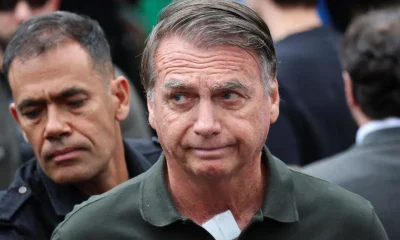
Brazil’s Supreme Court Rejects Bolsonaro’s Bid for House Arrest
-
 International5 days ago
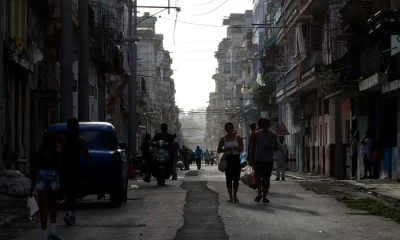
Trump Floats “Friendly Takeover” of Cuba Amid Rising Tensions
-
 Sin categoría4 days ago
Trump: ‘We Think It’s True’ Amid Claims Iran’s Supreme Leader Was Killed
-
 International5 days ago
Argentina’s Senate Reviews Milei-Backed Labor Overhaul
-
 International2 days ago
Anti-ICE Billboard Campaign Targets Immigration Spending in 31 U.S. Cities
-
 International2 days ago
Trump Warns of ‘Major Wave’ of Attacks as Iran Conflict Escalates
-
 International2 days ago
Mexico Calls for Immediate Probe After National Dies in ICE Custody
-
 International18 hours ago
Spain’s Prime Minister to Address Nation Amid Trump’s Trade Threats
-
 International17 hours ago
New York Announces First 2,000 Seats in Universal 2-K Program
-
 Central America2 days ago
Panama Canal Monitoring Trade as Middle East Conflict Disrupts Shipping
-
 International2 days ago
Bolivia Orders Three Investigations Into Deadly Military Plane Crash
-
 Central America18 hours ago
Guatemala’s Attorney General Fails in Bid for Top Court Seat Amid Corruption Allegations
-
 International18 hours ago
Warner Bros. Developing First ‘Game of Thrones’ Movie With ‘Andor’ Writer