
International
Health, trade chiefs urge jab makers to help poor nations
AFP
Four of the world’s most prominent health, trade and financial organisations on Saturday implored Covid-19 vaccine manufacturers to prioritise doses for poorer countries to combat the “acute and alarming shortage”.
A joint statement by the heads of the World Health Organization, World Trade Organization, International Monetary Fund and World Bank said countries which have progressed far in vaccinating against the disease should release doses rapidly in favour of less fortunate nations.
“We reiterate the urgency of providing access to Covid-19 vaccines, tests and treatments to people throughout the developing world,” they said.
“In the area of vaccines, a key constraint is the acute and alarming shortage in the supply of doses to low and low-middle income countries, especially for the rest of 2021.









“We call on countries with advanced Covid-19 vaccination programmes to release as soon as possible as much of their contracted vaccine doses and options as possible to Covax, AVAT (the African Vaccine Acquisition Trust), and low and low-middle income countries.”
Covax aims to get donor-funded jabs to poorer countries.
The leaders said vaccine delivery contracts for poorer nations were being delayed, with less than five percent of purchased vaccine doses having been delivered.
“We urge Covid-19 vaccine manufacturers to redouble their efforts to scale up production of vaccines specifically for these countries, and to ensure that the supply of doses to Covax and low and low-middle income countries takes precedence over the promotion of boosters and other activities,” they said.
They called on governments to reduce or eliminate barriers to the export of vaccines and all materials involved in producing them, and said there was an urgent need to tackle supply chain bottlenecks.
The four international agencies have set up a combined task force on Covid-19 vaccines, therapeutics and diagnostics for developing countries in order to identify and resolve impediments to production.
The task force held its first meeting on June 30.
More than four billion doses of Covid-19 vaccines have now been administered globally, according to an AFP count.
In countries categorised as high income by the World Bank, 98.2 doses per 100 people have been injected.
That figure drops to 1.6 per 100 in the 29 lowest-income countries.






International
US panel backs Trump-themed coin amid controversy
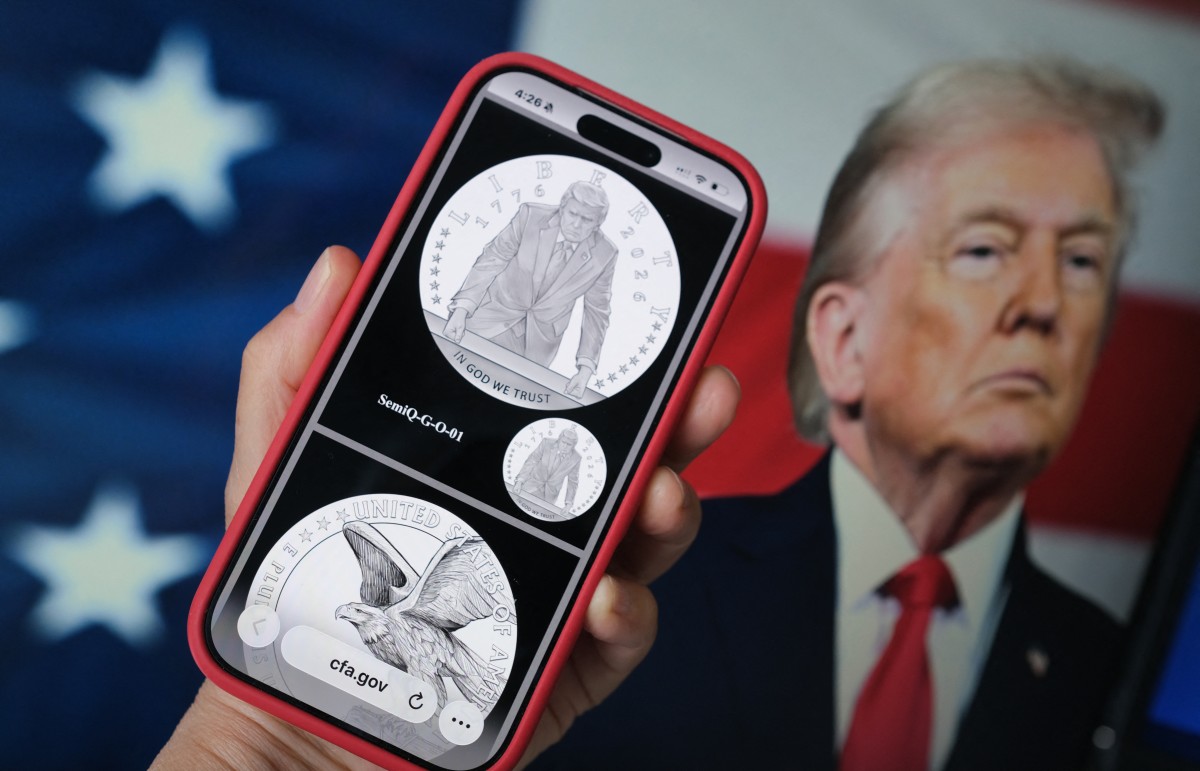
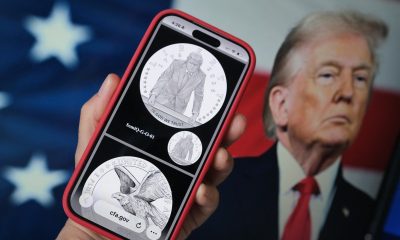
The United States Department of the Treasury confirmed to AFP that the Commission of Fine Arts approved the design of a new collectible coin featuring Donald Trump, with members of the commission appointed by the current administration.
According to the proposal, the coin will feature an image of Trump standing with clenched fists over a desk on the obverse, while the reverse will display an eagle, a traditional symbol of the United States.
The sale price of the collectible has not yet been disclosed, although the United States Mint typically offers similar items for more than $1,000.
“There is no more iconic portrait for the front of these coins than that of our president Donald Trump,” U.S. Treasurer Brandon Beach said in a statement sent to AFP. He added that two additional coins — a $1 piece and a one-ounce gold coin — are also under consideration.
However, the Citizens Coinage Advisory Committee (CCAC), another body responsible for reviewing new coin proposals, declined to discuss the Trump design in late February.
“Only nations governed by kings or dictators place the image of a sitting leader on their currency,” said Donald Scarinciat the time. “No country in the world has minted coins featuring a democratically elected leader during their term in office,” he added.
When contacted by AFP, the Treasury Department did not immediately respond to requests for further comment.
International
Fed’s Waller warns of rising inflation risks amid Middle East conflict
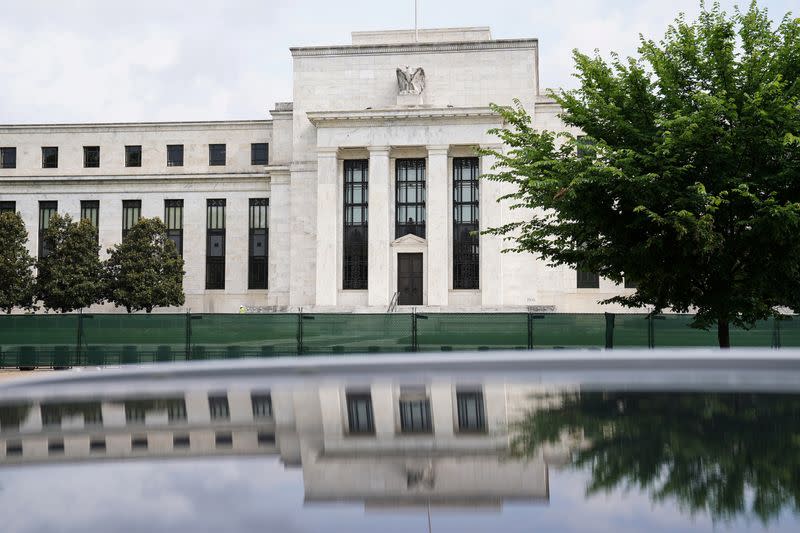
Christopher Waller, a governor at the Federal Reserve, said Friday that he is increasingly concerned about the inflationary impact of the ongoing conflict involving United States and Israel against Iran, particularly due to the prolonged closure of the Strait of Hormuz.
Waller, who had supported interest rate cuts over the past year amid concerns about the labor market, said he has shifted his stance in recent weeks due to rising inflation risks.
“Since the Strait of Hormuz was closed, it suggests this conflict could be much more prolonged and that oil prices will remain elevated for longer,” Waller said in an interview with CNBC.
“Therefore, this indicates that inflation is a greater concern than I had previously assessed,” he added.
Waller also backed the Federal Reserve’s decision earlier this week to keep interest rates unchanged, signaling a more cautious approach as global geopolitical tensions continue to affect economic outlooks.
International
Brazil offers to mediate Colombia-Ecuador tensions, calls for restraint
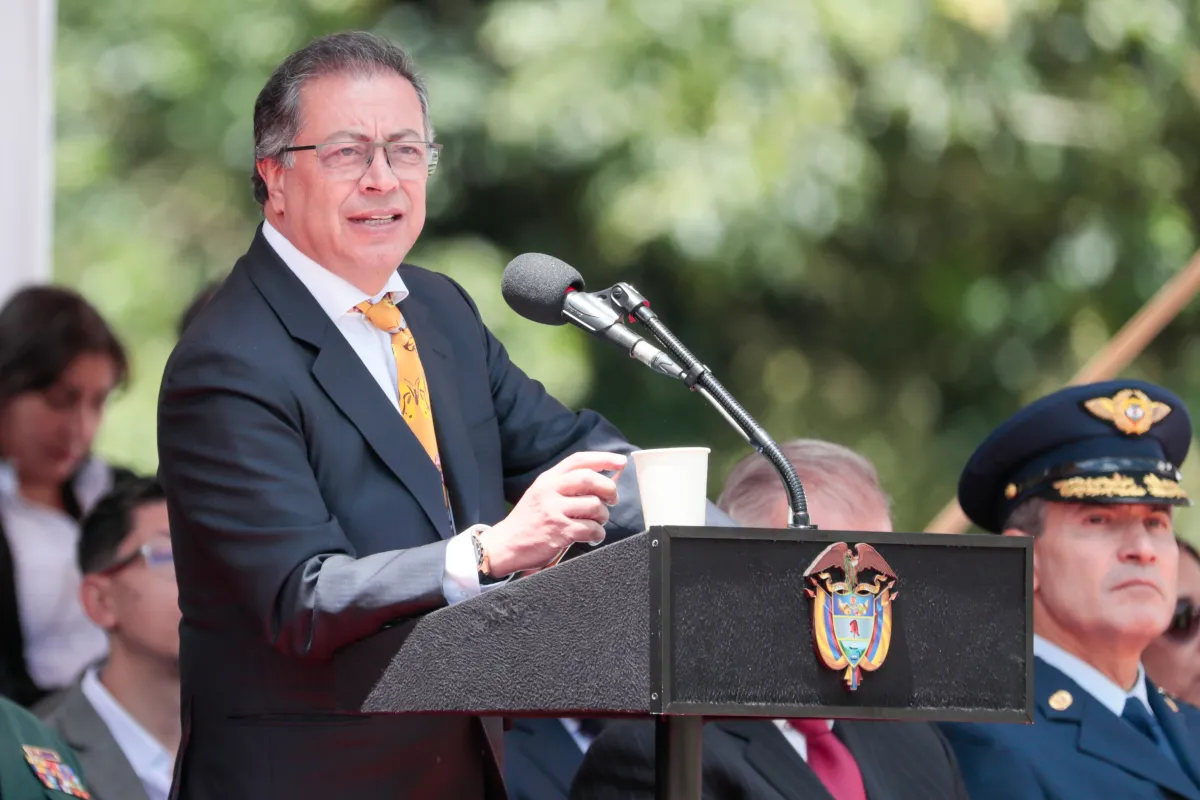
The government of Brazil has offered to mediate in the ongoing tensions between Colombia and Ecuador, while calling on both nations to exercise restraint.
In a statement released Wednesday, Brazil’s Ministry of Foreign Affairs urged the parties involved to act with moderation and seek a peaceful resolution to the dispute.
“Brazil encourages all sides to act with moderation in order to find a peaceful solution to the controversy. It stands ready to support dialogue efforts aimed at preserving peace and security in the region,” the statement said.
Brazil also expressed “serious concern” over reports of deaths in the border area between Colombia and Ecuador, noting that the circumstances surrounding the incidents have not yet been clarified.
The diplomatic move comes amid rising tensions between the neighboring countries, increasing regional concern over stability and security along their shared border.

Guatemala narrows emergency measures to hardest-hit gang violence areas

US panel backs Trump-themed coin amid controversy

Fed’s Waller warns of rising inflation risks amid Middle East conflict
Tec de Monterrey honors one of its students for his contribution to nanotechnology in medicine

Defense Minister commends salvadoran soldier for Central American Cross Country victory

Extension of the state of emergency approved in southern Chile
-
 International3 days ago
Two killed in shooting at restaurant near Frankfurt Airport
-
 International4 days ago
German president warns Iran war could spread and disrupt Strait of Hormuz
-
 Central America3 days ago
El Salvador destroys $166 million worth of cocaine seized from Tanzanian vessel
-
 International3 days ago
U.S. counterterrorism chief resigns over opposition to war in Iran
-
 Central America2 days ago
Costa Rica closes embassy in Cuba, citing human rights concerns
-
 International4 days ago
Mexico security chief meets DEA director in Washington to boost anti-drug cooperation
-
 International4 days ago
Venezuela’s foreign minister accuses UN rights chief of “immoral bias”
-
 Central America3 days ago
Analyst questions IACHR role over report on El Salvador emergency measures
-
 International2 days ago
Hiroshima survivor who embraced Obama dies at 88
-

 International1 day ago
Meningitis outbreak in England rises to 27 cases with two deaths reported
-
 International1 day ago
Brazil offers to mediate Colombia-Ecuador tensions, calls for restraint
-
 International1 day ago
U.S. lowers travel advisory for much of Venezuela but keeps high-risk zones under warning
-
 International2 days ago
Colombia seeks ‘total suffocation’ of armed groups with regional support
-

 International1 day ago
EU lawmakers move to ban AI tools that generate non-consensual nude images
-

 Central America2 days ago
Costa Rica closes Cuba embassy as president escalates rhetoric
-
 Central America13 hours ago
Guatemala narrows emergency measures to hardest-hit gang violence areas
-
 International13 hours ago
US panel backs Trump-themed coin amid controversy
-
 International13 hours ago
Fed’s Waller warns of rising inflation risks amid Middle East conflict