
Central America
Honduras takes part in a meeting against human trafficking and smuggling

The Honduran Attorney General’s Office joined the Conference of the Parties to the United Nations Convention against Transnational Organized Crime. This is the seventh time that the group, which is working on reducing the smuggling of migrants, meets. The meeting was held virtually from September 8 to 11.
Martha Patricia Gonzales was in charge of the Honduras presentation. She is the head of the Unit against Trafficking, Commercial Sexual Exploitation and Smuggling of Persons. She spoke about better practices in joint research. As well as specialized prosecutions. The head of the Special Prosecutor’s Office for Children, Ela Paredes, also took part in the global forum.
The Honduran delegation had many participants. Among them was the Secretary General of the Interinstitutional Commission against Commercial Sexual Exploitation and Human Trafficking, Rosa Corea. Besides Deputy Commissioner of the National Police, Wilmer Argeñal.






Central America
Guatemala narrows emergency measures to hardest-hit gang violence areas
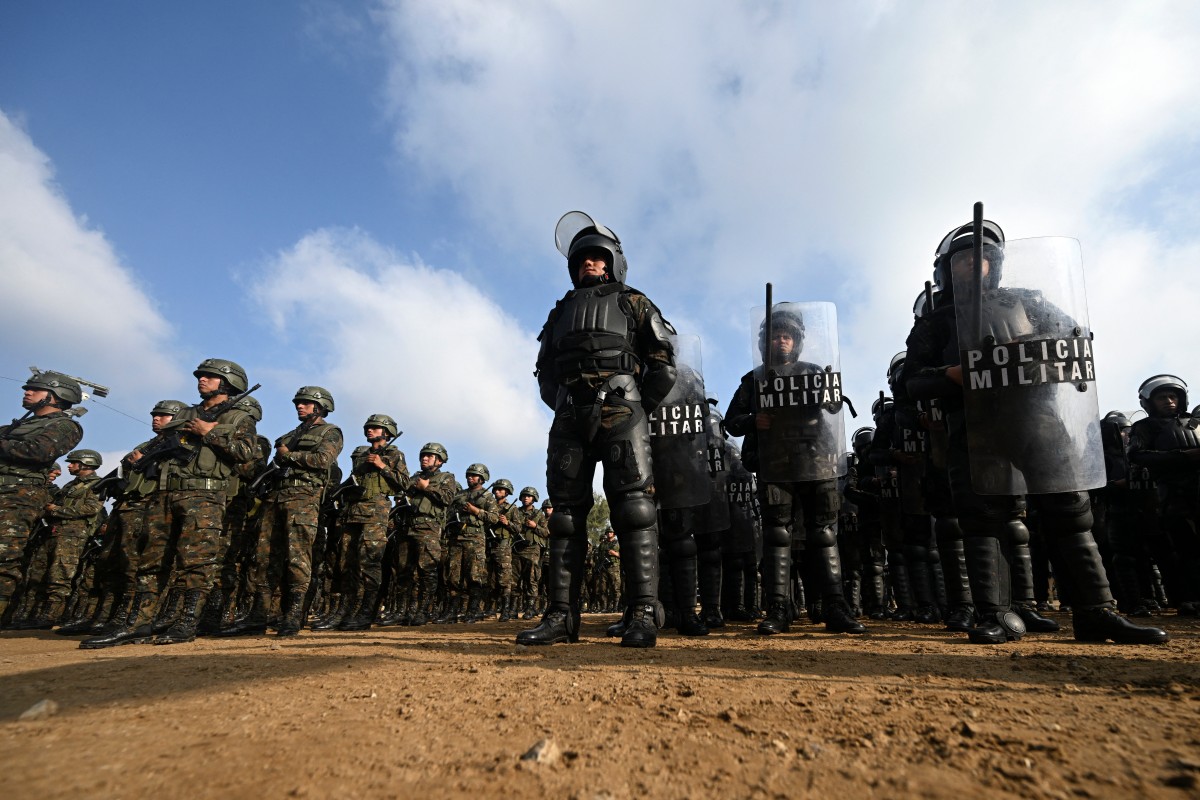
The government of Guatemala has narrowed the scope of its state of emergency to the areas most affected by gang violence, Interior Minister Marco Antonio Villeda announced on Thursday.
The measure comes two months after coordinated attacks attributed to the Barrio 18 left 11 police officers dead.
President Bernardo Arévalo initially imposed a state of siege in mid-January following the violence, which was reportedly in retaliation for government intervention in three prisons where gang leaders had staged uprisings.
That measure, which allowed arrests without a warrant, expired after one month. It was then replaced by a less restrictive “state of prevention,” alongside an increased security deployment in Guatemala City and surrounding areas.
According to Villeda, the state of prevention has been extended for two additional weeks but will now apply primarily to the central department of Guatemala — home to the capital — and Escuintla, which have recorded the highest levels of homicides and criminal activity.









“We need to continue these joint operations between the police and the military to maintain control,” the minister said.
The measure will also remain in effect in border departments including Petén, San Marcos and Huehuetenango, which border Mexico, as well as Izabal, which borders Honduras and Belize, in an effort to prevent the entry of criminal groups linked to drug trafficking.
Villeda added that in the past two weeks, homicides have dropped by 25% and extortion cases by 33% compared to the same period in 2025.
Central America
Costa Rica closes embassy in Cuba, citing human rights concerns
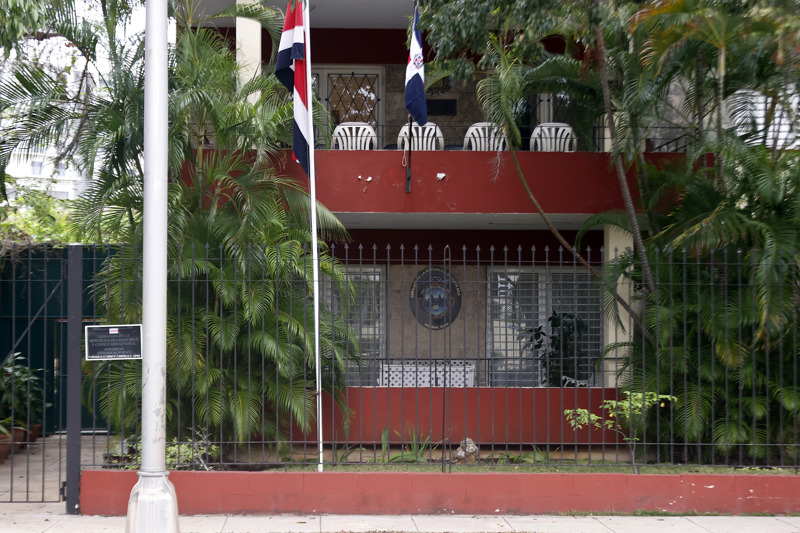
The government of Costa Rica announced on Wednesday the closure of its embassy in Cuba, a move that signals a further deterioration in diplomatic relations between the two nations.
Foreign Minister Arnoldo André confirmed that Costa Rica has also requested the withdrawal of Cuban diplomatic personnel from San José, leaving only consular representation in place.
According to André, the decision is driven by concerns over the worsening human rights situation on the island, including increased repression against citizens and opposition figures.
He also noted that Cuba’s ongoing economic and social crisis—marked by shortages of food, medicine, and basic services—has made the operation of the embassy increasingly difficult.
President Rodrigo Chaves backed the measure, stating that his administration does not recognize the legitimacy of Cuba’s political system.
In response, the Cuban government rejected the decision, calling it a “unilateral” move taken under pressure from United States.
“Under pressure from the United States, Costa Rica has limited its relations with Cuba to consular matters,” Cuba’s Foreign Ministry said, describing the action as “arbitrary.”
Despite the diplomatic setback, Cuban authorities stated that historical ties between the two nations would endure.
Central America
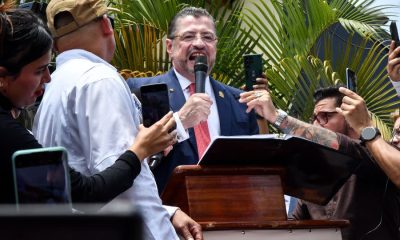
Costa Rica closes Cuba embassy as president escalates rhetoric
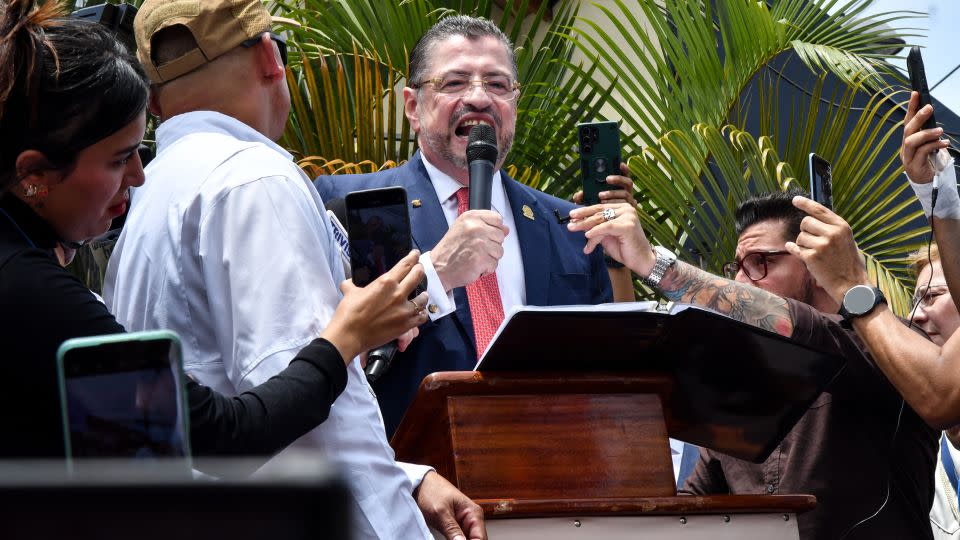
The president of Costa Rica, Rodrigo Chaves, escalated political rhetoric on Wednesday, stating that “the hemisphere must be cleansed of communists,” following his government’s decision to close its embassy in Cuba.
The remarks come as Costa Rica moves to downgrade diplomatic relations with the island, citing a sustained deterioration in human rights. Chaves reiterated that his administration does not recognize the legitimacy of the Cuban government, accusing it of repression and of maintaining poor living conditions for its population.
“We do not recognize the legitimacy of that government. We will not maintain a consulate there; services will be handled from Panama,” Chaves said during a press conference.
The president also argued that the communist model has “failed” not only in Cuba but in every country where it has been implemented, emphasizing that freedom is essential for development.
The decision was made in coordination with president-elect Laura Fernández, who is set to take office on May 8 and is expected to maintain the same foreign policy stance.
Foreign Minister Arnoldo André confirmed the closure of the embassy in Havana and requested that Cuba withdraw its diplomatic personnel from San José, while maintaining limited consular functions.
Costa Rican authorities justified the move by pointing to increased repression against citizens, activists, and opposition figures, as well as restrictions on fundamental freedoms.
The closure marks a new point of tension in bilateral relations and comes amid growing international pressure on Cuba.

Guatemala narrows emergency measures to hardest-hit gang violence areas

US panel backs Trump-themed coin amid controversy

Fed’s Waller warns of rising inflation risks amid Middle East conflict
Tec de Monterrey honors one of its students for his contribution to nanotechnology in medicine

Defense Minister commends salvadoran soldier for Central American Cross Country victory

Extension of the state of emergency approved in southern Chile
-
 International4 days ago
Two killed in shooting at restaurant near Frankfurt Airport
-
 International5 days ago
German president warns Iran war could spread and disrupt Strait of Hormuz
-
 Central America4 days ago
El Salvador destroys $166 million worth of cocaine seized from Tanzanian vessel
-
 International4 days ago
U.S. counterterrorism chief resigns over opposition to war in Iran
-
 Central America3 days ago
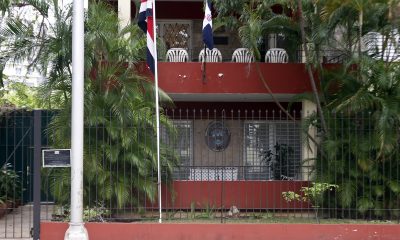
Costa Rica closes embassy in Cuba, citing human rights concerns
-
 International5 days ago
Mexico security chief meets DEA director in Washington to boost anti-drug cooperation
-
 International5 days ago
Venezuela’s foreign minister accuses UN rights chief of “immoral bias”
-
 Central America4 days ago
Analyst questions IACHR role over report on El Salvador emergency measures
-
 Central America1 day ago
Guatemala narrows emergency measures to hardest-hit gang violence areas
-

 International2 days ago
Meningitis outbreak in England rises to 27 cases with two deaths reported
-

 International2 days ago
EU lawmakers move to ban AI tools that generate non-consensual nude images
-
 International2 days ago
Brazil offers to mediate Colombia-Ecuador tensions, calls for restraint
-
 International2 days ago
U.S. lowers travel advisory for much of Venezuela but keeps high-risk zones under warning
-
 International3 days ago
Hiroshima survivor who embraced Obama dies at 88
-
 International1 day ago
US panel backs Trump-themed coin amid controversy
-
 International3 days ago
Colombia seeks ‘total suffocation’ of armed groups with regional support
-
 Central America3 days ago
Costa Rica closes Cuba embassy as president escalates rhetoric
-
 International1 day ago
Fed’s Waller warns of rising inflation risks amid Middle East conflict