
International
Pope Leo XIV asks journalists: Let’s disarm the words and help disarm the Earth
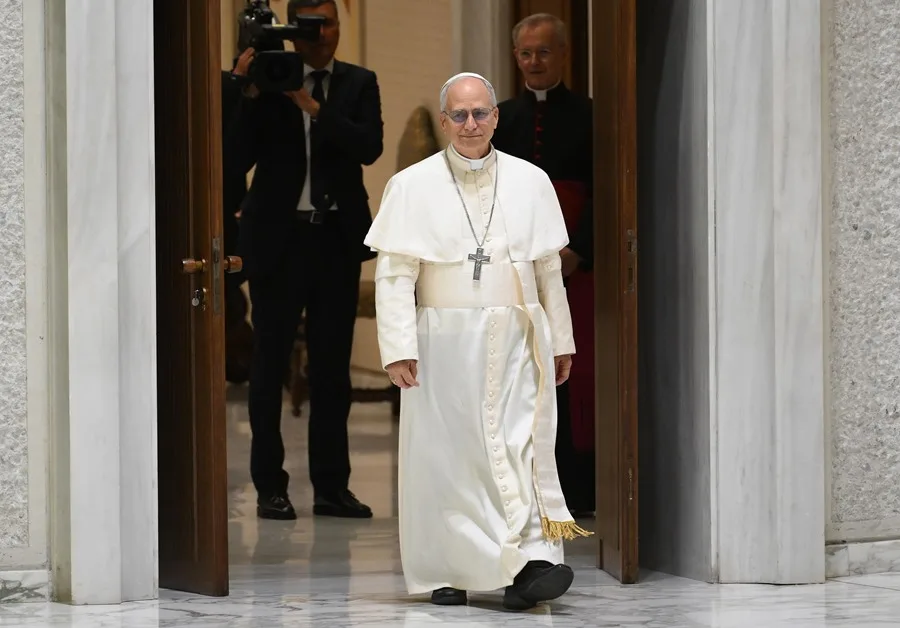
Pope Leo XIV asked the media on Monday to choose “with conscience and courage the path of a communication of peace” and added: “Let’s disarm the words and help disarm the Earth,” in the audience he granted to journalists who have reported on the conclave in which he was elected.
In the first audience he celebrates, as Francis also did at the beginning of his pontificate, the first American pope gathered in the Paul VI classroom of the Vatican several thousand communicators to whom he pointed out that “we live in difficult times to navigate and count, which pose a challenge for all of us and from which we must not escape.”
And, he stressed, that “on the contrary, they ask each of us, in our different roles and services, to never surrender to mediocrity.”
Leo XIV said that “what is needed is not a noisy and muscular communication, but a communication capable of listening, of collecting the voice of the weak who have no voice.”
“Let’s disarm the words and help disarm the Earth. Unarmed and disarming communication allows us to share a different vision of the world and act in a manner consistent with our human dignity,” said the pope, who in his first speech after being elected on May 8 also called for “an unarmed and disarming peace.”











And he added: “You are on the front line narrating conflicts and hopes for peace, situations of injustice and poverty, and the silent work of many for a better world. For this I ask you to choose with conscience and courage the path of a communication of peace.”
“There can be no communication or journalism outside of time and history,” he said and recalled St. Augustine’s phrase, since he is Augustinian: “Let’s live well and times will be good. We are the times.”
To the journalists, who applauded at various moments of the speech, he explained that today, “one of the most important challenges is to promote a communication capable of helping us escape from the ‘Tower of Babel’ in which we sometimes find ourselves, from the confusion of loveless languages, often ideological or biased”
And therefore he stressed that “the words they use and the style they adopt, is important.” Communication, in fact, is not only the transmission of information, but the creation of a culture, human and digital environments that become spaces for dialogue and confrontation,” he added.
And above all, he stressed the technological evolution and artificial intelligence “that with its immense potential, which requires, however, responsibility and discernment to guide the tools to the good of all, so that they can produce benefits for humanity.”
Leo XIV was greeted at the entrance of the Paul VI classroom with a loud applause by the journalists and joked saying that he hoped that the applause would also come at the end of his speech.
Pope Leo XIV after his message greeted some of them in a relaxed way, confirmed some news such as the trip to Nicea and, in dubious moments of protocol, responded jokingly: “I’m still learning.”
When asked if he wanted to participate in a charity tennis tournament that the Pontifical Mission Societies is preparing, Leo XIV jokingly said that he could participate “as long as you don’t bring (Jannick) Sinner”, about the double meaning both because the Italian is number one in the world and because his English surname means ‘sinner’.
While to others who proposed a double, he confessed: “I’m not that good.”
Leo XIV showed his sense of humor when he wanted a photo taken with a journalist who had dressed in white without “intention of wanting to be a pope,” although she refused to take a ‘selfie’ with another communicator.
The pope also called for the release of imprisoned journalists and urged to “safeguard the precious good of freedom of expression and press.”
Before several thousand journalists gathered in the Paul VI classroom, in which it is the first audience of his pontificate, the first American pope wanted to “reiterate the solidarity of the Church with the imprisoned journalists for seeking and reporting the truth” and “asking for their release.”
“The Church recognizes in these testimonies – I think of those who tell the war even at the cost of their own lives – the courage of those who defend the dignity, justice and the right of peoples to be informed, because only informed peoples can make free decisions,” said Robert Francis Prevost in his message.
And he added: “The suffering of these imprisoned journalists challenges the conscience of nations and the international community and calls on us all to safeguard the precious good of freedom of expression and of the press.”
In addition, Leo XIV confirmed that the trip that Francis had planned to Nicea, Turkey, at the end of May to celebrate the 1,700th anniversary of the Christian Council is being prepared.










International
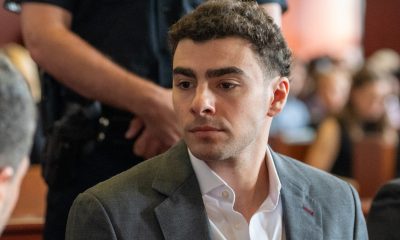
Luigi Mangione Pleads Guilty to Killing UnitedHealthcare CEO Brian Thompson
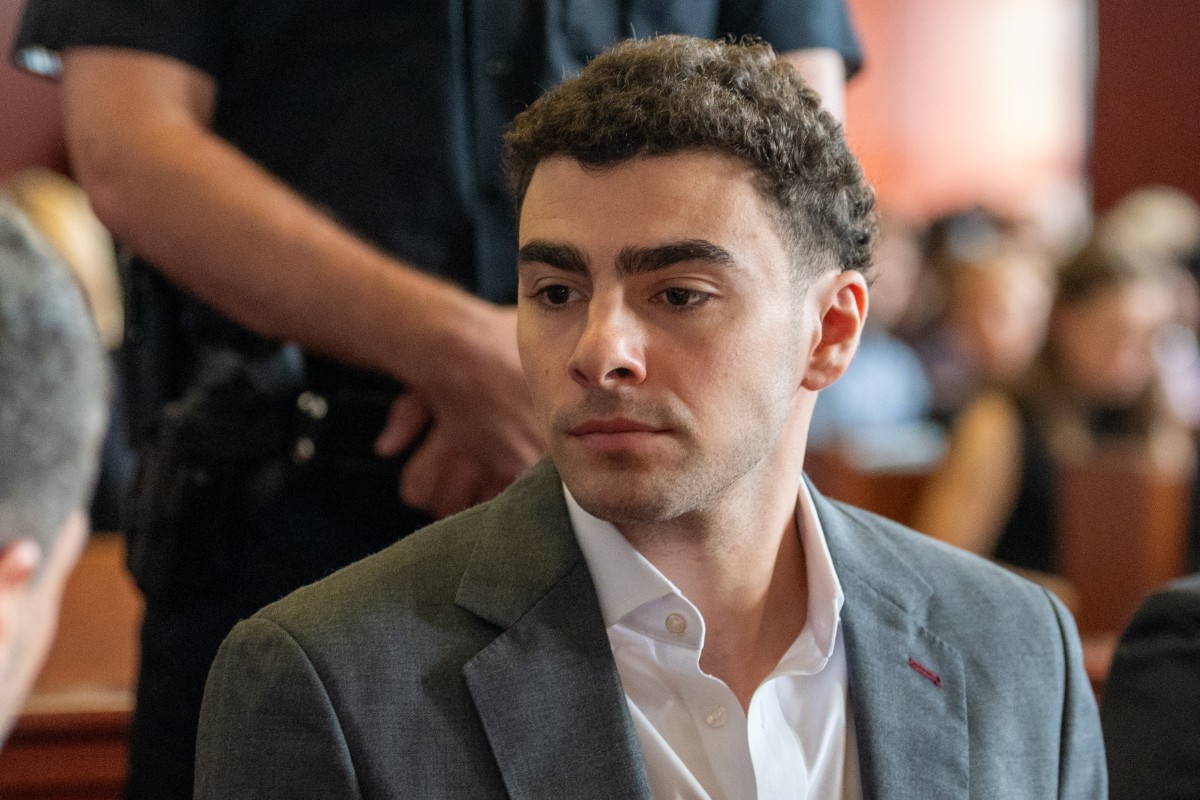
Luigi Mangione admitted Friday to fatally shooting Brian Thompson, the CEO of UnitedHealthcare, the largest health insurance group in the United States, during an appearance before a federal judge.
The case shocked the U.S. business community and dates back to December 2024, when Mangione opened fire on Thompson, 50, on a Manhattan street. Prosecutors have described the attack as being motivated by Mangione’s opposition to the U.S. health insurance system.
“On the morning of December 4, I shot Mr. Thompson in Manhattan and he died,” Mangione said as he pleaded guilty to a federal stalking charge related to his pursuit of the executive.
Mangione, 28, is scheduled to be sentenced on December 18, and prosecutors have indicated that they will seek a life sentence.
In addition to the federal charges related to stalking Thompson, Mangione also faces a murder case brought by the state of New York.
Following his guilty plea in federal court, Mangione’s defense asked a state court to dismiss the state charges, arguing that prosecuting him again for the same conduct would violate protections against double jeopardy.
“We have just filed our motion in state court to explain why the charges should be dismissed under New York’s protections against double jeopardy,” Mangione’s attorney, Karen Friedman Agnifilo, said Friday.
Both the federal and state cases could result in a life sentence. Two other federal charges that initially carried the possibility of the death penalty were dismissed by a judge earlier this year.
International
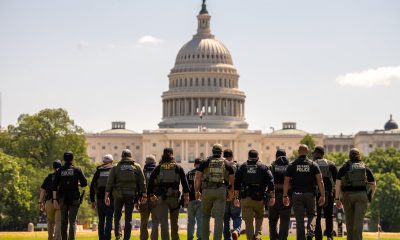
ICE Plan to Equip Agents With Electric Shock Gloves Raises Abuse Concerns
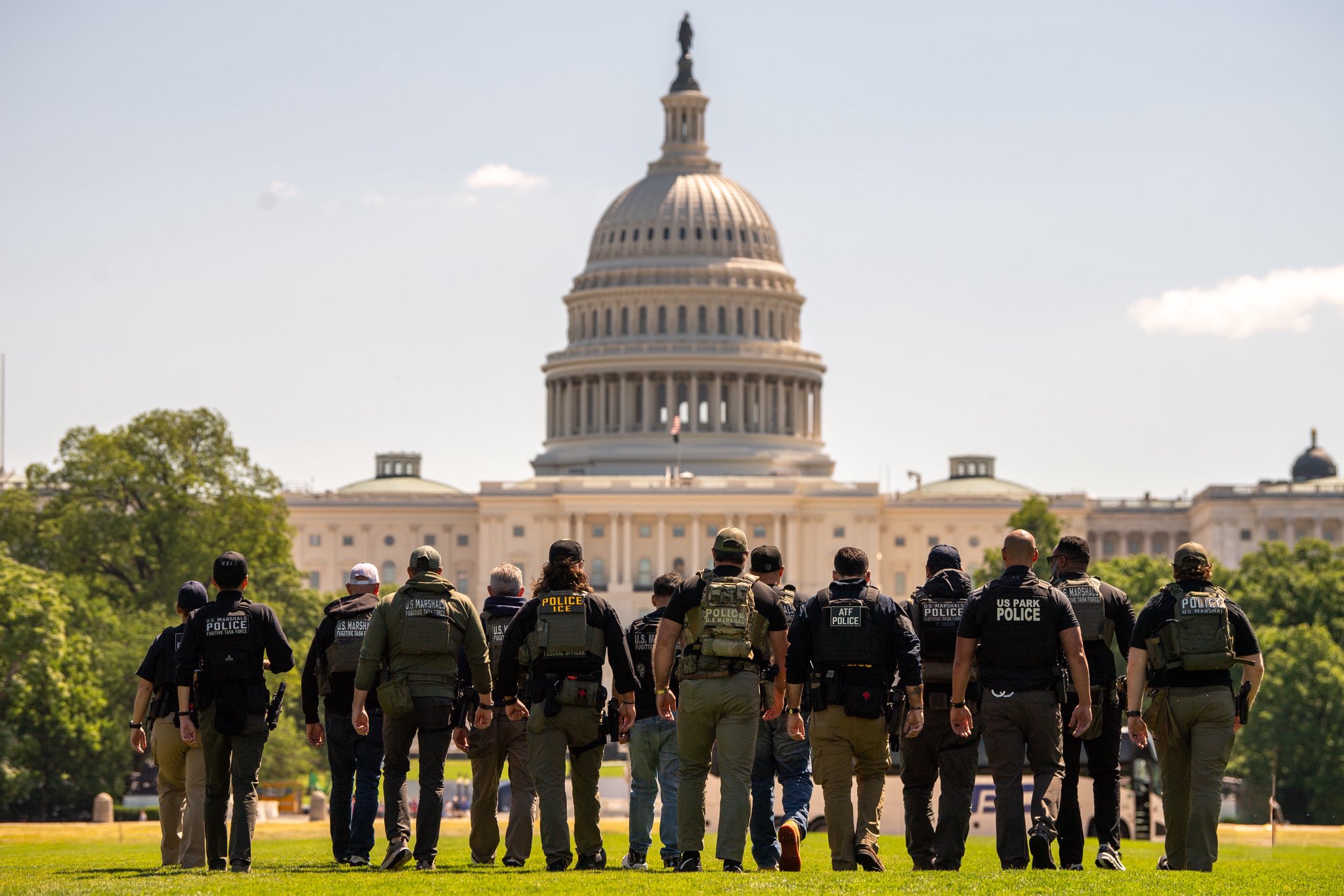
Plans to equip U.S. immigration agents with gloves capable of delivering electric shocks are raising concerns over potential abuses by a law enforcement agency that critics accuse of using excessive force and providing inadequate training to its personnel.
The plan involves the potential purchase of electric-shock gloves for agents with U.S. Immigration and Customs Enforcement (ICE), the agency primarily responsible for carrying out President Donald Trump’s campaign to deport millions of undocumented immigrants.
Democratic Representative Maxwell Frost criticized the proposal on X, arguing that the agency has already faced accusations of excessive force during immigration enforcement operations.
“As if assaulting and shooting people in the streets wasn’t enough,” Frost wrote. He also criticized the reported $20 million potential expenditure on the devices and called for greater restrictions on ICE.
The agency has faced growing scrutiny following a series of deadly shootings during immigration enforcement operations. Among the incidents were the deaths of two U.S. citizens in Minnesota in January who were participating in protests against the agency.
Critics have focused on the tactics used by ICE agents when detaining immigrants, as well as allegations that training standards for newly recruited personnel have been lowered.
According to a procurement plan first reported by the Associated Press, the Department of Homeland Security (DHS), which oversees ICE, could spend between $10 million and $20 million on the devices.
The gloves are described by the agency as tools intended for “distraction and de-escalation,” rather than lethal weapons. The system, known as GLOVE, stands for “Generated Low-Output Voltage Emitter.”
The device is manufactured by Compliant Technologies, a Kentucky-based company that describes its products as advanced non-lethal tools designed to protect and assist law enforcement and other personnel.
The proposal comes amid an intensifying national debate over ICE’s enforcement methods and the use of force during the Trump administration’s immigration crackdown.
International
Three U.S. Executions Set for Same Day as Trump Pushes to Expand Death Penalty

The death penalty has been abolished in 23 of the 50 U.S. states, while three others —California, Oregon and Pennsylvania— currently have moratoriums in place.
The United States is set to carry out three executions on the same day, a rare occurrence that has not happened since 2010, according to the nonprofit Death Penalty Information Center.
President Donald Trump has sought to expand the use of capital punishment for what he describes as “the most heinous crimes.” In April, the Department of Justice proposed expanding execution methods to include firing squads, lethal gas and electrocution.
Tennessee is scheduled to execute Anthony Darrell Dugard Hines, 66, on Thursday. He was sentenced to death for the 1985 murder of a woman, according to local media.
In Oklahoma, Carlos Cuesta-Rodríguez, 70, is scheduled to be executed for a 2003 murder.
Meanwhile, Alabama plans to execute Jeremy Williams, 42, who was sentenced to death for the rape and murder of a five-year-old girl.
The United States carried out 47 executions in 2025, the highest number since 2009, when 52 executions were recorded.
Florida conducted the largest number of executions last year, with 19, followed by Alabama, South Carolina and Texas, with five each.
Of the executions carried out in 2025, 39 were conducted by lethal injection. Three were carried out by firing squad and five through nitrogen hypoxia, a method that involves forcing nitrogen gas into a face mask, depriving the prisoner of oxygen.
The United Nations has condemned nitrogen gas as a cruel and inhumane method of capital punishment.

Luigi Mangione Pleads Guilty to Killing UnitedHealthcare CEO Brian Thompson

ICE Plan to Equip Agents With Electric Shock Gloves Raises Abuse Concerns

Three U.S. Executions Set for Same Day as Trump Pushes to Expand Death Penalty

Colombia Earthquake Death Toll Reaches 265 as Rescue Teams Race Against Time

German Authorities Investigate More Than 100 New Cases Against Convicted Nurse

Venezuela Raises Earthquake Death Toll to 6,301

CEAPI Backs Colombia’s New Government and Calls for Greater Public-Private Cooperation
Colombia Earthquake Leaves at Least 22 Dead as Rescue Efforts Continue
Three U.S. Executions Set for Same Day as Trump Pushes to Expand Death Penalty
Colombia Earthquake Death Toll Reaches 265 as Rescue Teams Race Against Time
Luigi Mangione Pleads Guilty to Killing UnitedHealthcare CEO Brian Thompson
ICE Plan to Equip Agents With Electric Shock Gloves Raises Abuse Concerns
-
 International3 days ago
Three U.S. Executions Set for Same Day as Trump Pushes to Expand Death Penalty
-
 International3 days ago
Colombia Earthquake Death Toll Reaches 265 as Rescue Teams Race Against Time
-
 International2 days ago
Luigi Mangione Pleads Guilty to Killing UnitedHealthcare CEO Brian Thompson
-
 International2 days ago
ICE Plan to Equip Agents With Electric Shock Gloves Raises Abuse Concerns