
International
Bolivia’s ruling party meets to choose candidates without the participation of Evo Morales
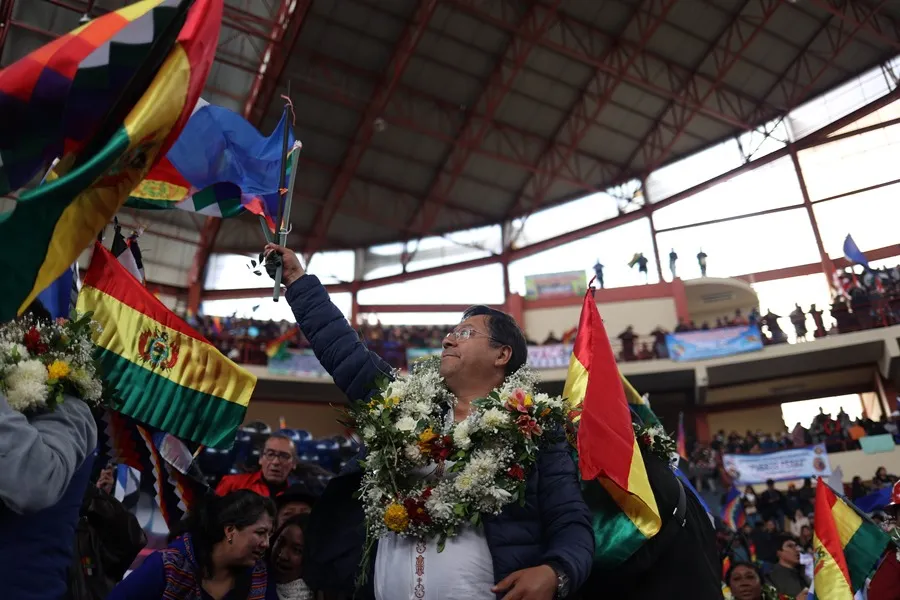
Thousands of followers of the ruling Movement to Socialism (MAS) met this Friday to define the election of the presidential binomial for the August 17 elections in Bolivia, without the former historical leader, former President Evo Morales (2006-2019), who after losing leadership will present his candidacy for the first time with another political group.
The president of the MAS, Grover García, said in his speech that this congress is to “seek the unity” of the popular bloc and establish an “organic” way to elect the departmental and national leaders of the ruling party.
García pointed out that the election of representatives and candidates will not be done “by finger” or with “imposition” as, he said, happened in the time of Evo Morales, whom he indicated to be the one who defined the MAS candidacies.
The meeting is held in the city of El Alto, neighboring La Paz, with delegations from organizations related to the Government and with the presence of President Luis Arce and Vice President David Choquehuanca.
On Thursday, Morales and his supporters announced that they will step away from the MAS and run for election with a new party, the Front for Victory (FPV), which means a distance between the “evista” bloc, as those loyal to the former president with the faction that supports Arce, known as ‘arcistas’.











In this regard, García said that “those who go to other parties” are the “true traitors” and that this will become clear at the conclusion of the official meeting.
Although President Arce has not confirmed that he will go to re-election, he is emerging as the main option of the MAS to the Presidency, since some sectors began to propose his name in the recent public events and delivery of public works to which the Head of State has attended.
For his part, Arce warned the crowd that attended the event that in the next elections they will face “two visions of the country”, among which the MAS promotes, oriented to deepen the Plurinational State, the plural economy and industrialization, with the opposition that seeks to return to the “old Republic”, privatization and economic dependence.
“Our political instrument has the challenge of facing these new elections with all the arsenal we have (…) and with the unity of our social organizations,” said the president.
Luis Arce has increased his travels throughout the country this year, an average of two daily since January, for the delivery of works and to offer speeches about his Administration.
While Morales does not leave the Tropic of Cochabamba (center), his main political and union stronghold, since October 2024, where he is surrounded by his followers who protect him against an arrest warrant.
The former governor was declared in “rebellion” for not appearing twice before a court to answer for an accusation of aggravated human trafficking, for allegedly maintaining a relationship with a minor with whom he had a child in 2016, when he was president of Bolivia.
In November, the former president ceased to be head of the MAS after the Judicial and Electoral bodies validated a congress held in May 2024 by the ‘arcista’ wing that elected leader Grover García as the new leader of the government party.
Morales insists that he is qualified to be a candidate despite a constitutional ruling that establishes that re-election in Bolivia is for “a single time” continuously or discontinuously, which would prevent him from participating, since he ruled the country for three consecutive periods (2006-2009, 2010-2014 and 2015-2019).
The division in the ruling party in Bolivia began to be noticed since the political crisis of 2019, when Morales resigned the presidency of the country alleging an alleged “coup d’état” and then took refuge in Argentina.
Arce and Morales have been distanced since the end of 2021 due to differences in the administration of the Executive and the election of the MAS presidential candidate.










International
Virginia Police Arrest Salvadoran Man in Great Falls Woman’s Killing

Alexis Antonio Cedillos-Campos, 19, identified by federal officials as an undocumented immigrant from El Salvador, was arrested in connection with the death of Carmen Lizet Puch, 42, who was found dead Monday, the Fairfax County Police Department said.
Authorities said Cedillos-Campos and Puch were coworkers and were also involved in an “intimate relationship.”
“Our victim suffered numerous stab wounds in a truly brutal and indescribable manner,” Police Chief Kevin Davis said during a news conference Wednesday.
Investigators said surveillance video showed Cedillos-Campos at the restaurant where he and Puch worked, allegedly taking a fixed-blade knife, a pair of black latex gloves and a bottle of water before leaving.
“He left with the intent to harm and kill the victim,” Davis said.
Cedillos-Campos was arrested Wednesday morning in Maryland and confessed to the killing, according to Davis. He is awaiting extradition to Virginia. Authorities have not said whether he has an attorney representing him.
The Department of Homeland Security said Cedillos-Campos had previously been arrested by U.S. Customs and Border Protection in 2024 after allegedly crossing the U.S.-Mexico border illegally near El Paso, Texas.
International
Mexico and Guatemala Agree on Five-Point Binational Plan for 2027
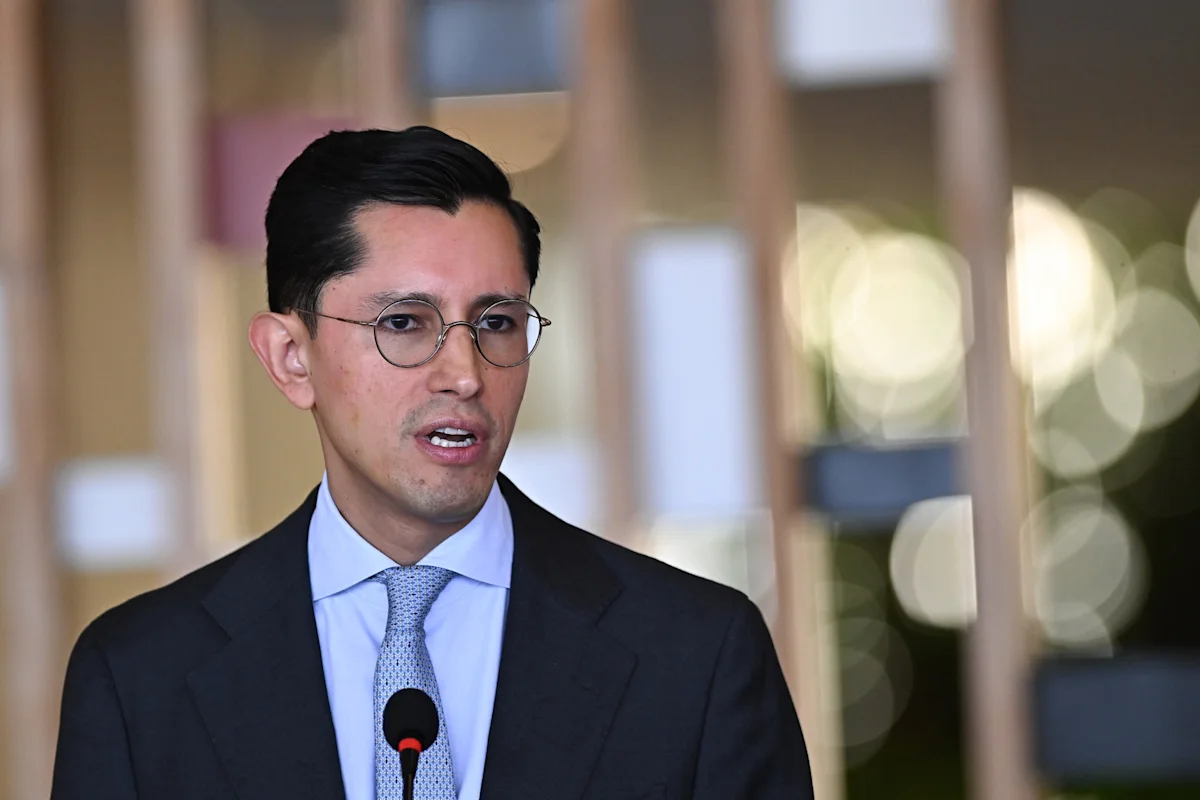
Mexico and Guatemala agreed Tuesday on a 2027 Binational Plan built around five areas of cooperation, along with a schedule of meetings and initiatives aimed at making progress by the end of 2026 on security, border infrastructure, human mobility, development and technical and social cooperation.
The agreement was announced by the foreign ministers of both countries following a meeting in Mexico City.
Mexican Foreign Minister Roberto Velasco said the plan will establish the “direction and priorities” of bilateral relations for next year. His Guatemalan counterpart, Carlos Ramiro Martínez, said the meeting allowed both governments to make decisions, schedule activities and revitalize bilateral cooperation mechanisms.
Security and border infrastructure
In the area of security, the two governments have nearly completed negotiations on a new memorandum of understanding for the Mexico-Guatemala High-Level Security Group (Ganseg), which was reactivated in 2025.
The countries expect to sign the agreement in the coming months to strengthen coordination and their ability to respond to shared security threats.
Regarding their nearly 1,000-kilometer shared border, Mexico and Guatemala agreed to advance infrastructure improvements at border crossings and continue work on a joint cargo clearance program between Ciudad Hidalgo and Tecún Umán, two border areas separated by the Suchiate River.
The measures are intended to facilitate bilateral trade while making cross-border exchanges safer and more efficient.
The two governments will also continue defining a route toward a railway connection between their countries through Line K of Mexico’s Interoceanic Corridor of the Isthmus of Tehuantepec (CIIT), with the aim of strengthening economic and community ties.
Migration and development
On human mobility, Mexico and Guatemala will maintain coordination to ensure safe, orderly and dignified returns, while strengthening protection for people in transit.
The bilateral agenda also includes a second phase of the Sembrando Vida program in Guatemala, which is expected to benefit 10,000 people across 15 departments.
Both countries will also advance initiatives under Juntos para el Bienestar, as well as six technical, scientific and energy cooperation projects approved by the Joint Commission.
The agreements seek to strengthen bilateral ties and establish concrete priorities for cooperation between Mexico and Guatemala during 2027.
International
France to Expel Two Iranian Diplomats Over Alleged Attack on French Officials
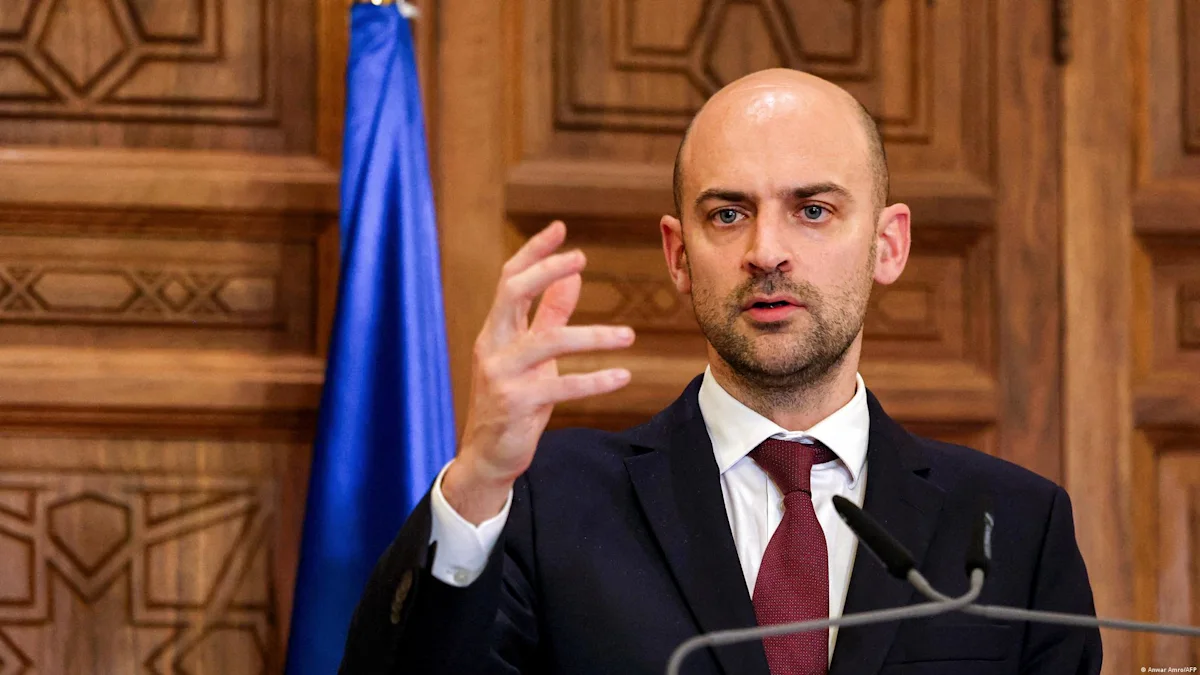
French Foreign Minister Jean-Noël Barrot announced Tuesday, August 18, 2026, that France will expel two Iranian diplomats in response to what Paris described as an attack on two French representatives in Iran last month.
“Two French diplomats were scandalously and deliberately assaulted on July 19. I had announced that this intolerable act would have consequences. It has now happened. Two Iranian diplomats in France will be expelled in the coming days,” Barrot said in a message posted on X.
The two Iranian diplomats have been declared persona non grata and will be required to leave France within the coming days, according to the French foreign minister.
About a month ago, Barrot said that two members of the French diplomatic staff had been detained by Iranian security forces for several hours. One of them was also subjected to harassment, he said.
The French government described the incident as an “extremely serious act of intimidation” that violated diplomatic immunity.
The two French embassy staff members were working on programs supporting Iranian civil society, particularly initiatives involving artists and researchers.
Iran has denied France’s allegations regarding the incident. The diplomatic dispute comes amid already strained relations between Paris and Tehran.

Virginia Police Arrest Salvadoran Man in Great Falls Woman’s Killing

Honduran Lawyer and Protected Witness in Angie Peña Case Shot Dead

Mexico and Guatemala Agree on Five-Point Binational Plan for 2027

France to Expel Two Iranian Diplomats Over Alleged Attack on French Officials

Heat wave puts more than 70 million Americans under alerts as temperatures near 46°C

Trump warns Iran over nuclear ambitions as U.S.-Iran ceasefire deadline passes

Brazil’s Lula and Flávio Bolsonaro kick off election campaigns amid focus on crime

Actress Hayden Panettiere Dies at 36, Representative Confirms
France to Expel Two Iranian Diplomats Over Alleged Attack on French Officials
Actress Hayden Panettiere Dies at 36, Representative Confirms
Honduran Lawyer and Protected Witness in Angie Peña Case Shot Dead
Trump warns Iran over nuclear ambitions as U.S.-Iran ceasefire deadline passes
Heat wave puts more than 70 million Americans under alerts as temperatures near 46°C
Virginia Police Arrest Salvadoran Man in Great Falls Woman’s Killing
Brazil’s Lula and Flávio Bolsonaro kick off election campaigns amid focus on crime
Mexico and Guatemala Agree on Five-Point Binational Plan for 2027
-
 International2 days ago
France to Expel Two Iranian Diplomats Over Alleged Attack on French Officials
-
 International4 days ago
Actress Hayden Panettiere Dies at 36, Representative Confirms
-
 Central America18 hours ago
Honduran Lawyer and Protected Witness in Angie Peña Case Shot Dead
-
 International3 days ago
Trump warns Iran over nuclear ambitions as U.S.-Iran ceasefire deadline passes
-
 International3 days ago
Heat wave puts more than 70 million Americans under alerts as temperatures near 46°C
-
 International17 hours ago
Virginia Police Arrest Salvadoran Man in Great Falls Woman’s Killing
-
 International3 days ago
Brazil’s Lula and Flávio Bolsonaro kick off election campaigns amid focus on crime
-
 International2 days ago
Mexico and Guatemala Agree on Five-Point Binational Plan for 2027