
International
More than 30 injured after a truck rammed at a bus stop north of Tel Aviv

At least 31 people were injured of varying severity, after a truck ran over a group of pedestrians waiting near a bus stop in Glilot, north of Tel Aviv, on Sunday.
“A preliminary investigation shows that a bus stopped near the station to leave the passengers at Glilot, (when) at that moment a truck arrived” and rammed them, detailed a police statement, which says it is investigating the event as a possible “terrorist attack.”
Previously, emergency services had reported the transfer to a hospital of 16 injured, four of them in serious condition.
Health volunteers from the United Hatzalah emergency service reported that some people were still trapped under the truck when they came to help the victims.
According to the police, the alleged aggressor was shot dead by civilians present in the area.











Second attack in October
So far in 2024, at least 34 people have died in a total of twenty attacks perpetrated by Palestinians in Israel or near illegal settlements in the occupied West Bank, according to an EFE count with police and emergency data.
Of the total number of victims, 12 were uniformed and 22 civilians, at least nine of them settlers.
The last attack took place on October 15, when an Israeli police officer was killed and four civilians were injured in a shooting near an interchange between the Israeli cities of Yavne and Ashdod, according to the MDA.










International
Controversial Pesticide Law Passes in France, Sparking Ecological Concerns and Ministerial Fallout
The French Parliament on Tuesday approved a highly controversial agricultural law that allows certain farmers to use two pesticides considered harmful to bees, substances that had been banned in France but remain authorized in the European Union.
After the National Assembly, the lower house of Parliament, approved the agricultural bill in the early hours of Tuesday, the Senate gave its final approval with a vote of 214 in favor and 111 against, officially adopting the measure.
Following the decision to reintroduce the use of acetamiprid and flupyradifurone, the office of Environment Minister Monique Barbut announced that she would soon submit her resignation.
Supporters of the measure argue that French producers of sugar beets, apples and hazelnuts need access to these insecticides — banned in France since 2018 and 2019, respectively — to remain competitive with European farmers in other countries where the products are still allowed.
Opponents, including environmental groups, argue that the substances pose serious risks to bees and could also threaten human health.
“Let us be proud of the work that has been done,” said Senator Laurent Duplomb of the conservative Republicans party, one of the main supporters of the measure.
The vote came after France’s Constitutional Council, the country’s highest court, struck down a previous attempt last year to bring back acetamiprid, ruling that the measure could pose risks to human health. That decision followed a petition signed by more than two million people opposing the pesticide’s reintroduction.
The previous bill had also been promoted by Duplomb, who argued that French agriculture needed additional tools to compete in international markets.
International
French Parliament Moves to Approve Social Media Age Limit for Minors

France’s Parliament is expected to approve legislation on Tuesday banning children under the age of 15 from accessing social media platforms, following an agreement reached Monday between lawmakers on the mechanism to enforce the measure.
The initiative is part of President Emmanuel Macron’s broader effort to strengthen online protections for minors and regulate children’s screen time before the end of his second presidential term in May 2027.
“Tomorrow, France will become the first country in Europe to establish a digital age of majority to better protect our children online,” Digital Affairs Minister Anne Le Hénanff said Monday in a post on X.
If approved, the government plans to implement the restriction in September, when students return to school after the summer holidays.
The United Kingdom has already passed similar legislation restricting social media access for users under the age of 16, although that measure is scheduled to take effect in early 2027.
Both the National Assembly, France’s lower house of Parliament, and the Senate are expected to hold final votes on the legislation Tuesday after a joint committee of seven senators and seven lawmakers reached an agreement on the bill’s final wording.
Under the proposed law, children under 15 years old would be prohibited from accessing online social media services, with limited exceptions for certain platforms, including online encyclopedias.
The legislation would make France the first member of the European Union to introduce a nationwide minimum digital age for access to social media platforms, reflecting a growing international movement to strengthen online safeguards for children and teenagers.
International
WHO to Hold New Round of Talks After Slow Progress on Pandemic Accord
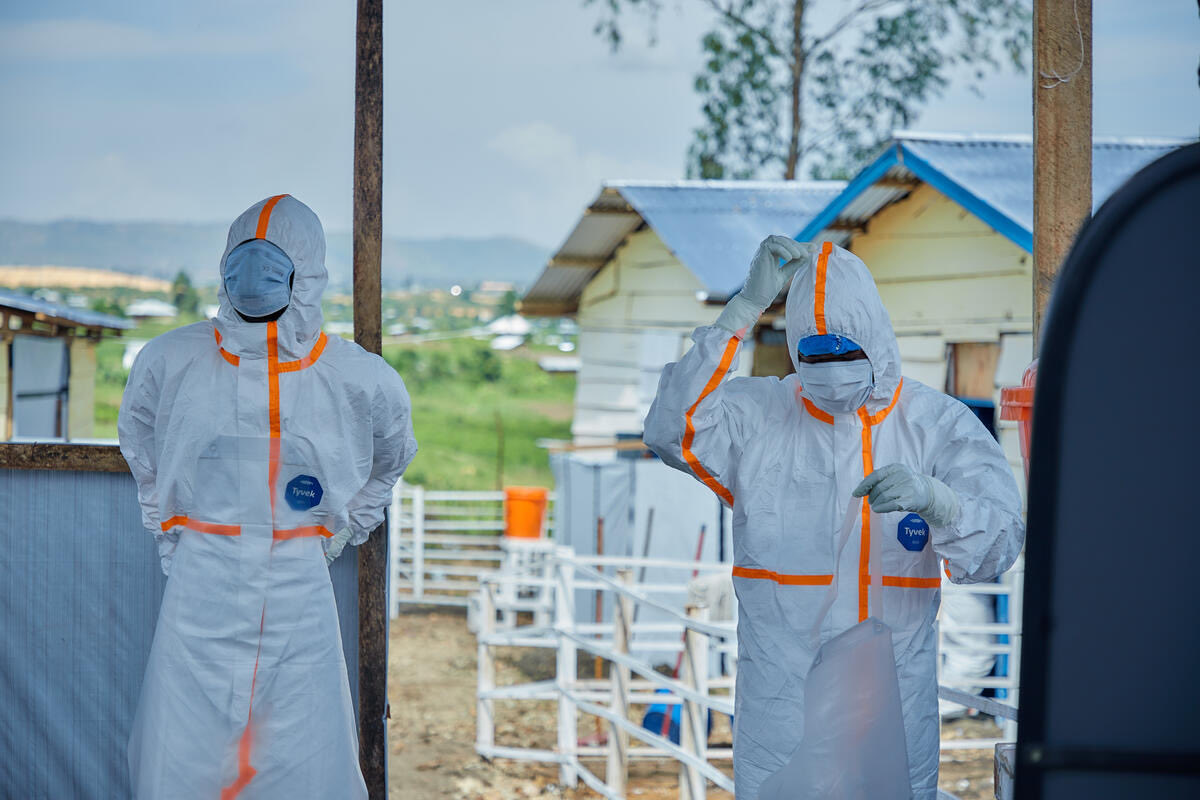
Member states of the World Health Organization (WHO) made limited progress during the seventh session of the Intergovernmental Working Group (IGWG) tasked with finalizing a key annex to the global pandemic agreement, prompting negotiators to schedule another round of talks in September.
The session, which opened on July 6 and concluded last week at WHO headquarters in Geneva, focused on drafting and negotiating the annex covering the Pathogen Access and Benefit-Sharing (PABS) System, a central component of the pandemic accord.
Without the completion of the PABS annex, the global pandemic agreement cannot enter into force.
The annex had originally been expected to be finalized before May 2026, but negotiations have progressed more slowly than anticipated.
In a statement, the WHO said member states “advanced negotiations” on the PABS system while acknowledging that additional discussions are required to complete a framework capable of supporting a faster, more effective and more equitable response to future pandemics.
The organization announced that an eighth round of negotiations will take place on September 14.
Despite the limited progress, delegates succeeded in streamlining the draft text and concentrating discussions on several technical issues.
According to the WHO, negotiators focused on the contractual arrangements underpinning the PABS mechanism, the laboratory networks responsible for handling and sharing pathogens and their genetic sequence data, as well as the framework for distributing the benefits generated through the sharing of those pathogens.
The PABS system is considered one of the most important elements of the future pandemic agreement, as it aims to ensure timely access to pathogens for scientific research while establishing fair mechanisms for sharing the benefits derived from vaccines, diagnostics and other medical countermeasures developed during future global health emergencies.
Controversial Pesticide Law Passes in France, Sparking Ecological Concerns and Ministerial Fallout

MLS Awaits Blockbuster Debuts as Griezmann and Lewandowski Join the Spotlight

French Parliament Moves to Approve Social Media Age Limit for Minors
Tec de Monterrey honors one of its students for his contribution to nanotechnology in medicine

Defense Minister commends salvadoran soldier for Central American Cross Country victory

Extension of the state of emergency approved in southern Chile
-

 International3 days ago
Ten Bodies Found in Mexico’s Zacatecas State Amid Security Operation
-

 International1 day ago
Iran Says It Is in “Full-Scale War” as U.S. Launches Ninth Consecutive Night of Airstrikes
-
 International1 day ago
French Parliament Moves to Approve Social Media Age Limit for Minors
-

 International1 day ago
WHO to Hold New Round of Talks After Slow Progress on Pandemic Accord
-
 Sports2 minutes ago
MLS Awaits Blockbuster Debuts as Griezmann and Lewandowski Join the Spotlight