
International
Five dead and nineteen injured in the terrorist attack on a military factory in Turkey
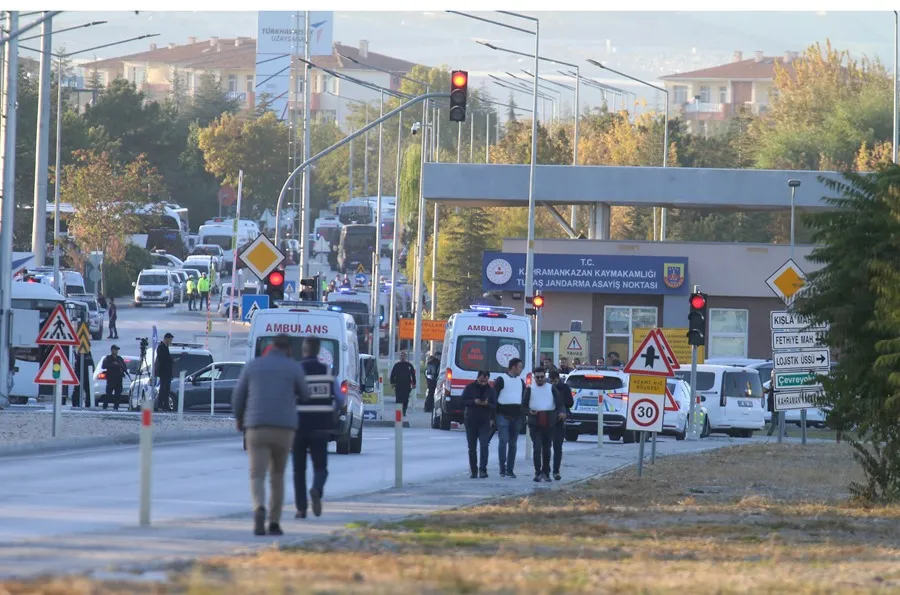
The Turkish government said that “with great probability” the attack on a military aeronautical factory in Ankara that caused five deaths and 19 injuries this Wednesday was the work of the outlawed Kurdistan Workers’ Party (PKK).
“We are still working on identifying terrorists and their fingerprints. As soon as we have results, we will announce which organization was behind the attack,” Interior Minister Ali Yerlikaya told the press in Ankara.
“But when evaluating the images we believe that it is very likely the PKK,” he added in reference to the two young people, a man and a woman, armed with assault rifles that were shot in the attack.
Shortly before, the Turkish Minister of Defense, Yasar Güler, had already attributed the attack to the PKK.
Yerlikaya stressed, however, that the responsibility of the guerrillas is not yet firmly established and that the results of the identification of the assailants must be awaited.











The attack began at 13.25 GMT on Wednesday, when at least two people arrived in a taxi at the door of the Tusas factory, on the northern outskirts of Ankara.
In the assault, five people were killed, in addition to the two assailants, and 19 were injured, two of them seriously injured.
According to NTV, the dead are a security guard and two technicians, while a quarter would be the driver of the taxi with which the assailants arrived at the factory, information not yet officially corroborated.
Explosions and shootings
Today explosions and shootings were recorded at the entrance of the TUSAŞ company’s factory in Ankara, which is dedicated to the manufacture of military aircraft, helicopters and military aeronautical equipment.
A large number of police officers, in addition to firefighters and ambulances, went to the place and, according to the NTV broadcaster, the shootings continue inside the factory.
That media indicates that the factory workers are going to shelters and there is talk of the possibility that some have been taken hostage.
The attackers arrived in a taxi to the factory
The CNNTürk network assures that the attackers arrived in a taxi at the factory and that at least one exploded at the door while others managed to access the enclosure.
Authorities have sent special units by helicopter to the place, local media said.
TUSAŞ develops and manufactures some of the most prestigious military aircraft of the Turkish weapons program, such as the Kaan fighter-bomber, still in project, the Hürjet training plane or the Hürkus small aircraft.










International
President Noboa Declares New Security Strategy as Ecuador Faces Record Violence Levels
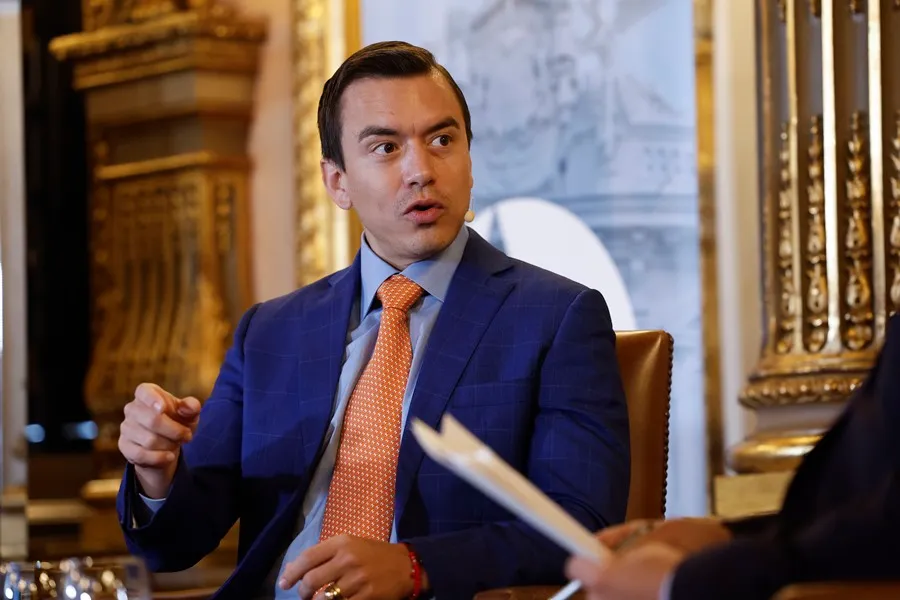
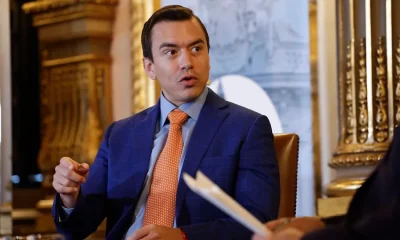
Ecuadorian President Daniel Noboa on Tuesday declared the National Comprehensive Security Plan 2025-2029 as a nationwide public policy, a strategy aimed at guiding state actions on security matters over the next four years.
The measure was formalized through an executive decree that activates the plan approved on March 9 by the Public and State Security Council (Cosepe) and replaces the National Comprehensive Security Plan 2019-2030, which had been designated as public policy in 2021.
Under the new decree, implementation of the strategy will be led by the ministries of Interior, Defense, and Foreign Affairs and Human Mobility, along with the National Intelligence Center and the National Secretariat for Risk Management. These institutions will be responsible for coordinating actions according to their respective areas of responsibility.
According to the official document, the new plan adopts a multidimensional and comprehensive security approach, with a long-term vision focused on national interests and on strengthening the State’s ability to respond to current threats.
The Ecuadorian government said the strategy seeks to improve coordination among public institutions within the framework of the “internal armed conflict” declared by Noboa in 2024 as part of the fight against criminal organizations operating across the country.
The plan also includes measures to strengthen international cooperation against transnational organized crime, which authorities identify as one of Ecuador’s main security challenges due to its links to drug trafficking and illegal mining.
The government described the document as a roadmap for prevention, protection, response and recovery actions in the face of national security risks, promoting coordinated efforts among state institutions.
Ecuador has remained under an internal armed conflict declaration since 2024, when Noboa intensified operations against criminal gangs that his administration has labeled terrorist organizations. Despite the increased security measures, the country recorded around 9,300 homicides in 2025, the highest figure in its history, according to data from the Ministry of Interior.
The new security plan comes as Ecuador seeks to strengthen its institutional response to escalating violence and the growing influence of organized crime networks.
International
Foreign Medical Teams Race to Prevent Health Crisis in Venezuela Earthquake Camps
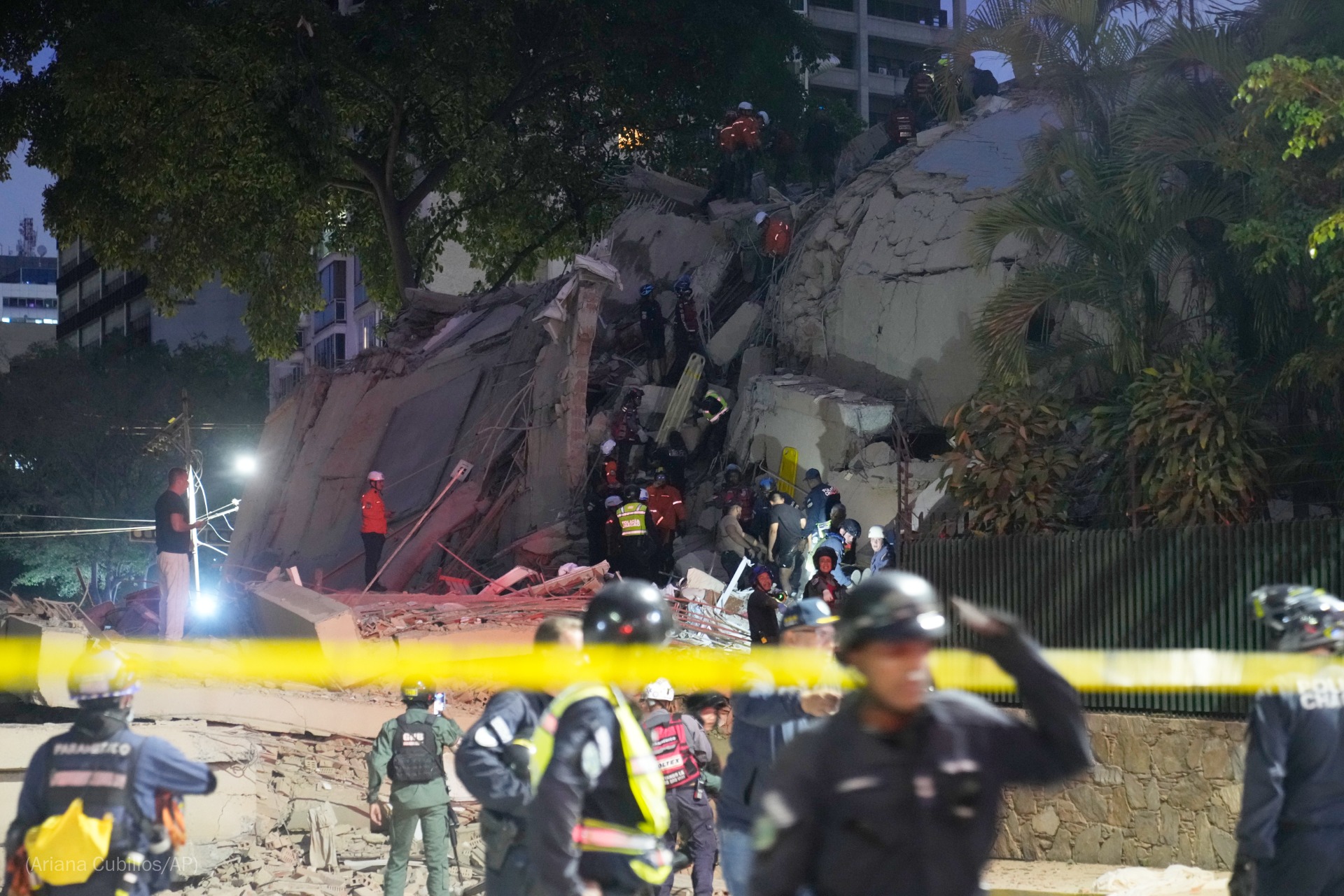
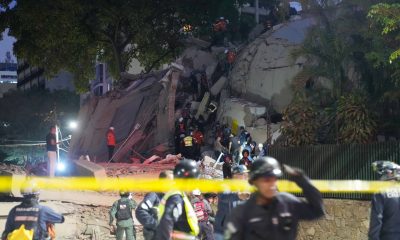
More than two weeks after the twin earthquakes that devastated parts of Venezuela and left thousands of people without homes, medical teams from several countries are working to prevent a potential health crisis in temporary shelters where survivors are living in precarious conditions.
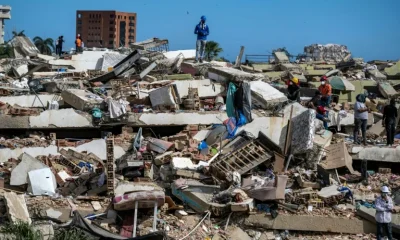
The magnitude 7.2 and 7.5 earthquakes that struck on June 24 have left more than 4,561 people dead and 16,740 injured, according to the latest government figures. The hardest-hit area has been La Guaira state, located near Caracas and considered the epicenter of the disaster.
Field hospitals from El Salvador, Mexico, the United States, Brazil and Spain are now facing the challenge of containing respiratory illnesses, gastrointestinal problems and psychological conditions linked to the tragedy.
Among those affected is 54-year-old Darwin López, one of nearly 18,000 Venezuelans who lost their homes and are now living in crowded emergency shelters set up in stadiums, parks, public squares and even sidewalks across La Guaira.
During the first three days after the earthquakes, López focused on rescuing his 44-year-old wife and their three-year-old child from the rubble of the building where they lived.
On Friday, he took another of his children, a 35-year-old man, to a U.S.-operated mobile hospital after he developed severe stomach pain.
“He had a strong stomach ache, and I took him to Pariata Hospital in La Guaira, but it was overwhelmed. So they gave us this alternative,” López told AFP while waiting outside a Samaritan’s Purse field hospital installed in large white tents.
Doctors are now treating him and his family hopes the condition is not serious, although López fears it may have been caused by contaminated food or unsafe water.
In the immediate aftermath of the earthquakes, international medical teams focused primarily on treating severe trauma cases, fractures and performing emergency surgeries. However, their priorities have now shifted toward addressing post-disaster illnesses and implementing epidemiological monitoring programs to reduce the risk of disease outbreaks.
Health authorities and humanitarian organizations warn that overcrowded shelters, limited access to clean water and difficult living conditions could increase the possibility of respiratory and gastrointestinal outbreaks among thousands of displaced survivors.
International
France Holds Largest Bastille Day Military Parade as Europe Highlights Strategic Defense
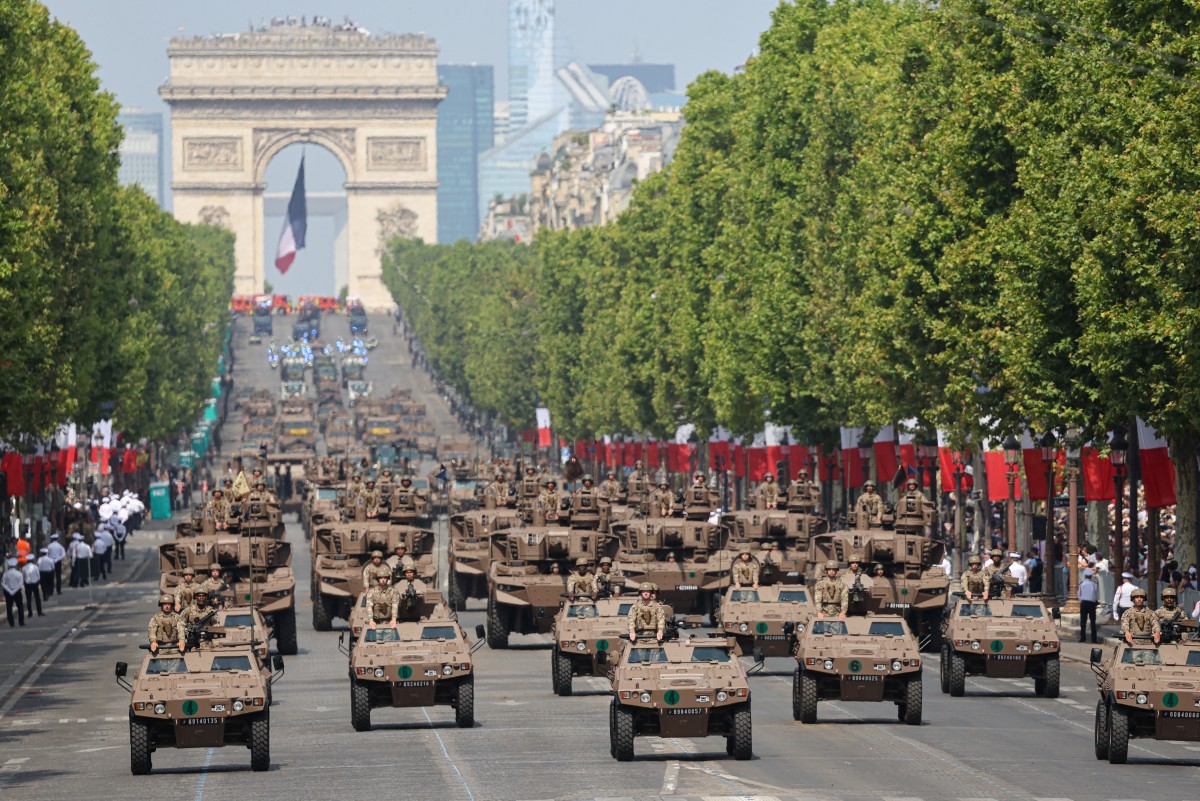
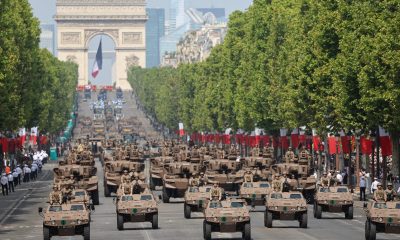
France held its largest-ever Bastille Day military parade on Tuesday, with nearly 6,700 troops, 98 aircraft, 31 helicopters and 315 military vehicles marching along the iconic route from the Arc de Triomphe to Place de la Concorde.
The annual parade, held to commemorate the storming of the Bastille prison in 1789, which marked the beginning of the French Revolution, was centered this year on France’s defense capabilities and Europe’s growing security challenges.
According to the Élysée Palace, the event aimed to highlight “France’s rearmament, France’s strategic autonomy and the strategic awakening of Europe.”
Among the main guests in the presidential stand was Ukrainian President Volodymyr Zelensky, who received a warm welcome upon his arrival, including a greeting from French First Lady Brigitte Macron and Prime Minister Sébastien Lecornu.
Zelensky was joined by 24 European heads of state and government, including German Chancellor Friedrich Merz, Spanish Prime Minister Pedro Sánchez, Polish Prime Minister Donald Tusk, Danish Prime Minister Mette Frederiksen and outgoing British Prime Minister Keir Starmer.
The parade also featured military contingents from 35 countries, with around 500 international participants, as well as 25 Ukrainian soldiers who took part in the ceremony.
The event came one day after a new summit in Paris of the so-called “Coalition of the Willing,” a group of countries committed to supporting Ukraine over the long term. Some members of the coalition have considered deploying troops to Ukraine once a ceasefire agreement with Russia is reached.
The large-scale celebration reflected France’s efforts to reinforce its role in European defense and underline unity among allies amid ongoing security concerns across the continent.

President Noboa Declares New Security Strategy as Ecuador Faces Record Violence Levels

Foreign Medical Teams Race to Prevent Health Crisis in Venezuela Earthquake Camps

France Holds Largest Bastille Day Military Parade as Europe Highlights Strategic Defense
Tec de Monterrey honors one of its students for his contribution to nanotechnology in medicine

Defense Minister commends salvadoran soldier for Central American Cross Country victory

Extension of the state of emergency approved in southern Chile
-
 Central America5 days ago
Panama launches anti-drone measures as prison security crisis deepens
-
 International2 days ago
ICE reverses course and moves forward with New Jersey migrant detention facility project
-
 International2 days ago
Judge rules Trump’s IRS lawsuit was a “bad faith” attempt to manipulate the judicial process
-
 International2 days ago
Marco Rubio launches U.S. campaign to “dismantle” the International Criminal Court
-
 International17 hours ago
France Holds Largest Bastille Day Military Parade as Europe Highlights Strategic Defense
-
 International17 hours ago
President Noboa Declares New Security Strategy as Ecuador Faces Record Violence Levels
-
 International3 days ago
Venezuela Earthquake Death Toll Rises to 4,490 as Rescue Efforts Continue
-
 International17 hours ago
Foreign Medical Teams Race to Prevent Health Crisis in Venezuela Earthquake Camps