
International
With its top unheaded, Hamas seeks new leadership in the middle of the war in Gaza

“Sinwar’s death will not end the resistance or the cause,” Hamas assured by confirming that the top leader of the movement died last week in clashes with Israeli troops in Rafah, south of the Gaza Strip.
The group then said that the Shura Council, its highest advisory body, would meet in the coming days to elect the new head of the political bureau to replace Sinwar, who in turn in August replaced In that position Ismail Haniyeh, eliminated in Tehran in an attack attributed to Israel.
However, Hamas sources have pointed out to EFE the possibility of postponing that decision to March, when internal elections are planned; and delegating the leadership to a five-member steering committee, which will assume the strategic political and military decisions.
“The next step is still under consultation in the direction of the movement. No decision has been made,” a source from the Hamas political bureau told EFE.
It is not the first time that Hamas has faced the assassination of its leaders, but its internal mechanisms are designed to make the movement survive above specific personalities.











The figures that follow in the first line are:
– Jaled Meshaal: One of the vice presidents of the Hamas political bureau, a body that he already led between 1996 and 2017, when he was succeeded in office by the head of the movement within the Strip, Ismail Haniyeh. That transfer marked the transfer of power from the leaders abroad to those inside Gaza (two years later Haniyeh moved to Qatar).
Born in the West Bank in 1956, he has lived in exile since 1967, when his family fled to Jordan in the Six-Day War. He then moved to Kuwait, where he joined the Muslim Brotherhood. A two-month tour in 1975 through Palestinian lands imbued him with patriotic feelings and he is one of the founders of Hamas in 1987.
He survived a poisoning assassination attempt in Amman by Mossad agents in 1997, by order of Benjamin Netanyahu. With Meshaal in a coma, the King of Jordan demanded the antidote under threat of breaking relations with Israel and trying his spies. Netanyahu had to give in after Bill Clinton’s intervention.
He has lived in Syria, Qatar and Turkey, and is the main representative of Hamas among the Palestinian exodus. With the murders of Haniyeh and the vice president of the political bureau, Saleh al Arouri – last January in Beirut – Meshaal remains the strongest figure of the group abroad.
–Jalil al Hayya: He was Sinwar’s right hand in the political branch within the Strip. After his appointment as president of the group in August, Al Hayya replaced him as head of Hamas in the enclave and occupies one of the three vice presidencies of the office, which corresponds to leaders from within Gaza.
In 2006 he led the Hamas bloc in the defunct Palestinian Legislative Council. He is a prominent supporter of the armed struggle against Israel and has survived several assassination attempts, the most serious in 2007, when an attack on his house in the northern Strip killed several of his relatives.
It was he who, the day after Israel announced Sinwar’s death, confirmed the news on behalf of Hamas, which can augur a prominent role.
– Mohamed Sinwar: He is the younger brother of Yahya Sinwar and a prominent commander of the al Qasam Brigades, the armed arm of Hamas. Before the death of several commanders during the war – including their military chief, Mohamed Deif, and his ‘number two’, Marwan Issa – he assumed military command of the southern half of the Strip, from Nuseirat to Rafah.
He grew up in the ranks of the Hamas military wing since the nineties, when he was a teenager, in the shadow of his brother. Although his leadership is on the military level, the current war context leaves him a wide margin of decision and autonomy. It is one of the “most sought after” by Israel.
– Musa Abu Marzouk: He is a member of the political bureau and, together with Haniyeh, promoted a pragmatic approach in negotiations with Israel for a ceasefire. In the 1990s, when he resided in the United States, he was arrested for raising funds for the armed wing of Hamas, and then remained in exile in Jordan, Egypt and Qatar.
– Izz ad Din al Haddad: He was the commander of the Gaza City Brigade when the war began, but now he holds military command of the entire northern part of the enclave. Together with the little Sinwar, he is in charge of continuing the “war of attrition” against Israel and co-directing military operations.
– Zaher Jabarin: He was from the circle close to Sinwar and Haniyeh. Handles the financial affairs of the group. Before he participated in military activities, so he was arrested by Israel and released in 2011 in the same exchange of more than a thousand prisoners for soldier Gilad Shalit, in which Sinwar was also released from prison.










International
Actress Hayden Panettiere Dies at 36, Representative Confirms

Actress Hayden Panettiere has died at the age of 36, her representative confirmed to CNN.
“It is with profound sadness that we share the tragic passing of our beloved Hayden. She was an incredible light and a force of nature who brought immeasurable love and joy to everyone who knew her, and to the millions who saw her on screen,” her father, Skip Panettiere, said in a statement to CNN.
The circumstances surrounding her death were not immediately known. ABC was the first outlet to report the news.
Panettiere rose to prominence in the late 2000s with her role as Claire Bennet in the television series “Heroes.” Her character was a cheerleader with the ability to heal herself, becoming one of the show’s most recognizable figures.
She later starred in the musical drama series “Nashville,” portraying Juliette Barnes, a young country music star whose career and personal life were central to the series.
Panettiere also appeared in the 2011 horror film “Scream 4” as Kirby Reed. She later returned to the franchise more than a decade later in “Scream VI.”
Her other notable film credits included “I Love You, Beth Cooper” and “Remember the Titans.”
Panettiere’s career spanned television and film, with roles that made her a familiar face to audiences from the 2000s onward.
International
Luigi Mangione Pleads Guilty to Killing UnitedHealthcare CEO Brian Thompson
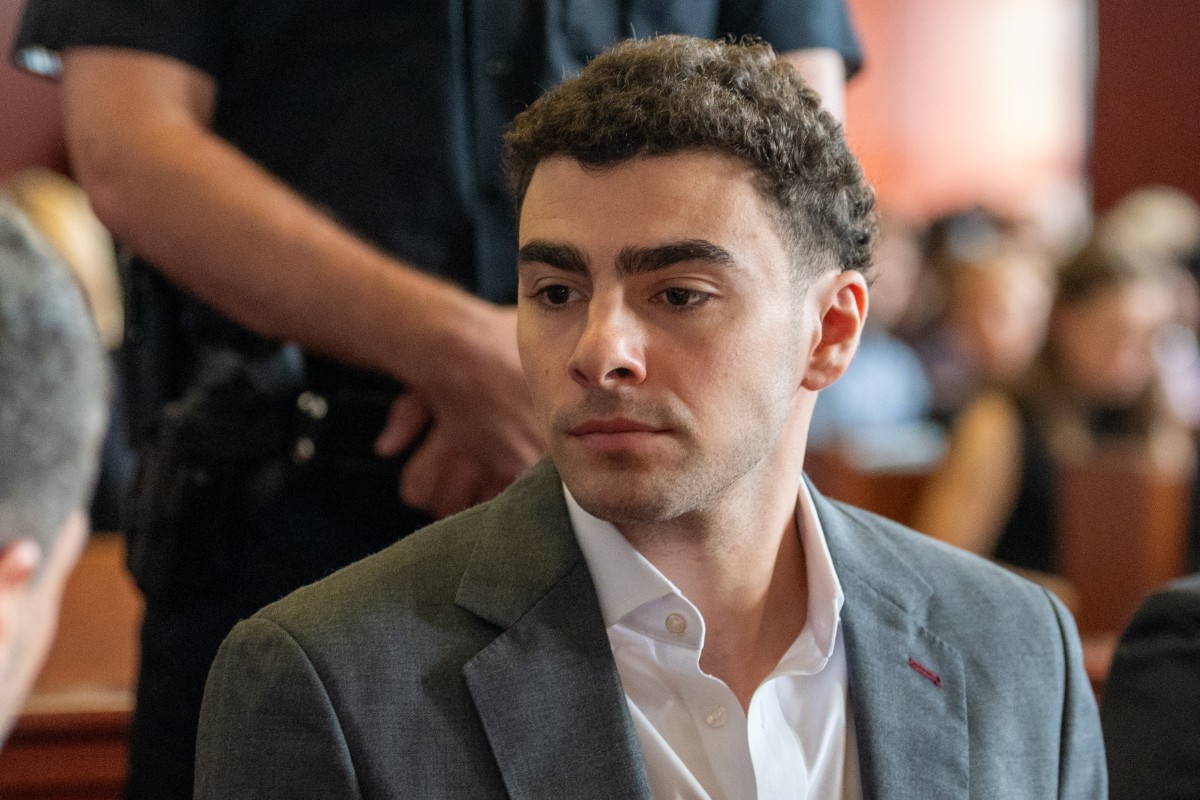
Luigi Mangione admitted Friday to fatally shooting Brian Thompson, the CEO of UnitedHealthcare, the largest health insurance group in the United States, during an appearance before a federal judge.
The case shocked the U.S. business community and dates back to December 2024, when Mangione opened fire on Thompson, 50, on a Manhattan street. Prosecutors have described the attack as being motivated by Mangione’s opposition to the U.S. health insurance system.
“On the morning of December 4, I shot Mr. Thompson in Manhattan and he died,” Mangione said as he pleaded guilty to a federal stalking charge related to his pursuit of the executive.
Mangione, 28, is scheduled to be sentenced on December 18, and prosecutors have indicated that they will seek a life sentence.
In addition to the federal charges related to stalking Thompson, Mangione also faces a murder case brought by the state of New York.
Following his guilty plea in federal court, Mangione’s defense asked a state court to dismiss the state charges, arguing that prosecuting him again for the same conduct would violate protections against double jeopardy.
“We have just filed our motion in state court to explain why the charges should be dismissed under New York’s protections against double jeopardy,” Mangione’s attorney, Karen Friedman Agnifilo, said Friday.
Both the federal and state cases could result in a life sentence. Two other federal charges that initially carried the possibility of the death penalty were dismissed by a judge earlier this year.
International
ICE Plan to Equip Agents With Electric Shock Gloves Raises Abuse Concerns
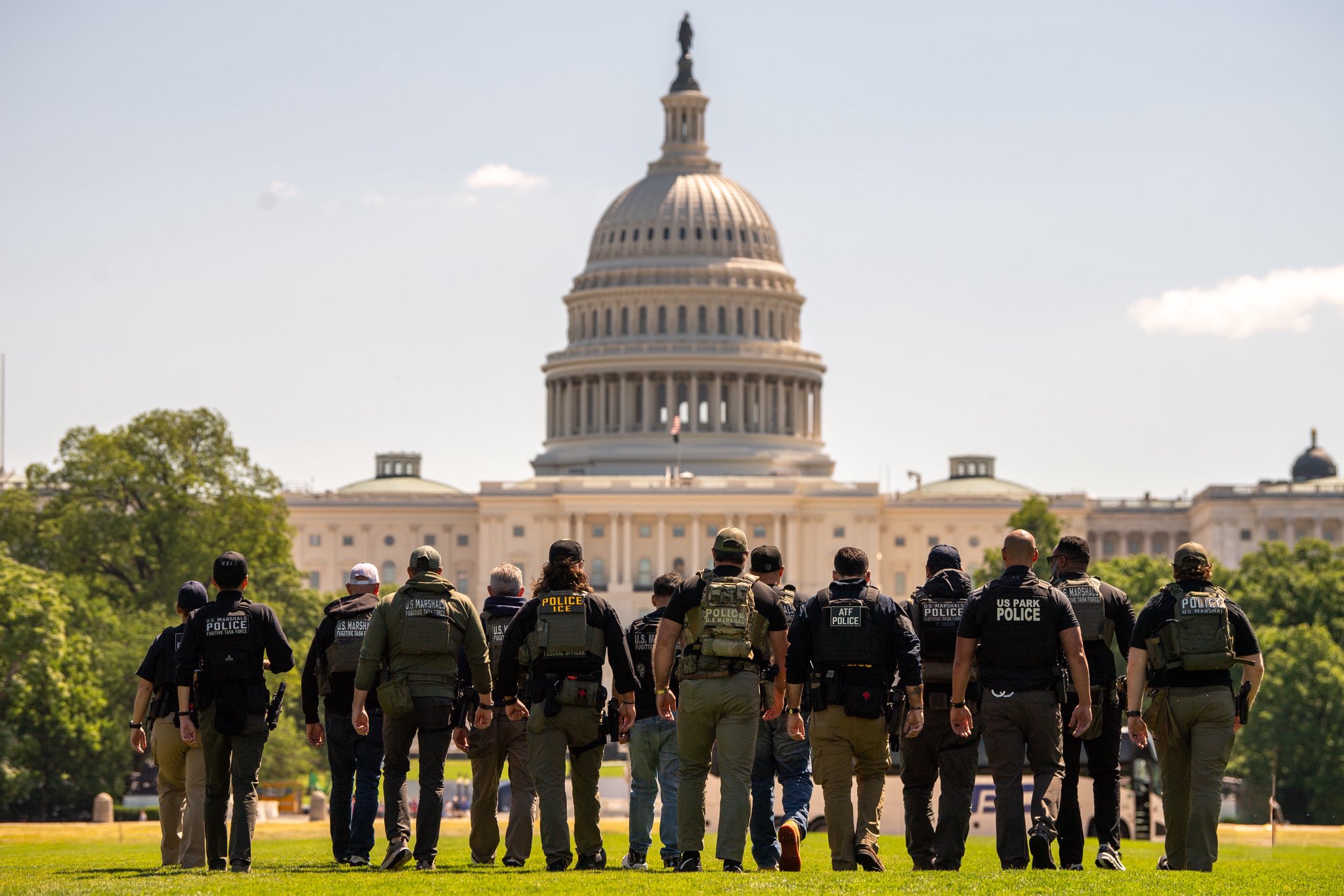
Plans to equip U.S. immigration agents with gloves capable of delivering electric shocks are raising concerns over potential abuses by a law enforcement agency that critics accuse of using excessive force and providing inadequate training to its personnel.
The plan involves the potential purchase of electric-shock gloves for agents with U.S. Immigration and Customs Enforcement (ICE), the agency primarily responsible for carrying out President Donald Trump’s campaign to deport millions of undocumented immigrants.
Democratic Representative Maxwell Frost criticized the proposal on X, arguing that the agency has already faced accusations of excessive force during immigration enforcement operations.
“As if assaulting and shooting people in the streets wasn’t enough,” Frost wrote. He also criticized the reported $20 million potential expenditure on the devices and called for greater restrictions on ICE.
The agency has faced growing scrutiny following a series of deadly shootings during immigration enforcement operations. Among the incidents were the deaths of two U.S. citizens in Minnesota in January who were participating in protests against the agency.
Critics have focused on the tactics used by ICE agents when detaining immigrants, as well as allegations that training standards for newly recruited personnel have been lowered.
According to a procurement plan first reported by the Associated Press, the Department of Homeland Security (DHS), which oversees ICE, could spend between $10 million and $20 million on the devices.
The gloves are described by the agency as tools intended for “distraction and de-escalation,” rather than lethal weapons. The system, known as GLOVE, stands for “Generated Low-Output Voltage Emitter.”
The device is manufactured by Compliant Technologies, a Kentucky-based company that describes its products as advanced non-lethal tools designed to protect and assist law enforcement and other personnel.
The proposal comes amid an intensifying national debate over ICE’s enforcement methods and the use of force during the Trump administration’s immigration crackdown.

Actress Hayden Panettiere Dies at 36, Representative Confirms

Luigi Mangione Pleads Guilty to Killing UnitedHealthcare CEO Brian Thompson

ICE Plan to Equip Agents With Electric Shock Gloves Raises Abuse Concerns

Three U.S. Executions Set for Same Day as Trump Pushes to Expand Death Penalty

Colombia Earthquake Death Toll Reaches 265 as Rescue Teams Race Against Time

German Authorities Investigate More Than 100 New Cases Against Convicted Nurse

Venezuela Raises Earthquake Death Toll to 6,301

CEAPI Backs Colombia’s New Government and Calls for Greater Public-Private Cooperation
Three U.S. Executions Set for Same Day as Trump Pushes to Expand Death Penalty
Actress Hayden Panettiere Dies at 36, Representative Confirms
Colombia Earthquake Death Toll Reaches 265 as Rescue Teams Race Against Time
ICE Plan to Equip Agents With Electric Shock Gloves Raises Abuse Concerns
Luigi Mangione Pleads Guilty to Killing UnitedHealthcare CEO Brian Thompson
-
 International4 days ago
Three U.S. Executions Set for Same Day as Trump Pushes to Expand Death Penalty
-
 International8 hours ago
Actress Hayden Panettiere Dies at 36, Representative Confirms
-
 International4 days ago
Colombia Earthquake Death Toll Reaches 265 as Rescue Teams Race Against Time
-
 International3 days ago
ICE Plan to Equip Agents With Electric Shock Gloves Raises Abuse Concerns
-
 International3 days ago
Luigi Mangione Pleads Guilty to Killing UnitedHealthcare CEO Brian Thompson