Connect with us

International

Parliament approves the dismissal of Kenya’s vice president on a historic day

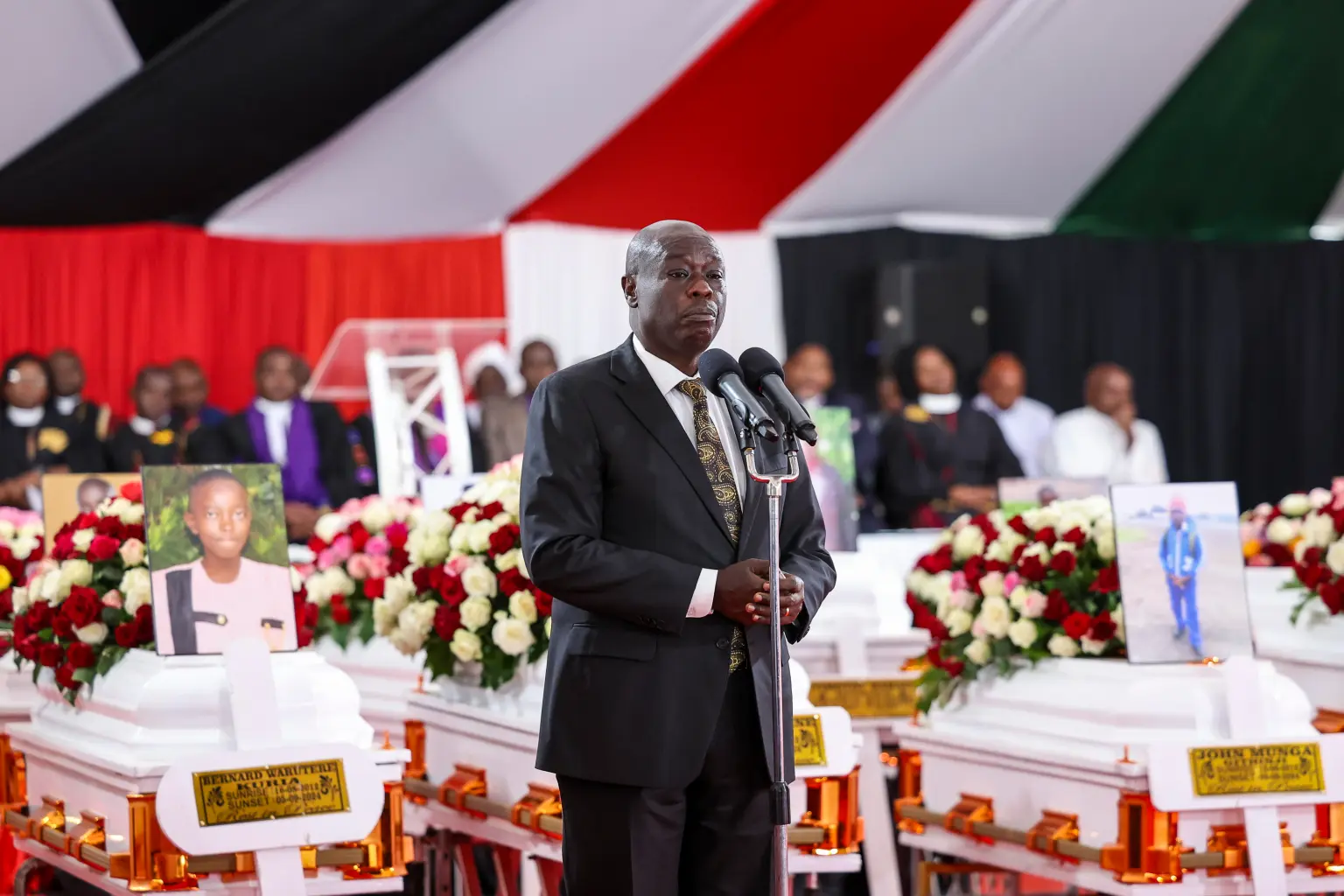
The Senate of Kenya (Upper Chamber of Parliament) approved this Thursday the dismissal of the vice president of the country, Rigathi Gachagua, an unprecedented act in the history of the African country.

After two days of impeachment, the senators voted in favor of the impeachment (as the impeachment process is known in English) against the vice president, who could not defend himself in person before the parliamentarians because he was admitted to a hospital in Nairobi for intense chest pains.

How was the motion for the dismissal of the vice president of Kenya?

The motion had to be supported by at least two-thirds (45) of the 67 members of the Senate who supported at least one of the eleven charges that weighed on Gachagua.

Thus, 45 senators or more voted in favor of five of the eleven charges, which included corruption, promotion of ethnic discrimination, insubordination, intimidation and humiliation towards public officials.

“As a result, his Excellency Rigathi Gachagua ceases to hold office,” said the president of the Upper House, Amason Kingi.


Advertisement
20250501_mh_noexigencia_dui_728x90
previous arrow
next arrow

But the vice president also received the express support of some senators.

“This divorce that the president is looking for, he will get it. But it will be painful, harmful, catastrophic, it will have victims,” said legislator John Methu in reference to Kenyan President William Ruto, whose relationship with Gachagua had been rarefied for months.

On the 8th, the National Assembly (Lower House) already expressed itself in favor of the process of dismissal of Gachagua, 59 years old.

The dismissal ends his political career – he has been vice president since 2022 and, from 2017 to 2022, he was a deputy of the Assembly – since he will not be able to occupy any other public office in the future and, in addition, he will lose all the benefits derived from having held the vice presidency of Kenya.

Sudden hospitalization of Gachagua

The vote culminated in a dramatic day marked by the sudden hospitalization of the dismissed vice president, who is “stable,” according to doctors, adding that he will remain under observation between 48 and 72 hours.

Advertisement
20250501_mh_noexigencia_dui_728x90
previous arrow
next arrow

“It came with chest pains and when you get to the hospital with that, our first concern is if it has something to do with the heart and our job is to make sure that you don’t have the possibility of suffering a heart attack,” Karen Hospital’s chief cardiologist Dancan Gikonyo told reporters.

The setback caused the temporary suspension of the session in the Upper House, which resumed the impeachment shortly after 17:00 local time (14:00 GMT).

The session, the second debate in the Senate after the one held this Wednesday, was resumed after a request from Gachagua’s lawyer, Paul Muite.

Muite asked for a postponement of the impeachment until next Tuesday, so that the vice president could stand in person and defend himself before the Senate, but the president of the Upper House, Amason Kingi, pointed to this Saturday as an alternative date.

However, the senators refused in a vote to postpone the process until Saturday and decided to continue this Thursday, before which Muite and his legal team withdrew in protest.

Advertisement
20250501_mh_noexigencia_dui_728x90
previous arrow
next arrow

The procedure with green light

The procedure already received the green light on October 8 with a large majority in the National Assembly (Lower House), where 281 of the 349 deputies voted to move forward, after a marathon session in which the vice president intervened.

“In the absence of an active investigation by any Kenyan investigative agency, I believe that there can be no serious reason to believe that I have committed any crime,” Gachagua said at the time, denying all the accusations against him.

The debate in the Senate could begin this Wednesday after two courts rejected urgent appeals imposed by the vice president to stop the process.

According to local media, Vice President Gachagua has filed up to 26 lawsuits challenging the legality and the process of his dismissal.

One of the main arguments against impeachment is the lack of significant public participation.

Advertisement
20250501_mh_noexigencia_dui_728x90
previous arrow
next arrow
Continue Reading
Advertisement
20250501_mh_noexigencia_dui_300x250

International

Spain’s irregular migrant population rises to 840,000, study finds

The number of migrants living in Spain without legal residency status continues to rise and has reached 840,000 people, with 91% originating from the Americas, particularly Colombia, Peru and Honduras, according to a report by the Spanish think tank Funcas (Foundation of the Savings Banks).

An estimated 17.2% of the non-EU foreign population living in Spain is in an irregular administrative situation. The estimate is based on the gap between the number of foreign residents effectively living in Spain, according to the National Statistics Institute (INE), and those who hold a residence permit, benefit from international protection, or are in the process of obtaining it.

The data, as of January 1, 2025, point to a notable and sustained increase in irregular migration since 2017, when the estimated figure stood at around 107,000 people, representing 4.2% of the non-EU population residing in Spain.

By origin, migrants from the American continent stand out, totaling around 760,000 people, or 91% of all irregular migrants. Colombians account for nearly 290,000, followed by Peruvians with almost 110,000, and Hondurans with about 90,000. Migrants from Africa (50,000), Asia (15,000) and Europe (14,000) trail far behind.

The figures predate Spain’s latest immigration regulation reform, which came into force in May 2025 and introduces measures to ease access to legal status through residency ties. According to Funcas, the reform would, in principle, tend to reduce the number of migrants in an irregular situation.

Advertisement
20250501_mh_noexigencia_dui_728x90
previous arrow
next arrow
Continue Reading

International

Historic snowstorm paralyzes Toronto after 60 centimeters of snow

Toronto, Canada’s largest city and the fourth most populous in North America, was largely paralyzed on Monday after a historic snowstorm dumped up to 60 centimeters of snow and sent temperatures plunging to -15 degrees Celsius, authorities said.

Late Sunday, as the scale of the snowfall became clear, city officials declared a climate emergency, triggering extraordinary measures including parking bans on several major streets to facilitate snow removal operations.

Toronto’s public transit authority reported that while some buses remain immobilized, subway and streetcar services are operating with relative normality, though localized disruptions may occur.

A similar situation is affecting the city’s commuter rail network, which remains operational but is experiencing significant delays on its main routes due to the severe weather conditions.

Continue Reading

International

Venezuela frees at least 80 political prisoners, NGO says

At least 80 political prisoners were released on Sunday across Venezuela, human rights group Foro Penal reported, as the broader process of detainee releases continues at a slow pace under the interim government.

Foro Penal’s director, Alfredo Romero, wrote on social media platform X that verified releases took place nationwide and that the figure could rise as more confirmations are completed.

Attorney Gonzalo Himiob, also from Foro Penal, said the excarcelations occurred during the early hours of the day and emphasized that the number is not yet final pending further verification.

The releases are part of a series of steps announced by Venezuela’s interim leader, Delcy Rodríguez, who took power after the capture of former President Nicolás Maduro in a U.S. military operation on Jan. 3, 2026. Rodríguez has pledged a significant number of liberations but has been criticized by opposition groups and rights organizations for the slow and nontransparent nature of the process.

So far, the Venezuelan government reports that 626 detainees have been freed since December, though independent counts by human rights groups suggest the number of actual political prisoner releases is lower and that many remain behind bars.

Advertisement
20250501_mh_noexigencia_dui_728x90
previous arrow
next arrow

Families of those still detained have maintained vigils outside prisons, hopeful for further releases even as broader concerns about political imprisonment and due process persist.

Continue Reading

Trending

Central News