
International
Record registration of Latino voters after Harris’ arrival in the presidential race
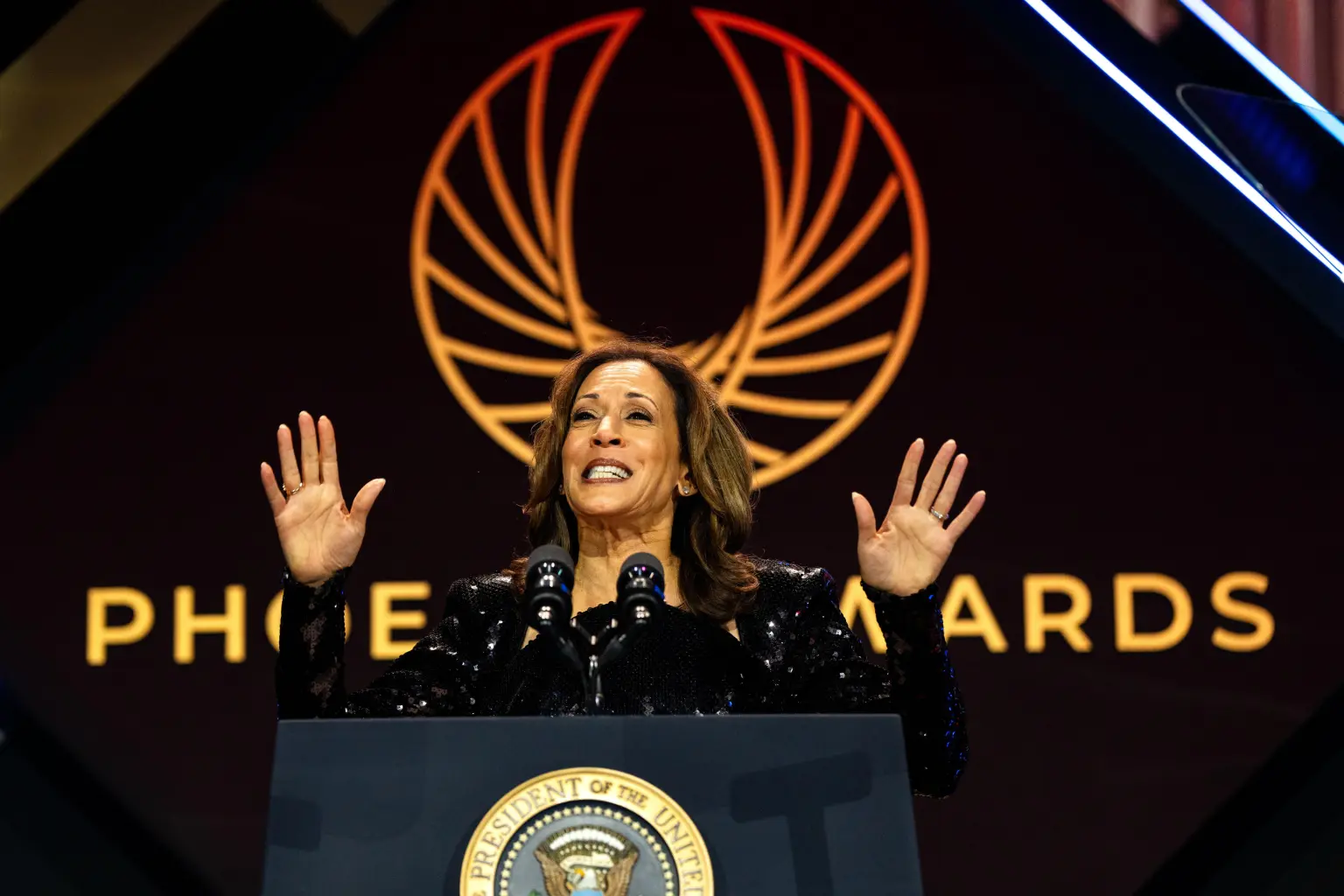
A record number of eligible Latinos have registered to vote after the arrival of Vice President Kamala Harris to the race for the White House, especially young and female voters, in states considered key to winning the November election, which may tip the balance towards the Democratic candidate.
The organization Voto Latino announced at a press conference that it has exceeded the voter registration goal in five key states: Florida, Texas, Georgia, Arizona and North Carolina by registering 112,035 Latino voters so far this year.
María Teresa Kumar, director of Voto Latino, said that the voter registration of her organization increased by 200% and attributed the unusual increase to the arrival of Harris in the race for the Presidency in the United States.
“All this enthusiasm began to gather and accumulate around July 21, when President Joe Biden decided to step aside and nominate and support Vice President Kamala Harris,” the activist said.
Of the total (112,035) registered this year by the organization, 67,092 voters registered after July 21, an unprecedented figure in the 20 years in which the organization has promoted voter participation.











Kumar also highlighted the increase achieved with respect to previous elections. And it is that, for the 2016 election, the Latino Vote campaign in favor of Hillary Clinton managed to register 2,252 Hispanic voters in July of that year.
In the same month, but in 2020, 25,156 Latino voters were registered in favor of President Joe Biden, almost half of the 50,111 who registered between July 21 and July 31 of this year, supported by Harris.
Even the mood of voters since Harris entered has exceeded that awakened by the candidacy of former President Barack Obama (2009-2017).
Ameer Patel, a researcher at Voto Latino, said that since the vice president landed in the presidential race, there has been a “disproportionate amount” of young voters and especially young Latinas who registered to vote.
Of the 67,092 voters registered after July 21, 55% are voters between 18 and 29 years old and 86% are between 18 and 39 years old. Of the total, 69.7% are women.
The enthusiasm of the new voters is not only motivated by the fight for women’s reproductive rights. In fact, the first issue that concerns the voters consulted by Voto Latino is the economy, better wages and income control.
The second issue is the rights to abortion, followed by gun control and security in educational institutions.
In that sense, Kumar highlighted the campaigns advanced by women in South Texas in favor of Harris and his formula, the governor of Minnesota, Tim Walz, with a wake-up call about school shootings, something that was not seen in 2020.
It is precisely in Texas where the most new Latino voters have registered Voto after the arrival of Harris with 17,000 registered voters, followed by Florida with 13,600, Georgia (11,500), North Carolina (7,500) and Arizona (4,500).
Kumar stressed the importance of these votes especially in states where President Joe Biden won by just over 10,000 votes, such as Georgia and Arizona.
“Harris has been stealing votes from Donald Trump in North Carolina, Pennsylvania, Arizona and Nevada, key states in this battlefield,” the activist said.
He added that the vice president is not only attractive to independent voters but also to Republicans, a clear disadvantage for former President Trump.
More than 36 million eligible Latinos will be able to vote this year. But of them, only 26 million are registered to vote, and only 16 million voted in the last presidential elections.
Activists’ efforts have focused on encouraging 20 million Latinos who could pay, but they don’t.
Kumar insisted that there is an incredible opportunity to strengthen the political voice of the Hispanic community, which although it is not monolithic has mostly opted for the Democrats.
The message was delivered right in celebration of National Voter Registration Day.










International
Chuck Schumer Unveils Proposal to Strengthen Oversight of the U.S. Presidency
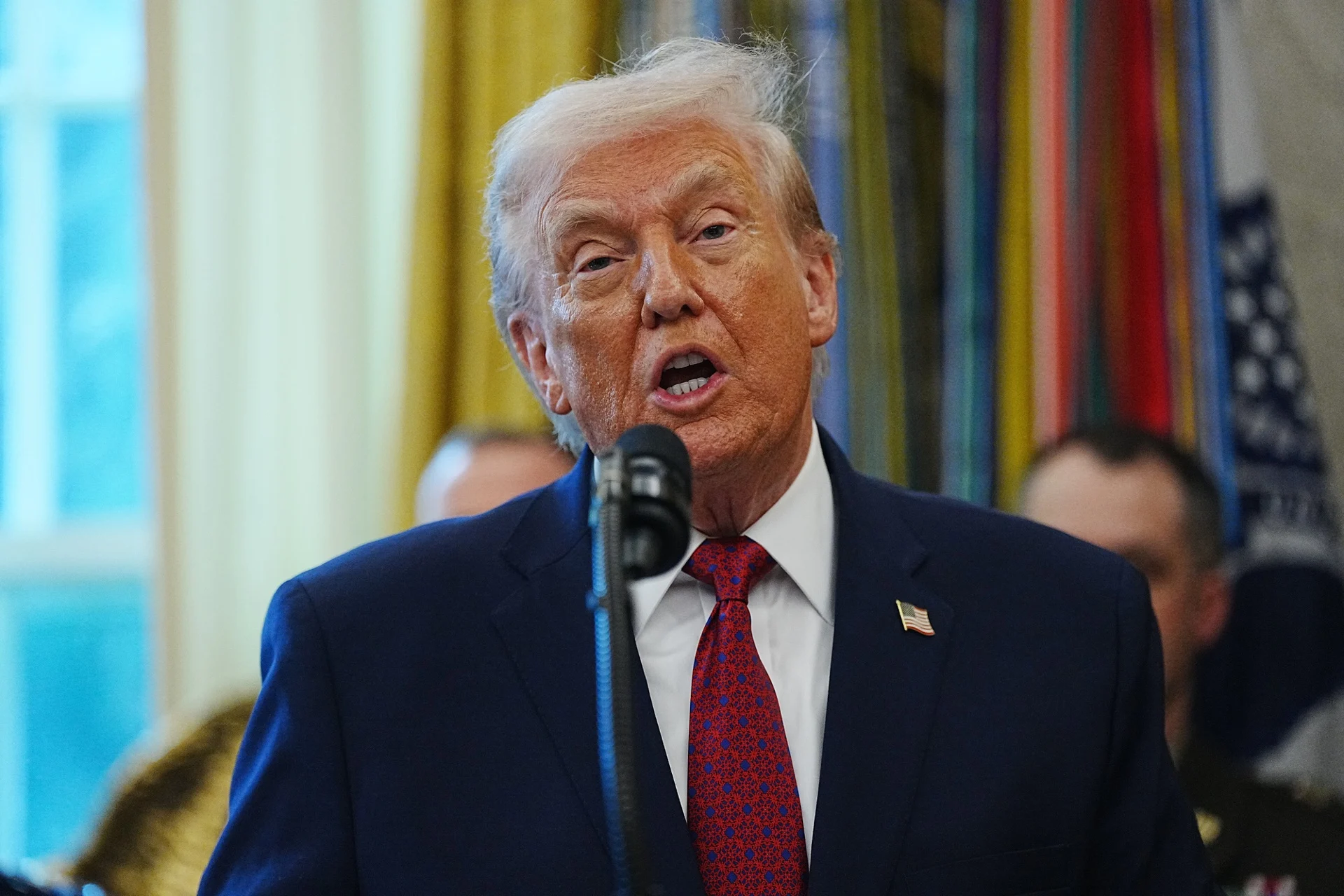
U.S. Senate Democratic Leader Chuck Schumer on Thursday announced legislation to establish a federal anti-corruption office aimed at strengthening oversight of the executive branch and preventing future presidents from using the White House for personal financial gain.
Schumer said the proposal was prompted by what he described as President Donald Trump’s misuse of the presidencyto benefit his family’s business interests.
“In just 18 months, the Trump family has made more than $4 billion by exploiting the influence of the presidency,” Schumer alleged.
The New York senator also argued that the alleged corruption has had direct economic consequences for American households.
“The same corrupt practices Trump is using to pocket billions of dollars are also forcing Americans to pay, on average, $3,100 more each year because of the rising cost of living,” he said.
The legislation was introduced alongside Democratic Senators Alex Padilla, Jeff Merkley, and Andy Kim.
According to Schumer, the bill has two primary objectives: “First, to return money to the American people. Second, to ensure that no one can ever steal from them again.”
He added that the proposal would create legal mechanisms allowing citizens to seek the recovery of funds allegedly obtained through government corruption.
“The fact that Trump stole money from the American people does not make it his. Americans deserve to get that money back,” Schumer said.
Under the proposed legislation, any U.S. citizen—as well as state attorneys general acting on behalf of their residents—would be authorized to file civil lawsuits to recover funds allegedly acquired through corrupt practices by public officials.
“Our bill would empower any individual, including a state attorney general acting on behalf of the people of that state, to bring legal action to recover money stolen from the public through government corruption,” Schumer said.
The measure is expected to face debate in Congress, where Republicans and Democrats remain deeply divided over executive accountability and the scope of presidential powers.
International
Trump Administration Urges Latin America to Increase Defense Spending Against Organized Crime
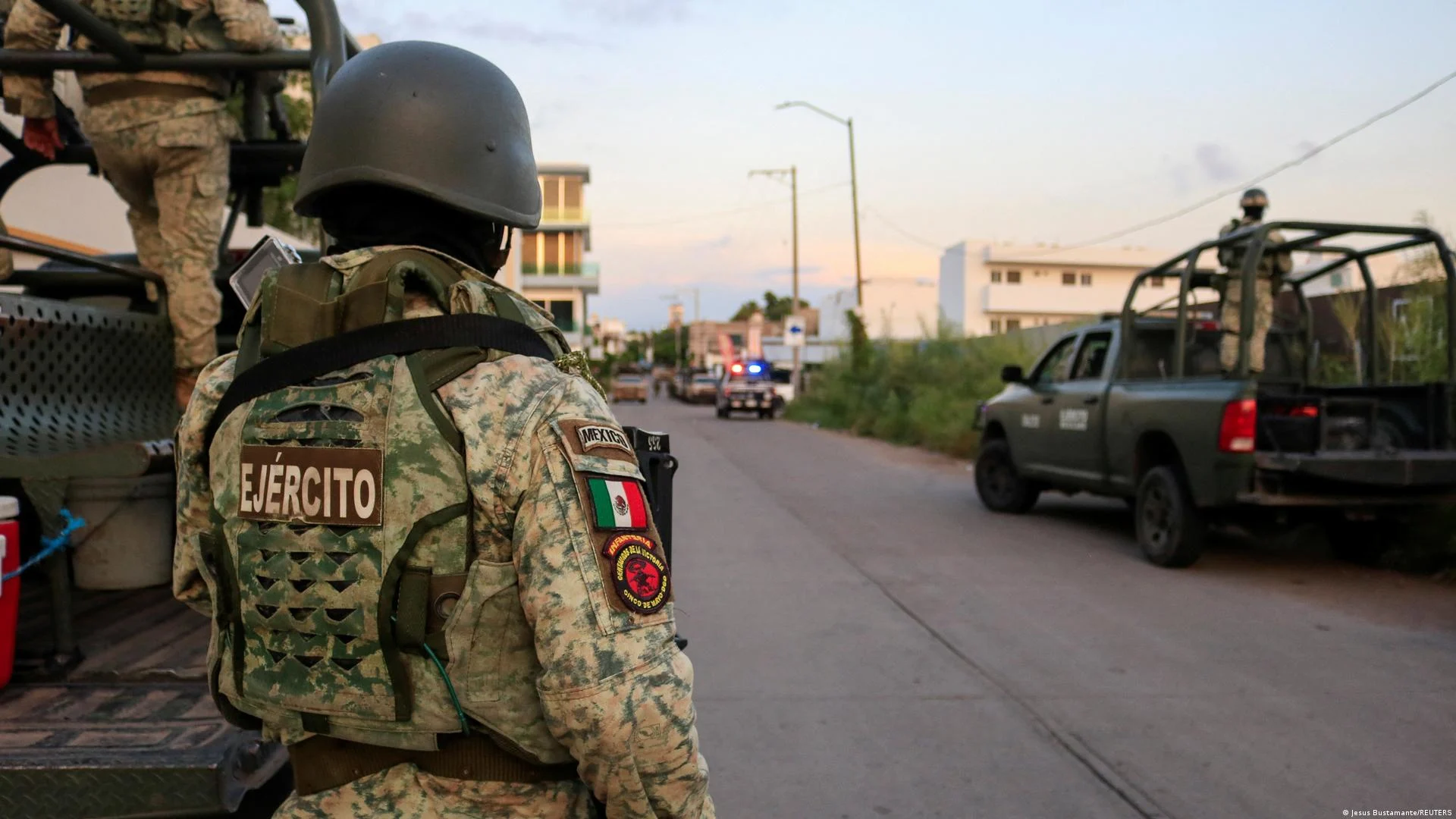
The administration of U.S. President Donald Trump on Wednesday urged Latin American countries to increase investment in defense and security to strengthen the fight against organized crime and drug trafficking networks.
The appeal was made by Elbridge Colby, the U.S. Under Secretary of Defense for Policy, in an article published by Americas Quarterly. Colby argued that governments across the region should assume greater responsibility for protecting their territories from transnational criminal organizations.
“It is essential that our neighbors in the region invest more in their own defense and security. There is no reason why any country, especially those facing significant narco-terrorist threats, should spend so little on defense,” Colby wrote.
The Pentagon official described it as “absurd” that some Latin American nations allocate less than 1% of their Gross Domestic Product (GDP) to defense, although he did not identify the countries. He contrasted that with NATO members in Europe, many of which are increasing defense expenditures to 3.5% of GDP, with an additional 1.5% devoted to security-related investments.
Colby, who participated earlier this month in the Conference of Defense Ministers of the Americas in Cusco, Peru, said there is “a historic opportunity” for the United States and its regional partners to strengthen cooperation against drug trafficking and other transnational threats.
He also defended the proposed Shield of the Americas, a military partnership promoted by the Trump administration to combat organized crime and supported by several conservative governments in the region. The initiative does not include Brazil or Mexico.
In addition, Colby said the administration’s security strategy includes an updated interpretation of the Monroe Doctrine, the long-standing U.S. foreign policy principle that historically viewed Latin America as part of Washington’s sphere of influence.
“Of course, we recognize that the Monroe Doctrine is controversial in many circles. But it is also frequently misunderstood,” he said.
According to Colby, the United States is not seeking “exploitation, subordination or dependence,” but rather a region characterized by greater prosperity, stability and security.
He also stated that Washington is prepared to use “all available resources,” including the U.S. Armed Forces, to combat drug trafficking and irregular migration. Colby highlighted ongoing counternarcotics operations in the Caribbean, despite criticism from human rights organizations that have questioned some missions over allegations of extrajudicial killings in international waters.
International
FAO and WFP Seek $42 Million to Prepare Southern Africa for Unprecedented El Niño
The Food and Agriculture Organization of the United Nations (FAO) and the World Food Programme (WFP) on Thursday appealed for $42 million to help vulnerable communities in southern Africa prepare for what is expected to be an unprecedented El Niño event.
The funding will enable humanitarian agencies to protect millions of people before worsening weather conditions severely affect agricultural production across the region.
Following a meeting with partners in Maputo, Mozambique, the two UN agencies said they still need to secure $42 million of the $54 million required to assist 2.3 million people in Madagascar, Malawi, Mozambique and Zimbabwe.
In a joint statement, FAO and WFP said the appeal marks the first time the two organizations have launched a large-scale, forward-looking call for anticipatory action, warning that insufficient funding could push the region’s most vulnerable families into a major food security crisis.
“The period before the main planting season is critical for taking action,” said José Luis Fernández, FAO Representative in Mozambique. He stressed that early intervention is both more effective and less costly than responding after crops have failed and productive assets have already been lost.
“With timely and flexible financing, we can help farmers access appropriate seeds and agricultural inputs, protect livestock and water resources, and sustain food production before reduced rainfall causes irreversible damage,” Fernández said.
Claire Conan, WFP Representative in Mozambique, emphasized that acting before disasters strike is more efficient and cost-effective than responding after communities have lost their livelihoods. She added that the agency is working closely with the Mozambican government to translate climate forecasts into preventive measures aimed at reducing the impact of droughts and floods.
The planned interventions include supporting farmers, strengthening food production systems and protecting the food security of the region’s most vulnerable households, with the goal of reducing the risk of widespread hunger.
El Niño is a recurring climate phenomenon characterized by unusually warm sea surface temperatures in the equatorial Pacific Ocean and changes in atmospheric circulation, disrupting weather patterns around the world. Its most recent episode, between 2023 and 2024, was associated with record global temperatures, severe droughts across southern Africa, Central America and northern South America, as well as destructive wildfires, torrential rainfall and widespread flooding.

Chuck Schumer Unveils Proposal to Strengthen Oversight of the U.S. Presidency

Trump Administration Urges Latin America to Increase Defense Spending Against Organized Crime

FAO and WFP Seek $42 Million to Prepare Southern Africa for Unprecedented El Niño
Tec de Monterrey honors one of its students for his contribution to nanotechnology in medicine

Defense Minister commends salvadoran soldier for Central American Cross Country victory

Extension of the state of emergency approved in southern Chile
-
 International3 days ago
U.S. and Iran Maintain Ceasefire as Trump Expresses Optimism Over New Talks
-

 International3 days ago
Police Investigate After Remains of Five Newborns Found in French Apartment
-
 International1 day ago
Five Bodies Found in Ecuador as Police Probe Suspected Gang Turf War
-
 International3 days ago
Portuguese Authorities Seize 2.6 Tons of Cocaine Worth More Than $550 Million in Drug Bust
-

 International1 day ago
Georgia Teen Sentenced to Life Without Parole for Deadly School Shooting
-

 International3 days ago
Costa Rica Seeks to Expand Extradition Law to Target Organized Crime
-
 Central America4 days ago
EU Urges Nicaragua to Hold Free and Transparent Elections Amid Proposed Electoral Reforms
-
 Central America1 day ago
Prosecutors Accuse Ex-Defense Minister of Undermining Press Freedom in Honduras
-
International12 hours ago
Chuck Schumer Unveils Proposal to Strengthen Oversight of the U.S. Presidency
-

 International3 days ago
China Accuses U.S. AI Firms of Using Chinese Models to Train Artificial Intelligence
-

 International3 days ago
Three Killed, Four Injured in Shooting Near Seattle’s Space Needle
-
 International12 hours ago
Trump Administration Urges Latin America to Increase Defense Spending Against Organized Crime
-
International12 hours ago
FAO and WFP Seek $42 Million to Prepare Southern Africa for Unprecedented El Niño