
International
North Korea seeks to break into the US presidential elections with its uranium centrifuges
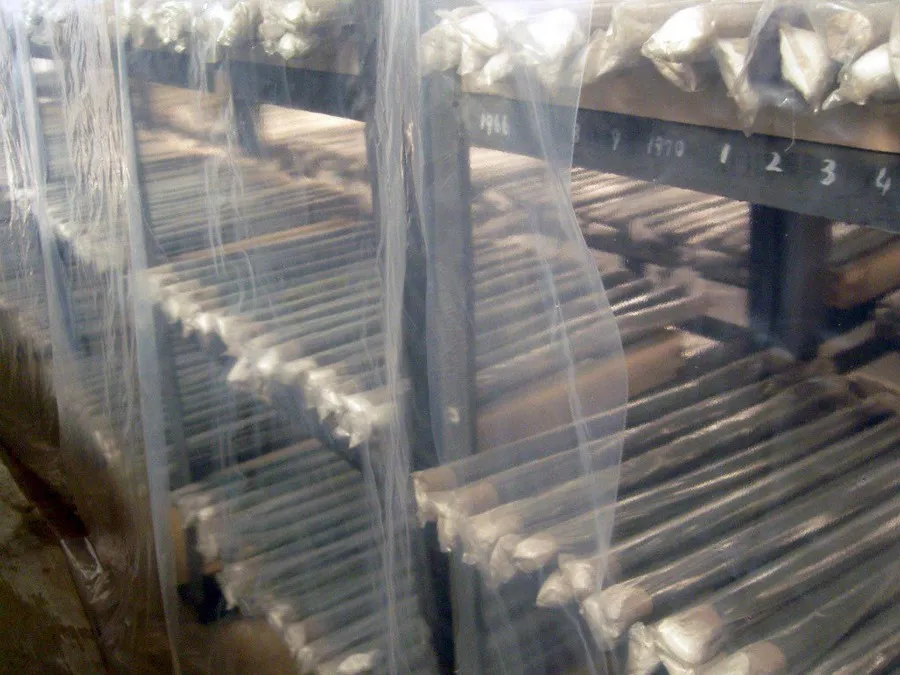
By showing for the first time its facilities to manufacture fuel for nuclear bombs this Friday, North Korea is positioned to acquire prominence in the campaign for the presidential elections in the United States while the fear increases that it will soon carry out a large-scale weapons test.
It is a forceful gesture on the part of the regime of Kim Jong-un, which these days visited a plant full of cascades of uranium centrifuges – apparently more advanced than initially estimated by the experts – and ordered to increase the number of these devices “to exponentially increase the number of nuclear weapons.”
These are some keys to try to decipher this calculated message that Pyongyang – which since 2019 has refused to resume the dialogue on disarmament – has decided to issue with just over seven weeks to go for the Americans to elect a new president.
A gloomy uranium enrichment program
Few details are known about how, where and how much uranium is capable of enriching North Korea, as well as the level of concentration of isotopes of the resulting material (the higher the concentration of uranium-235, the more fligible the fuel of the pump).
Until now, North Korea had only shown in 2010 some facilities at the Yongbyon Nuclear Research Center (about 100 kilometers north of Pyongyang) to the American scientist Siegfried Hecker, who estimated that the place housed about 2,000 gas centrifuges – a more outdated model than the one shown on Friday – to produce low-enrichment uranium.











Intelligence services and analysts assume that the regime has at least another processing center in Kangson, on the outskirts of the North Korean capital.
It is this Kangson enclosure that is believed to have been shown by the North Korean media (which do not mention the location of the plant), since they claim that Kim Jong-un visited the surface under construction for new centrifuges, something that agrees with a recent report from the International Atomic Energy Agency (IAEA) that warns that an annex is being built in this complex located southwest of Pyongyang.
The chosen moment
The vast majority of experts believe that North Korea has chosen to show its centrifuges a few weeks before the US elections to regain prominence at a time when its weapons programs did not come to light even once in this week’s debate between candidates Donald Trump and Kamala Harris, as they did not do in June between Trump and Joe Biden.
Although North Korea is not an issue that currently conditions the vote of the Americans, the message that Pyongyang has sent today is that it will be an issue that will require attention from those who inherit the presidency from Biden.
“For Trump the message is ‘after the fiasco of (the summit of) Hanoi our atomic program goes ahead. If you want to stop it, you will have to sit down and negotiate.’ And for Harris it’s a bit the same; ‘Biden’s policy has failed, you’ll see if you want to sit down and negotiate,’” Ramón Pacheco Pardo, director of the chair on politics on the Korean peninsula at the Free University of Brussels, explains to EFE.
Pacheco Pardo is one of those who believe that Pyongyang is willing to resume dialogue to lower sanctions or achieve a security agreement, but in terms different from those of 2019 in Hanoi, since today’s announcement endorses what Pyongyang has been saying in recent years: that there is no longer any possibility of him abandoning nuclear weapons.
What to expect in the coming weeks
Seoul and Washington and different experts have warned in recent weeks about the possibility of Pyongyang choosing to carry out just – before or after the presidential elections in the US – important weapons of mass destruction tests to get the attention of the new tenant of the White House.
It could be the launch of an intercontinental ballistic missile (ICBM), possibly equipped with a multiple and independent re-entry vehicle (like the one tested in June), to show once again that North Korea can theoretically reach the US. This possibility charges integers after Pyongyang showed a new and impressive 12-axle mobile erector shuttle (TEL) last week.
A nuclear test now seems a little more unlikely, not only because it is something that can always anger China and Russia (which support the lifting of sanctions on Pyongyang), but because the damage caused by the monsoon in the accesses to the remote test center of Punggye-ri (northeast of the country) and recently detected by the satellites will require important repairs in the coming weeks.










International
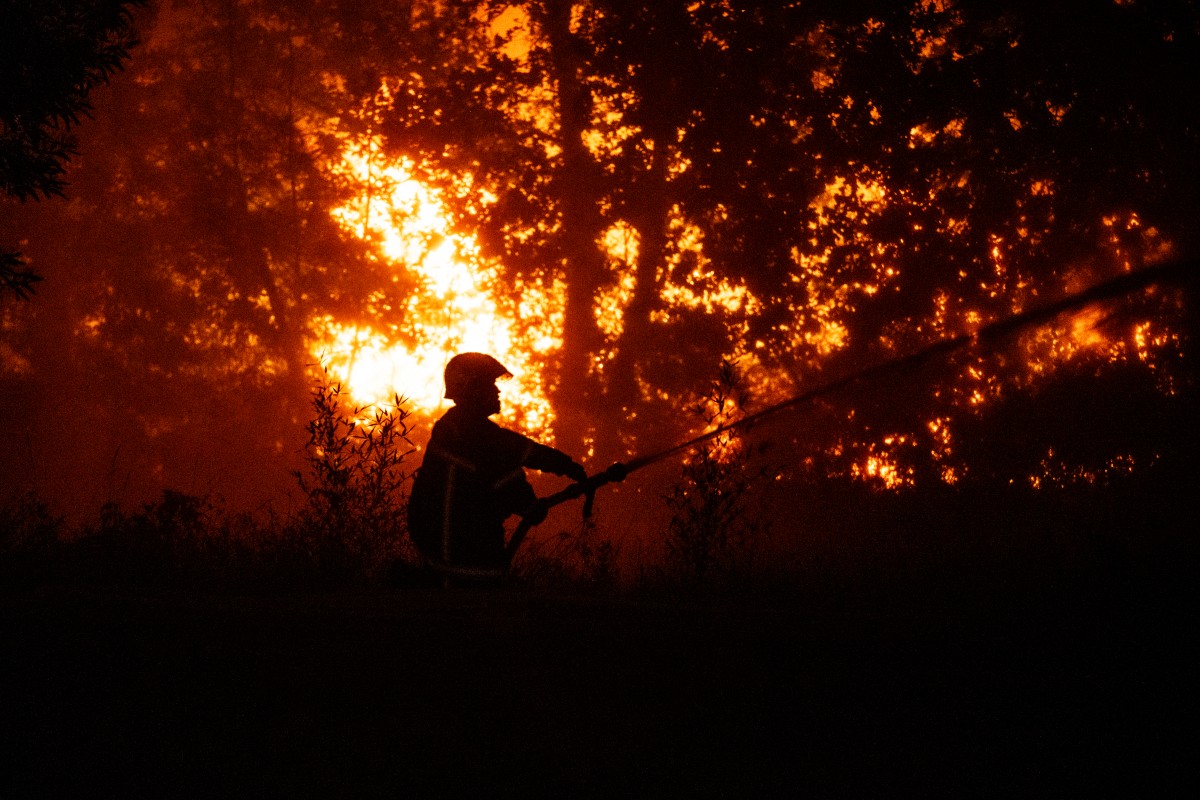
Wildfires in France Burn Nearly Three Times More Land Than in 2025, Interior Minister Says
International
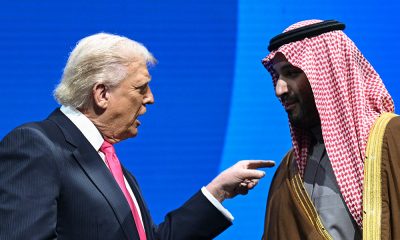
Israel Says Saudi Recognition Would Mark ‘Historic Breakthrough’ for Middle East Peace
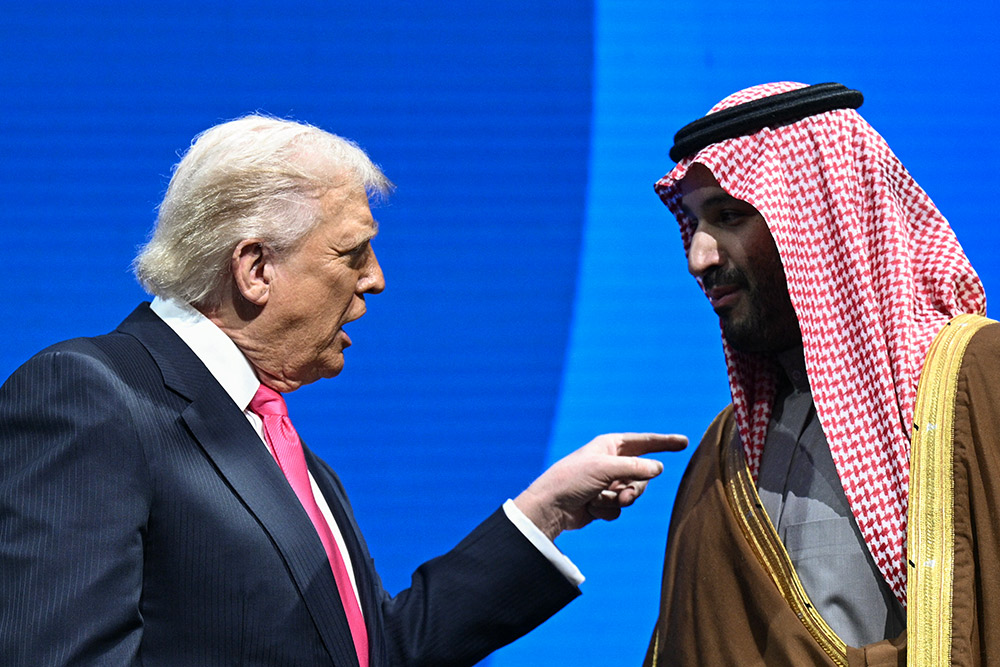
The office of Israeli Prime Minister Benjamin Netanyahu said Thursday that Saudi Arabia’s recognition of Israel would represent a “historic breakthrough” toward achieving peace in the Middle East.
The statement came after the United States and Saudi Arabia announced an agreement on Wednesday to establish a civil nuclear program in the kingdom. U.S. President Donald Trump said the initiative would be linked to Riyadh’s decision to normalize diplomatic relations with Israel.
“Saudi Arabia joining the Abraham Accords would represent a historic breakthrough toward peace in the Middle East,” Netanyahu’s office said following Trump’s announcement.
The statement added that recent developments, including joint military actions by the United States and Israel against Iran, as well as Israel’s efforts against what it described as Iran’s “terror axis,” have created new opportunities to expand regional diplomatic ties.
“The joint U.S.-Israeli military action against the genocidal regime in Tehran and Israel’s defeat of Iran’s terror axis have created the possibility of expanding the circle of peace,” the statement said.
A potential normalization agreement between Israel and Saudi Arabia would represent a major diplomatic shift in the region, as Riyadh has long been viewed as one of the key countries whose formal recognition could significantly reshape Middle Eastern relations.
International
Nicolás Maduro’s Son Calls U.S. Trial Against His Father and Cilia Flores “Unjust”
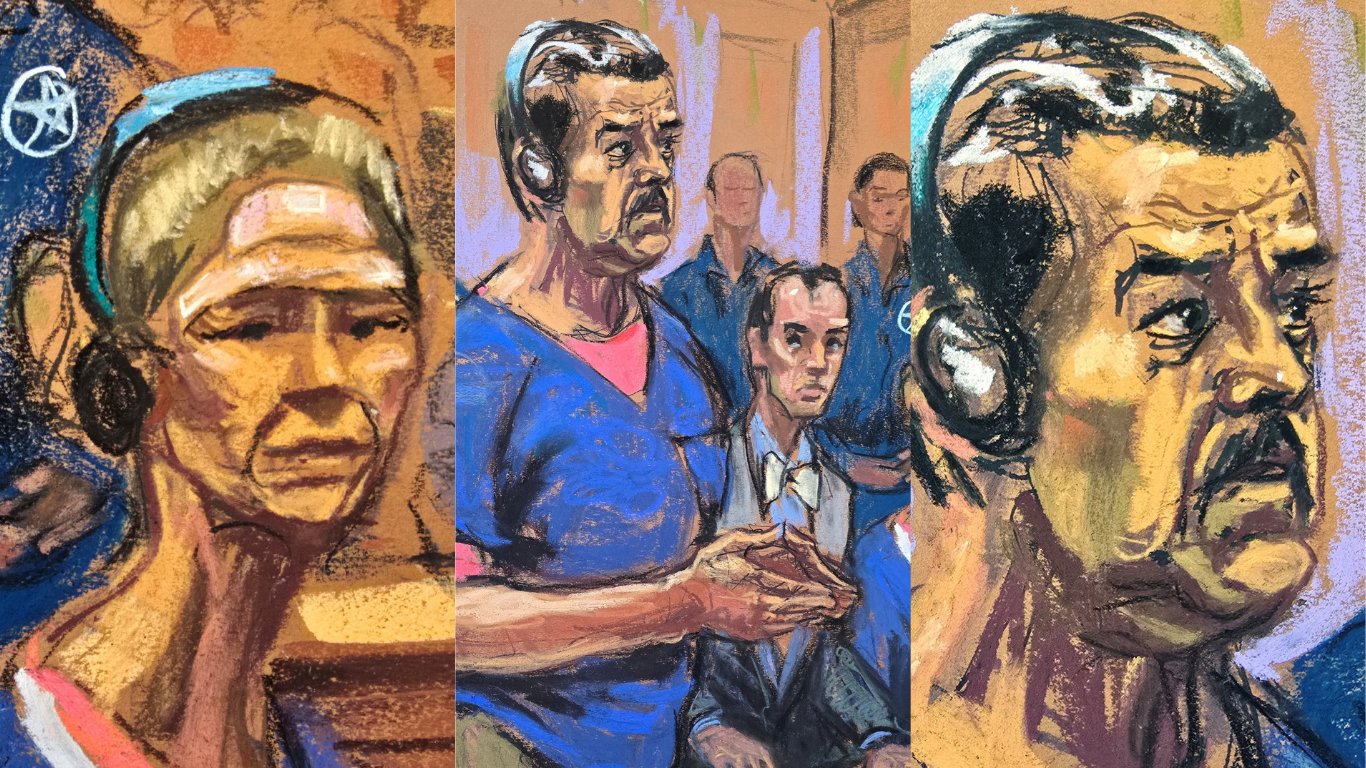
Venezuelan lawmaker Nicolás Maduro Guerra on Wednesday described as “unjust” the legal proceedings in the United States against his father, ousted Venezuelan President Nicolás Maduro, and his wife, Cilia Flores, following their capture in Caracas on January 3 by U.S. forces.
“Faced with the unjust trial taking place today, the people raised their voices with a single demand: We demand the immediate release of President Nicolás Maduro and the First Lady,” Maduro Guerra wrote on his Instagram account.
The lawmaker attended a rally in Caracas where supporters of the ruling United Socialist Party of Venezuela (PSUV)gathered to show support for the former president, who faces charges in the United States including conspiracy to commit narco-terrorism and cocaine importation. Flores is accused of crimes related to drug trafficking and weapons possession.
The event was also attended by PSUV Vice President for Mobilizations and Events Nahum Fernández and Caracas Mayor Carmen Meléndez, according to photos shared by Maduro’s son.
The third hearing in the case against Maduro and Flores concluded Wednesday at a federal court in New York after lasting only about 18 minutes. During the hearing, the judge preliminarily set June 2027 as the expected start date for the trial.
One of the main arguments from the defense will focus on immunity. Maduro’s lead attorney, Barry Pollack, who has also represented WikiLeaks founder Julian Assange, said the defense plans to request immunity for both defendants, arguing that Maduro was serving as head of state and Flores as first lady at the time of their detention.
Both Maduro and Flores pleaded not guilty during their first court appearance in New York on January 5.
Meanwhile, Venezuela’s interim president Delcy Rodríguez, who assumed power after Maduro’s capture, has not yet commented on Wednesday’s hearing in the United States.

Wildfires in France Burn Nearly Three Times More Land Than in 2025, Interior Minister Says

Israel Says Saudi Recognition Would Mark ‘Historic Breakthrough’ for Middle East Peace

Honduras Warns of Possible New Dengue Epidemic as Cases Continue to Rise
Tec de Monterrey honors one of its students for his contribution to nanotechnology in medicine

Defense Minister commends salvadoran soldier for Central American Cross Country victory

Extension of the state of emergency approved in southern Chile
-

 International4 days ago
Controversial Pesticide Law Passes in France, Sparking Ecological Concerns and Ministerial Fallout
-
 International4 days ago
U.S. Sends First Humanitarian Aid Flight to Cuba Amid Ongoing Tensions Between Both Governments
-
 Central America2 days ago
CDC Issues Level 2 Travel Alert for Costa Rica Amid Chikungunya Outbreak
-
 Sports4 days ago
MLS Awaits Blockbuster Debuts as Griezmann and Lewandowski Join the Spotlight
-
 International3 days ago
Mexico Files 20 Complaints in U.S. Over Deaths of 17 Citizens During ICE Operations
-
 International3 days ago
Nicolás Maduro’s Son Calls U.S. Trial Against His Father and Cilia Flores “Unjust”
-
 International1 day ago
Wildfires in France Burn Nearly Three Times More Land Than in 2025, Interior Minister Says
-
 International4 days ago
India Approves New Dengue Vaccine as Global Cases Continue to Rise
-
 Central America2 days ago
Honduras Warns of Possible New Dengue Epidemic as Cases Continue to Rise
-
 International1 day ago
Israel Says Saudi Recognition Would Mark ‘Historic Breakthrough’ for Middle East Peace