
International
The drone and missile attack launched by Russia has affected 15 of the 24 Ukrainian regions
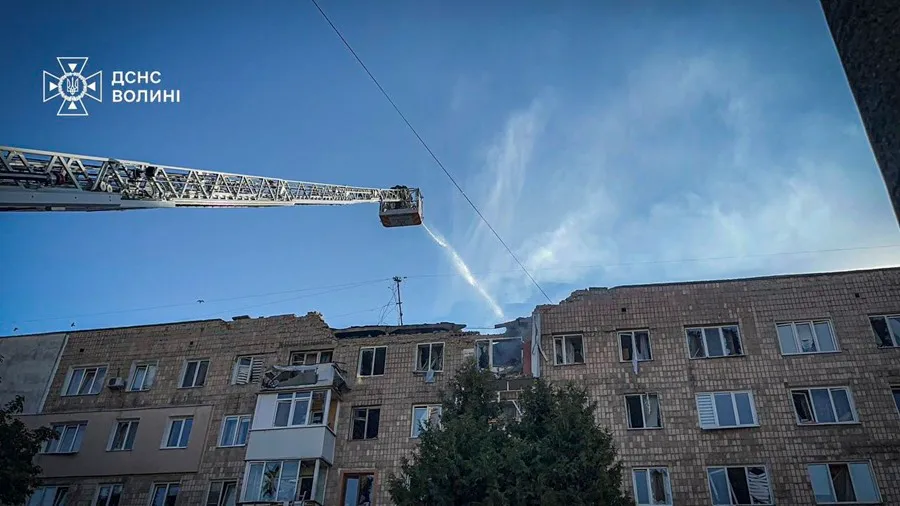
The massive attack with drones and missiles launched by Russia during the early hours of Monday morning has affected 15 of the 24 Ukrainian regions, as reported by the Prime Minister of Ukraine, Denís Shmigal, on his Telegram account.
Shmigal explained that Russian forces have used drones, cruise missiles and Kinzhal hypersonic missiles in the attack. These last missiles are the most difficult to intercept in the entire Russian arsenal. Ukraine is vulnerable to the Kinzhal (which means ‘dagger’ in Russian) in most of its territory.
For his part, the Foreign Minister of Ukraine, Dmitro Kuleba, again asked Kiev’s Western partners to allow him to hit with his long-range weaponry military targets throughout the territory of the Russian Federation to avoid massive attacks with drones and missiles such as the one launched on Monday.
And the Russian Ministry of Defense confirmed that it had launched this attack against targets of the “energy infrastructure” of Ukraine.
“This morning, the Armed Forces of the Russian Federation launched a massive attack from the air and sea with high-precision and long-range weapons, and unmanned aerial vehicles against critical energy infrastructure facilities that guarantee the operation of the military-industrial complex of Ukraine,” says the military side.











In addition, according to the Russian command, “gas pumping stations in the Lviv, Ivano-Frankivsk and Kharkov regions, which guaranteed the operation of the Ukrainian gas transport system” and warehouses with aerial site pumps and projectiles “delivered by the West, at airfields in the Kiev and Dnipropetrovsk regions” were attacked.
Prime Minister Shmigal also recalled that there have been deaths and injuries in the attack. The authorities of the regions of Volín (northwest), Dnipropetrovsk (center), Zaporiyia (southeast) and Zhitómir (center-west) had previously reported the death of a total of four people.
Shmigal has also pointed out that “the target of the Russian terrorists was again the energy infrastructure.” “Unfortunately, there are damages in several regions,” said the head of government, who also reported power cuts in the country as a result of the impacts.
Ukrainian authorities have reported damage to electrical infrastructure in the regions of Lviv and (west) and Dnipropetrovsk. The massive Russian attack has also caused power and water cuts in some areas of Kiev, according to the mayor of the capital, Vitali Klichkó.
The Minister of Energy, Herman Galushchenko, has described the situation of the electricity system as “difficult” after the attack, and companies in the sector have announced emergency cuts due to the damage suffered by the system.
Today’s is the ninth Russian massive attack on the Ukrainian electricity system since last March 22. Ukraine has lost much of its generation capacity in these attacks, which forced the authorities to ration the supply with scheduled blackouts of up to half a day during the first part of the summer.
Meanwhile, the president of Ukraine, Volodymyr Zelensky, announced in his speech to the nation last night that the Ukrainian Army has taken control of two other localities in the Russian region of Kursk, where Kiev forces occupy dozens of towns after crossing the border in early August.
“I just spoke to the commander-in-chief (Oleksandr) Sirski. We are advancing in the Kursk region, from one to two kilometers. We have taken control of two more locations. There are operations underway in another town,” Zelenski said in his speech.
The head of the Ukrainian state also explained that his troops continue to take prisoners among Russian soldiers in the Kursk region. “We are filling in the ‘exchange fund,’” Zelenski said, referring to the exchanges of prisoners of war that are carried out regularly between both sides.
In addition, one journalist killed and three more injured left a Russian attack on the city of Kramatorsk, near the Donetsk front.
The deceased communicator was identified as Ryan Evans, a member of the Reuters team that covered the war in Ukraine, the British agency confirmed.
The attack also reached two other Reuters journalists of Ukrainian and American nationality, who were in a hotel in the east of Ukraine.
“Ryan Evans, a member of the Reuters team that covered the war in Ukraine, died and two Reuters journalists were injured in an attack on a hotel in the city of Kramatorsk,” the international news agency confirmed on Sunday.
According to other versions, a fourth Polish informant was injured when her vehicle was hit.
The Kremlin assured that Russian forces attack only military infrastructure or facilities linked to the Ukrainian military sector when commenting on the death of a security adviser from the Reuters agency in Kramatorsk.
Filashkin, the governor of Donetsk, recalled that throughout Saturday’s day seven civilians died in the region – which records the most intense fighting on the front at the moment – as a result of the Russian attacks, five of them in Kostiantinivka, while 15 people were injured.










International
Portuguese Authorities Seize 2.6 Tons of Cocaine Worth More Than $550 Million in Drug Bust
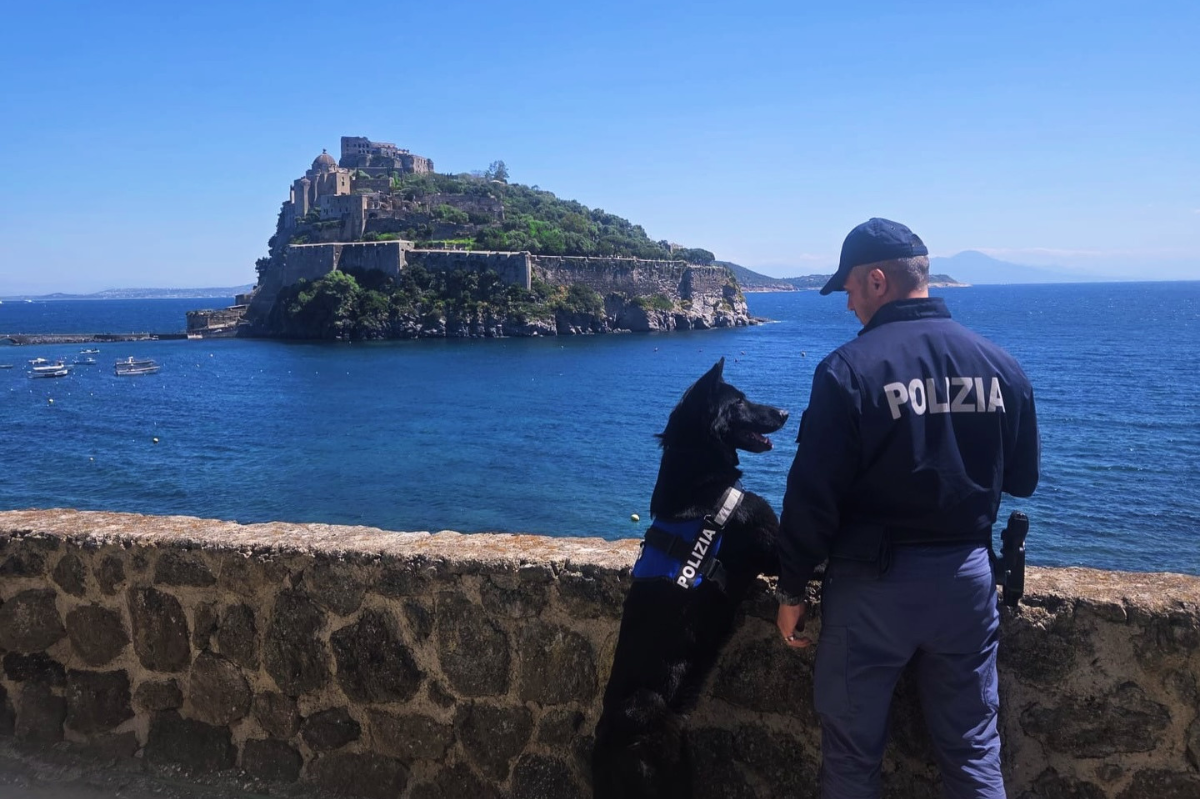
Italian financial police reported Monday that Portuguese authorities intercepted a speedboat carrying more than 2.6 tons of cocaine, with an estimated street value exceeding $550 million.
Four people — two Spanish nationals, one Albanian citizen, and a man from Gibraltar — were arrested in connection with the operation, according to Italian authorities.
The vessel was intercepted off the coast of Lisbon by Portugal’s maritime police following an investigation led by Italian authorities.
Italian financial police estimated that the seized shipment had a street value of approximately 500 million euros ($570 million), making it one of the largest drug seizures reported in the region in recent years.
Portuguese authorities said the interception took place on Thursday, about 90 kilometers (50 nautical miles) southwest of Cape Espichel, during an operation targeting international drug trafficking routes.
International
U.S. and Iran Maintain Ceasefire as Trump Expresses Optimism Over New Talks
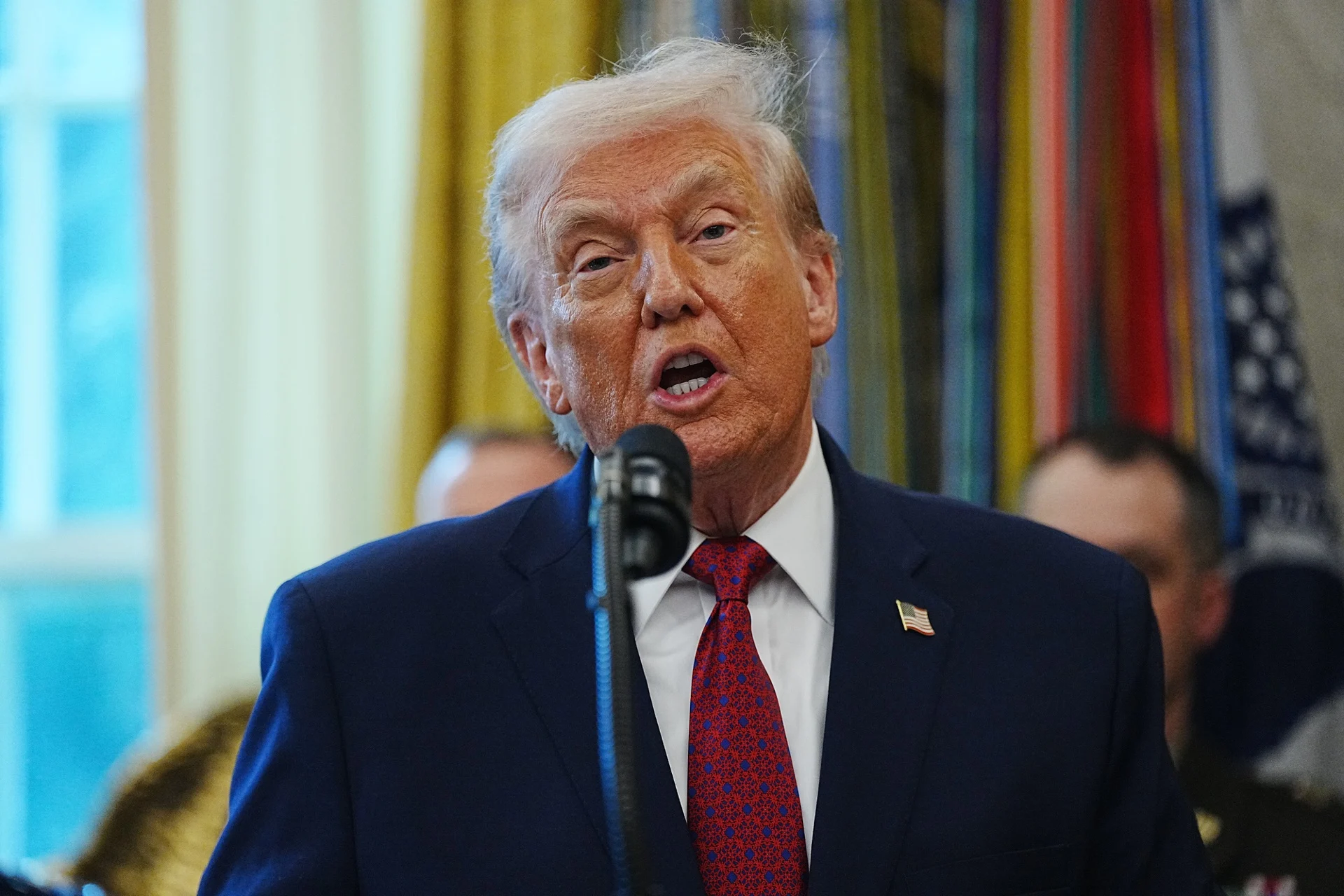
U.S. President Donald Trump said Monday that there are “good chances” of reaching an agreement with Iran, as both sides maintained a ceasefire for the third consecutive day following weeks of escalating hostilities.
Trump expressed optimism about the possibility of resuming diplomatic negotiations aimed at ending the conflict, which began in late February and has raised international concerns over its impact on global markets and energy supplies.
The fighting has remained suspended since Saturday, after the United States resumed airstrikes against Iran amid a dispute over control of the Strait of Hormuz, a key route for global oil shipments. The renewed military action had previously caused the collapse of an earlier ceasefire agreement.
Asked about the prospects for negotiations aboard Air Force One, Trump said: “I have a lot of patience… We’ll see what happens. I think there are good chances that something could happen.”
The U.S. president also highlighted Washington’s military capabilities, saying: “We have a lot of ammunition,” while adding that he would like to have more resources due to U.S. support for Ukraine.
U.S. Ambassador to the United Nations Mike Waltz said Trump was allowing diplomatic efforts more time, explaining that the president was “giving some space to the talks” while maintaining that Washington remains prepared to take action if necessary.
Meanwhile, tensions continue in other areas of the Middle East. Saudi Arabia reported that it intercepted drones launched from Iraq by groups allied with Tehran and urged the Iraqi government to take measures to prevent further attacks.
International
Police Investigate After Remains of Five Newborns Found in French Apartment

French authorities have opened a murder investigation after the discovery of human remains believed to belong to five newborn babies inside an apartment in the historic center of a city, the local prosecutor’s office reported Monday night.
According to prosecutors, a 32-year-old woman had given birth at home on Sunday to a healthy baby before being taken to a hospital for medical care.
The discovery was made after the woman’s 32-year-old partner began searching the residence after reportedly learning, once again and at a late stage, that she had been pregnant.
During the search, the man found what appeared to be human remains and informed the hospital, which then alerted prosecutors.
A forensic doctor determined that the remains likely belonged to five newborn infants. Authorities have not yet established the circumstances or motive behind the case.
Investigators have not been able to interview the mother, who remains hospitalized following the delivery.
Prosecutors also confirmed that the couple has two other children, aged eight and nine years old. The investigation remains ongoing as authorities work to clarify the events surrounding the discovery.

Portuguese Authorities Seize 2.6 Tons of Cocaine Worth More Than $550 Million in Drug Bust

U.S. and Iran Maintain Ceasefire as Trump Expresses Optimism Over New Talks

Police Investigate After Remains of Five Newborns Found in French Apartment
Tec de Monterrey honors one of its students for his contribution to nanotechnology in medicine

Defense Minister commends salvadoran soldier for Central American Cross Country victory

Extension of the state of emergency approved in southern Chile
-
 International4 days ago
Wildfires in France Burn Nearly Three Times More Land Than in 2025, Interior Minister Says
-
 International15 hours ago
U.S. and Iran Maintain Ceasefire as Trump Expresses Optimism Over New Talks
-
 International15 hours ago
Police Investigate After Remains of Five Newborns Found in French Apartment
-

 International4 days ago
Israel Says Saudi Recognition Would Mark ‘Historic Breakthrough’ for Middle East Peace
-
 International15 hours ago
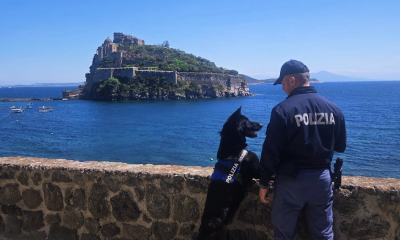
Portuguese Authorities Seize 2.6 Tons of Cocaine Worth More Than $550 Million in Drug Bust
-

 International1 day ago
Costa Rica Seeks to Expand Extradition Law to Target Organized Crime
-

 International1 day ago
China Accuses U.S. AI Firms of Using Chinese Models to Train Artificial Intelligence
-

 Central America2 days ago
EU Urges Nicaragua to Hold Free and Transparent Elections Amid Proposed Electoral Reforms
-

 International1 day ago
Three Killed, Four Injured in Shooting Near Seattle’s Space Needle