
International
Noboa assures that Ecuador has a new face with more security after six months in office
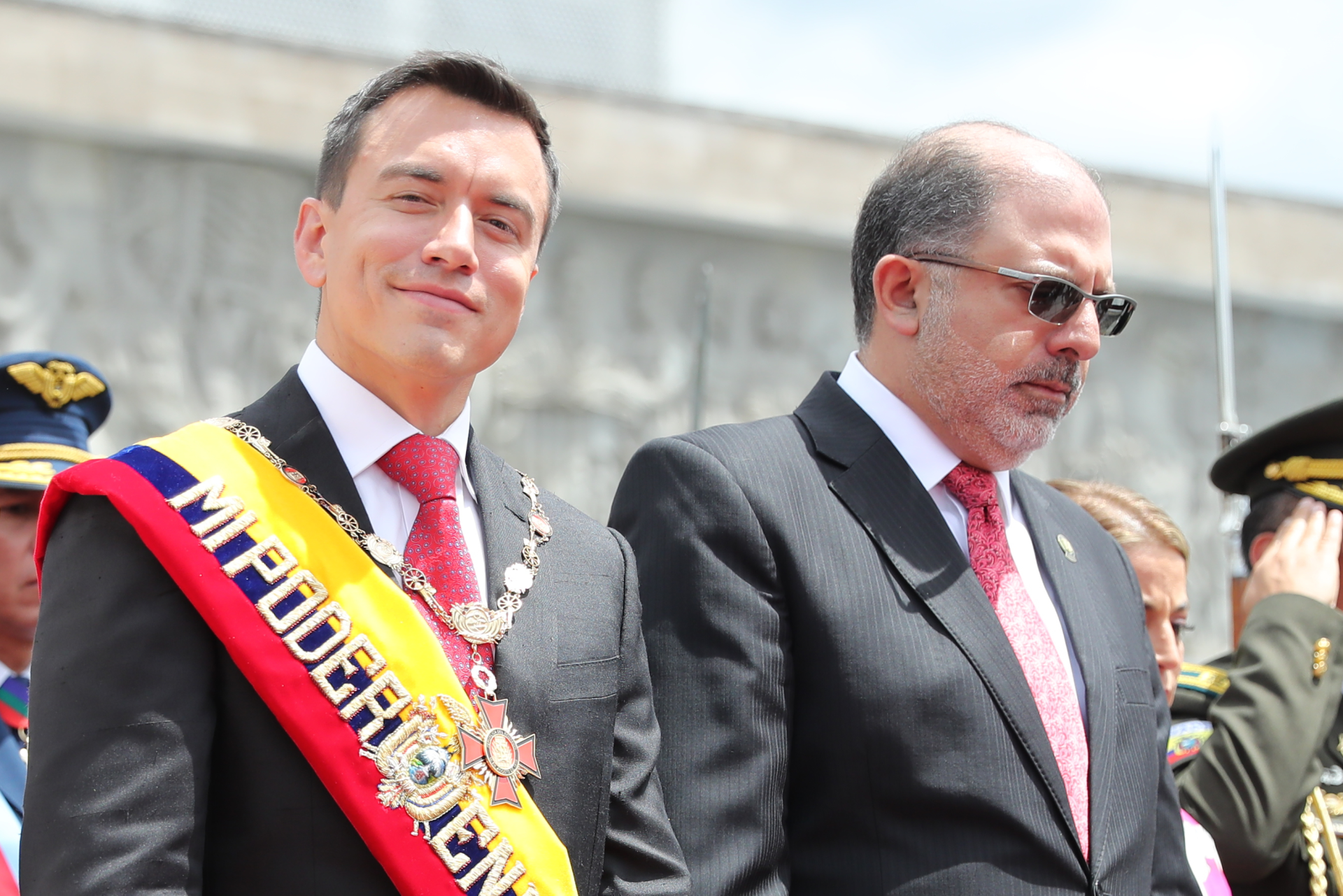
The president of Ecuador, Daniel Noboa, assured this Friday in his first report to the nation that, in the six months of his mandate, he has achieved a country with a new face thanks to efforts to combat insecurity and for the recovery of institutionality.
In his message to the National Assembly (Parliament), a day after having served six months as head of state, Noboa asserted that he received a country “with fear and without hope,” so he had to take “hard” decisions that other administrations did not dare, in search of a safe country, open to investments, job creation and to “guaranteee the future of all.”
The president said that last January 9 will be a date that the country will not forget, having revealed the scope of “the horror of terrorism”, with a series of attacks and violent actions of organized crime such as the taking of the TC Televisión channel by a group of armed men and simultaneous riots in various prisons with about 200 hostages.
That day, on which he again denounced an attempted coup d’état against him, Noboa declared the “internal armed conflict” against 22 criminal gangs linked to drug trafficking, whom he called terrorists.
The actions of the Government, he said, seek to “start building a country where tranquility and progress are the norm and not the exception.”











He highlighted the commitment and sacrifice of the security forces to fight the mafias that “have accomplices and allies, at all levels of the country: public institutions, public companies, local governments, in our neighborhoods, they are everywhere.”
Despite the changes he reported about, Noboa said that the fight for “the ‘New Ecuador’ has only begun,” he pointed out that social transformation and security are also achieved “with employment, education, with services and empathy” with social actions that reveal “the face of a new Ecuador that grows.”
In that line, he also mentioned the efforts in the energy field of his Government, which in April had to face blackouts in the face of a serious electricity crisis, due to the drought of one of the main hydroelectric complexes in the country.
“We are working very hard to solve the energy crisis, in such a way that Ecuadorians, in the future, do not have to go through more energy rationing. In other words, we are cleaning up what those of the past mudded,” he said.
In the economic area, Noboa mentioned the existence of 105,000 young employment places, the ratification of two trade agreements (with China and Costa Rica) and the reduction of 1,000 points in the risk premium.
Noboa claimed to have recovered the country’s institutionality by asserting that “the new Ecuador does not deal with drug trafficking, drug policy, terrorists or any of its historical costumes.”
“The new Ecuador also does not give in to external pressures or even from citizens who call themselves Ecuadorians and even want their country to be sentenced,” he said, without referring to any specific person, although the day before he sent on social networks “to cry to tears” to former President Rafael Correa for his statements regarding the crisis with Mexico.
Noboa did not speak in his speech about the assault on the Mexican Embassy in Quito in April, to capture Jorge Glas, former vice president of Rafael Correa, which caused the breakdown of relations with the Mexican Government, as well as the almost unanimous condemnation of the international community.
After that assault, Correa considered that the country should receive pressure from the international community at the political and legal level as a precedent so that a similar situation does not happen again.
Noboa committed himself to his compatriots to “not go back” and “never stay in the problem or in the comfort of the excuse,” but to move forward to “find and travel clean roads that allow the problems of Ecuadorians to be solved.”
And he explained that he follows the lessons that formed his generation: “to be strong so that no one defeats you, to be noble so that no one humiliates you, to be humble so that no one offends you and to continue to be you so that no one forgets you.”
“In just six months we are achieving what other governments did not do in two, nor four, or ten years,” he said.











International
U.S. to Limit Visa Duration for Foreign Students and Journalists
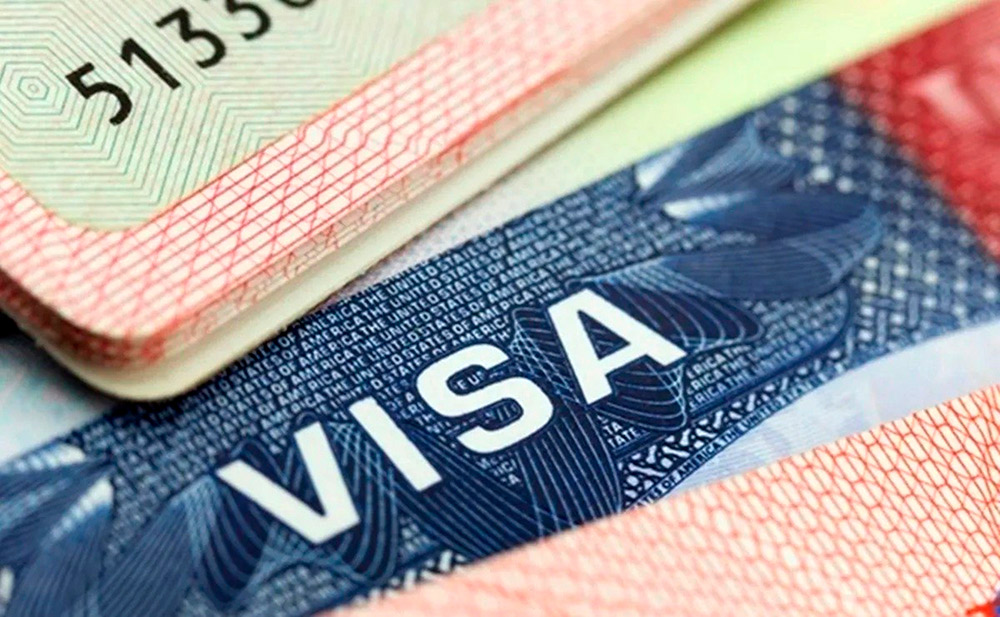
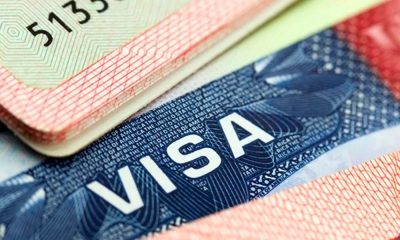
The United States has announced new limits on the legal length of stay for foreign students and journalists, marking the latest tightening of immigration policies under President Donald Trump.
The changes, outlined in an administrative rule published on Thursday, are expected to take effect in September, unless Congress blocks the measure.
Under the new policy, holders of student visas will be allowed to remain in the United States for no more than four years.
Foreign journalists will be limited to 240-day stays—approximately eight months—with the possibility of applying for extensions of the same duration.
The policy imposes even stricter rules on Chinese journalists, whose visas will be capped at 90 days.
More than 100 international news organizations and press freedom groups, including Agence France-Presse (AFP), criticized the measure in an open letter, arguing that it would reduce both the quantity and quality of international coverage of events in the United States.
The Republican Party, led by President Trump, currently holds a majority in Congress and has pledged to curb both illegal immigration and certain forms of legal immigration.
Previously, the United States generally issued student visas for the full duration of an academic program, while foreign journalists could receive visas valid for up to five years.
Central America
Nicaragua Cuts Diplomatic Ties With Italy Over Red Brigades Dispute
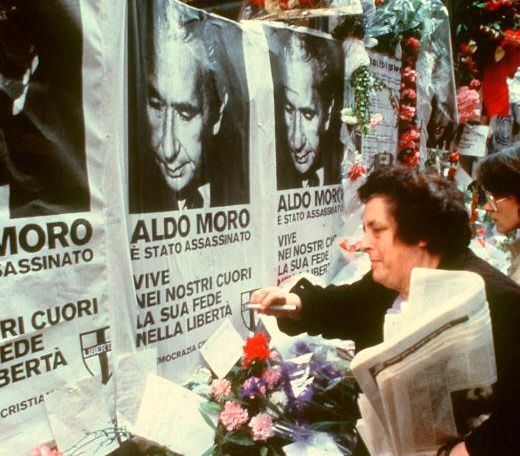
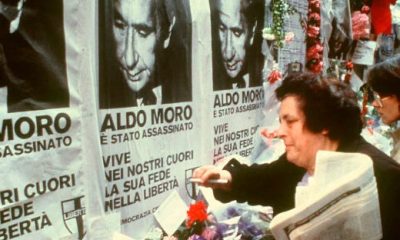
The Nicaraguan government announced on Thursday that it is severing diplomatic relations with Italy following criticism from the Italian government over Nicaragua’s long-standing decision to shelter Alessio Casimirri, a former member of the Red Brigades convicted in Italy for the 1978 kidnapping and murder of former Prime Minister Aldo Moro.
Italian Foreign Minister Antonio Tajani criticized the administration of co-presidents Daniel Ortega and Rosario Murillo on Wednesday for continuing to provide refuge to Casimirri, who was sentenced in Italy to six life terms for his role in Moro’s abduction and killing.
In a statement issued Thursday, Nicaragua’s Foreign Ministry said it was ending all diplomatic relations with Italy, describing Tajani’s remarks as “unjustified, aggressive, and irresponsible.”
Tajani made the comments during a gathering of conservative leaders from Europe and Latin America held in Madrid.
“We have absolutely nothing in common with the positions of extremist governments such as Nicaragua, a country that continues to harbor dangerous Red Brigades terrorists like Alessio Casimirri,” Tajani said, according to Italian media.
The diplomatic break marks a new escalation in tensions between the two countries over the decades-old case involving Casimirri, who has lived in Nicaragua for many years despite repeated calls from Italy for his extradition.
International
U.S. Strikes Hit Areas Near Strait of Hormuz as Tensions With Iran Escalate
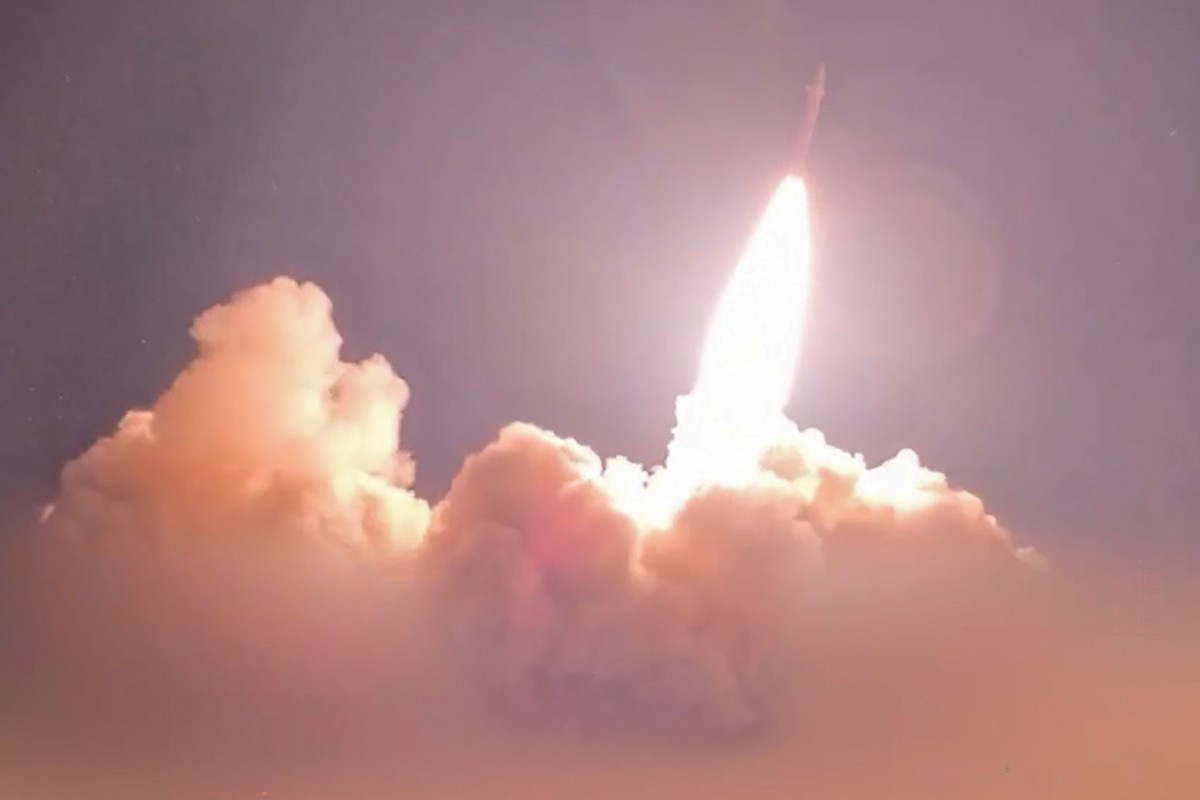
Several U.S. strikes targeted areas near the Strait of Hormuz on Thursday, according to Iranian state media citing local authorities, as hostilities between the United States and Iran intensified.
Officials in Iran’s Hormozgan Province said the island of Qeshm was struck multiple times by what they described as U.S. missiles during the evening. The reports were carried by the Iranian news agencies Fars and Tasnim.
Iranian state television also reported that the Bandar Abbas region, located on the Iranian coast overlooking the Strait of Hormuz, was the target of what authorities described as an “enemy U.S. air attack.”
According to local officials quoted by state television, no casualties have been reported following the strikes.
The reported attacks come amid renewed military tensions between Washington and Tehran, although U.S. authorities had not immediately commented on the reported operations.


U.S. to Limit Visa Duration for Foreign Students and Journalists

Nicaragua Cuts Diplomatic Ties With Italy Over Red Brigades Dispute

U.S. Strikes Hit Areas Near Strait of Hormuz as Tensions With Iran Escalate
Tec de Monterrey honors one of its students for his contribution to nanotechnology in medicine

Defense Minister commends salvadoran soldier for Central American Cross Country victory

Extension of the state of emergency approved in southern Chile
-
 International3 days ago
ICE reverses course and moves forward with New Jersey migrant detention facility project
-
 International13 hours ago
U.S. Strikes Hit Areas Near Strait of Hormuz as Tensions With Iran Escalate
-
 International4 days ago
Judge rules Trump’s IRS lawsuit was a “bad faith” attempt to manipulate the judicial process
-
 International3 days ago
Marco Rubio launches U.S. campaign to “dismantle” the International Criminal Court
-
 International3 days ago
France Holds Largest Bastille Day Military Parade as Europe Highlights Strategic Defense
-
 International3 days ago
President Noboa Declares New Security Strategy as Ecuador Faces Record Violence Levels
-
 International4 days ago
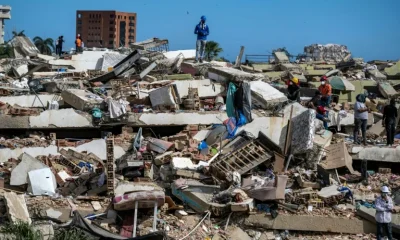
Venezuela Earthquake Death Toll Rises to 4,490 as Rescue Efforts Continue
-
 International3 days ago
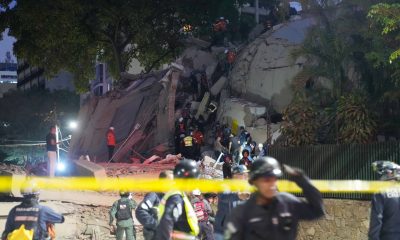
Foreign Medical Teams Race to Prevent Health Crisis in Venezuela Earthquake Camps
-

 International2 days ago
Latin Music Stars Unite in Miami to Raise Aid for Victims of Venezuela’s Devastating Earthquake
-
 International2 days ago
Trump Administration Seeks Global Action Against “Resurgent” Left-Wing Terrorism
-
 International13 hours ago
U.S. to Limit Visa Duration for Foreign Students and Journalists
-
 International13 hours ago
El Salvador Sends Eighth Humanitarian Flight to Earthquake-Hit Venezuela
-
 Central America13 hours ago
Nicaragua Cuts Diplomatic Ties With Italy Over Red Brigades Dispute