
International
Severe or moderate food insecurity is low but affects 26% of households in Colombia
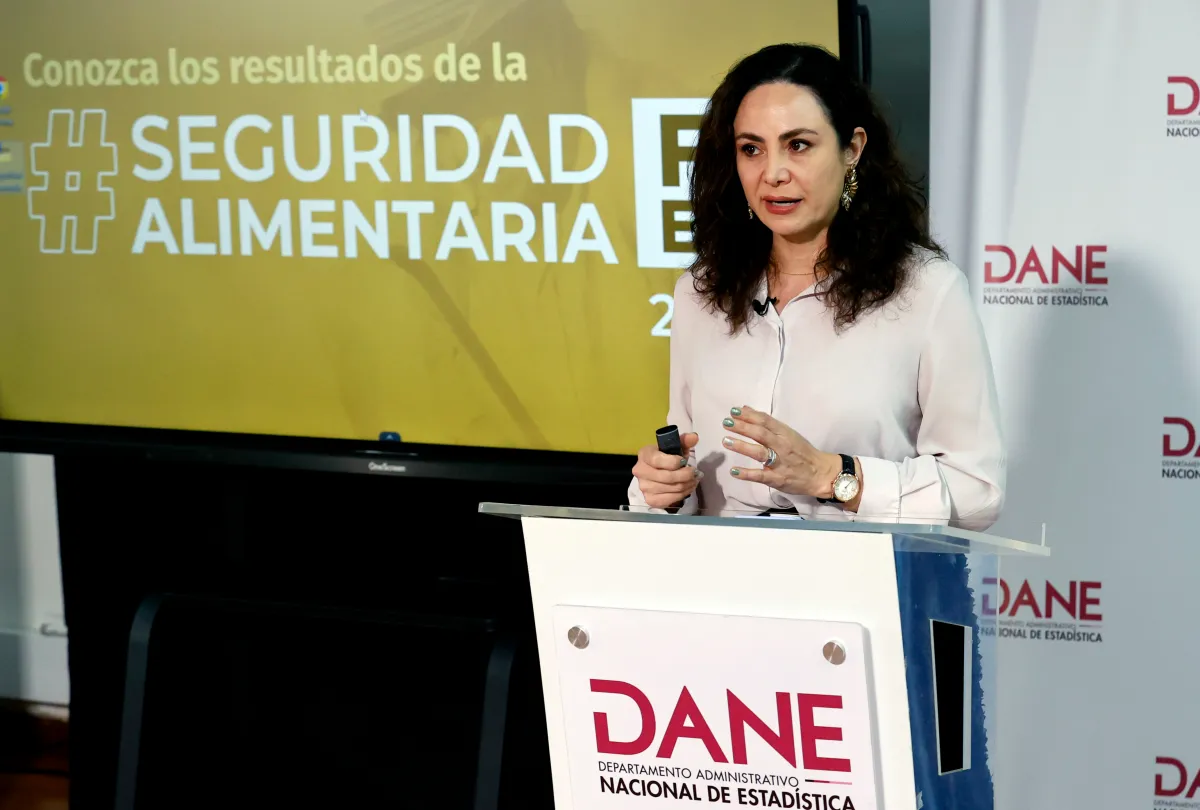
Serious or moderate food insecurity in Colombia decreased in 2023 compared to 2022, but continues to affect more than a quarter of the country’s households, while serious food insecurity has hardly changed and continues to affect 4.8% of households, according to data published this Friday by the Colombian Government and the FAO.
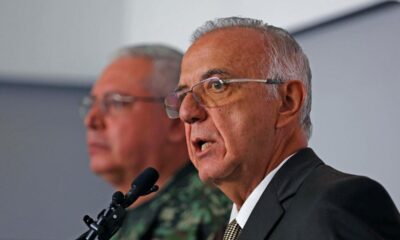
The director of the National Administrative Department of Statistics (DANE), Piedad Urdinola, revealed at a press conference that severe or moderate food insecurity “fell from 28.1% to 26.1%” in 2023, affecting more than 14 million people, while regretting that in severe food insecurity the “variations are very slight,” since it has barely gone from 4.9% of households to 4.8%.
Where severe or moderate food insecurity decreased the most was in the municipal capitals of Colombia (from 26.8% to 24.7%), while in dispersed populated and rural centers the decrease was more moderate (from 32.5% to 31.2%).
In addition, the results show that in the departments with the worst records of hunger or poverty, La Guajira and Chocó, food insecurity has had great decreases, even reaching a reduction of 24.3 percentage points in the Chocó jungle, where severe or moderate food insecurity went from affecting 43.2% of households to 18.9%.
“The report does not present a very encouraging picture for the goal of eradicating hunger by 2030,” admitted the representative of the Food and Agriculture Organization of the United Nations (FAO) in Colombia, Agustín Zimmermann, although he admitted that there is “political will” and means to reverse the situation.











“Colombia undoubtedly has all the natural resources, the productive capacity, the institutionality, and the human resources to advance this goal,” said the Argentine who emphasized that “the vision of a Colombia without hunger and without malnutrition is within reach.”
The data come from the Food Insecurity Experience Scale (FIES) developed by the FAO, published this Friday for the second year in Colombia, which is the largest in Latin America, carried out in more than 86,000 Colombian households.
The data on this scale show results similar to those presented by the World Food Program (WFP) in February that revealed that food insecurity was reduced in 2023 from 30% to 25%, with 13 million people still in moderate or severe food insecurity.
The data, which were included in the National Quality of Life Survey (ECV) of the DANE, show that food insecurity is greater where life situations are most vulnerable, such as when it comes to single-parent households, made up of migrants, where there is no work or with many family members or young children.
Thus, in 2023, severe or severe food insecurity affected 40.7% of households led by a black, Afro, raizal or palenquera person, and 46.3% of indigenous people.
The situation in households led by a Venezuelan migrant is also particularly delicate, since “in households of international migrants in Venezuela, that prevalence goes to 41.6% so we see a very important gap that is replicated in regions,” according to Urdinola, and that contrasts with the 25.4% prevalence in households without migrants.
On the other hand, in households with more than five members, severe or moderate food insecurity reached 37.9% in 2023, while in single parents, food insecurity stood at 31.4%.
Food insecurity affected 32.8% of households with at least one child under 5 years of age, although “we are seeing an improvement from one year to the next,” said the director of DANE, pointing out that in 2022 it was 36.5%.










































































International
Portuguese Authorities Seize 2.6 Tons of Cocaine Worth More Than $550 Million in Drug Bust

Italian financial police reported Monday that Portuguese authorities intercepted a speedboat carrying more than 2.6 tons of cocaine, with an estimated street value exceeding $550 million.
Four people — two Spanish nationals, one Albanian citizen, and a man from Gibraltar — were arrested in connection with the operation, according to Italian authorities.
The vessel was intercepted off the coast of Lisbon by Portugal’s maritime police following an investigation led by Italian authorities.
Italian financial police estimated that the seized shipment had a street value of approximately 500 million euros ($570 million), making it one of the largest drug seizures reported in the region in recent years.
Portuguese authorities said the interception took place on Thursday, about 90 kilometers (50 nautical miles) southwest of Cape Espichel, during an operation targeting international drug trafficking routes.
International
U.S. and Iran Maintain Ceasefire as Trump Expresses Optimism Over New Talks

U.S. President Donald Trump said Monday that there are “good chances” of reaching an agreement with Iran, as both sides maintained a ceasefire for the third consecutive day following weeks of escalating hostilities.
Trump expressed optimism about the possibility of resuming diplomatic negotiations aimed at ending the conflict, which began in late February and has raised international concerns over its impact on global markets and energy supplies.
The fighting has remained suspended since Saturday, after the United States resumed airstrikes against Iran amid a dispute over control of the Strait of Hormuz, a key route for global oil shipments. The renewed military action had previously caused the collapse of an earlier ceasefire agreement.
Asked about the prospects for negotiations aboard Air Force One, Trump said: “I have a lot of patience… We’ll see what happens. I think there are good chances that something could happen.”
The U.S. president also highlighted Washington’s military capabilities, saying: “We have a lot of ammunition,” while adding that he would like to have more resources due to U.S. support for Ukraine.
U.S. Ambassador to the United Nations Mike Waltz said Trump was allowing diplomatic efforts more time, explaining that the president was “giving some space to the talks” while maintaining that Washington remains prepared to take action if necessary.
Meanwhile, tensions continue in other areas of the Middle East. Saudi Arabia reported that it intercepted drones launched from Iraq by groups allied with Tehran and urged the Iraqi government to take measures to prevent further attacks.
International
Police Investigate After Remains of Five Newborns Found in French Apartment

French authorities have opened a murder investigation after the discovery of human remains believed to belong to five newborn babies inside an apartment in the historic center of a city, the local prosecutor’s office reported Monday night.
According to prosecutors, a 32-year-old woman had given birth at home on Sunday to a healthy baby before being taken to a hospital for medical care.
The discovery was made after the woman’s 32-year-old partner began searching the residence after reportedly learning, once again and at a late stage, that she had been pregnant.
During the search, the man found what appeared to be human remains and informed the hospital, which then alerted prosecutors.
A forensic doctor determined that the remains likely belonged to five newborn infants. Authorities have not yet established the circumstances or motive behind the case.
Investigators have not been able to interview the mother, who remains hospitalized following the delivery.
Prosecutors also confirmed that the couple has two other children, aged eight and nine years old. The investigation remains ongoing as authorities work to clarify the events surrounding the discovery.


Portuguese Authorities Seize 2.6 Tons of Cocaine Worth More Than $550 Million in Drug Bust

U.S. and Iran Maintain Ceasefire as Trump Expresses Optimism Over New Talks

Police Investigate After Remains of Five Newborns Found in French Apartment
Tec de Monterrey honors one of its students for his contribution to nanotechnology in medicine

Defense Minister commends salvadoran soldier for Central American Cross Country victory

Extension of the state of emergency approved in southern Chile
-

 International5 days ago
Wildfires in France Burn Nearly Three Times More Land Than in 2025, Interior Minister Says
-
 International18 hours ago
U.S. and Iran Maintain Ceasefire as Trump Expresses Optimism Over New Talks
-
 International18 hours ago
Police Investigate After Remains of Five Newborns Found in French Apartment
-

 International5 days ago
Israel Says Saudi Recognition Would Mark ‘Historic Breakthrough’ for Middle East Peace
-
 International18 hours ago
Portuguese Authorities Seize 2.6 Tons of Cocaine Worth More Than $550 Million in Drug Bust
-

 International2 days ago
Costa Rica Seeks to Expand Extradition Law to Target Organized Crime
-

 International1 day ago
China Accuses U.S. AI Firms of Using Chinese Models to Train Artificial Intelligence
-

 Central America2 days ago
EU Urges Nicaragua to Hold Free and Transparent Elections Amid Proposed Electoral Reforms
-

 International1 day ago
Three Killed, Four Injured in Shooting Near Seattle’s Space Needle