
International
The Israeli Army again besieges Jan Yunis’ Naser and Al Amar hospitals
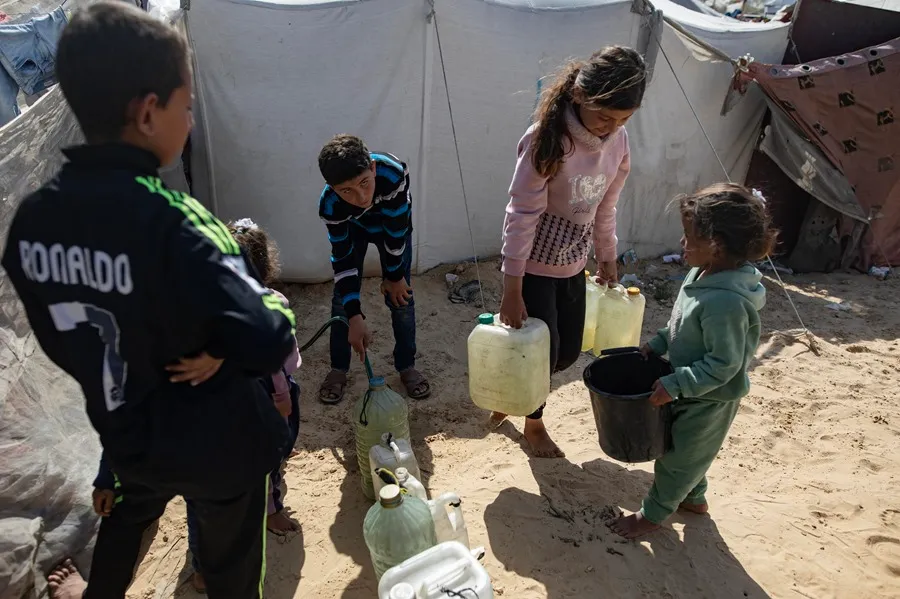
The Israeli Army again besieged the Naser and Al Amal hospitals this Sunday, both in the city of Jan Yunis, in the south of the enclave, with “intense bombings and gunfire” around both medical centers, denounced the Palestinian Red Crescent.
Dozens of armored vehicles surround both hospitals and carry out excavation work in the surroundings, Palestinian sources indicate.
The new siege of the two main hospitals of Jan Yunis, which were already besieged for more than twenty days in February, occurs when Israeli troops carry out for the seventh consecutive day a hard military operation at the Shifa hospital in Gaza City, where they claim to have arrested 480 “terrorists.”
The Palestinian Red Crescent, which manages the Al Amal hospital, pointed out that Israeli armored vehicles are demolishing buildings and structures around the hospital and warned about the “extreme danger” run by their teams, which can neither enter nor leave the hospital.
A member of the Red Crescent emergency operating room, Amir Subhi Abu Aisha, died from a drone attack by Israeli troops while working in the hospital and had to be buried in the courtyard of the center, the organization reported.











Eyewitnesses cited by the official Palestinian agency Wafa also reported aerial bombardments on the southern and eastern flanks of the Naser medical complex, the most important in the southern Strip, as well as in the nearby neighborhood of Batn as Samin, in Jan Yunis.
“The continuous artillery bombardments relentlessly hit the buildings, in addition to helicopter and drone fire, which caused the death of several civilians and other wounded,” Wafa said of the attacks on the Naser, which houses thousands of Palestinians displaced by the hard fighting in the center and south of the enclave.
He also assured on Sunday that he had arrested about 480 members of Hamas organizations or Islamic Jihad, in addition to having located “numerous weapons and terrorist infrastructure,” in the Shifa hospital in Gaza City, which is experiencing its seventh consecutive day of military siege today.
“The forces continue the precise operational activities in the area of the Shifa Hospital while avoiding damage to civilians, patients, health workers and medical equipment,” said a military statement.
The Ministry of Health of the Strip, controlled by Hamas, reported yesterday that five wounded who were treated at that center died as a result of the siege of Israeli troops, which began on Monday, and are in addition to the 13 intensive care patients who died in recent days due to lack of electricity and medical treatment.
Health also reported that 240 patients and relatives had been arrested by Israeli forces and a dozen health personnel; while the Israeli Army indicated that it had interrogated more than 800 suspects – it assures that 480 are “terrorists” – and killed 170 alleged fighters.
“We will end this operation only when the last terrorist is in our hands, alive or dead,” said last night the commander-in-chief of the Southern Command of the Israeli Army, Major General Yaron Finkelman, who praised the success of the “bold and impressive” operation.
The Army also pointed out that on the last day, its fighter planes attacked about 65 targets in the north and center of the Gaza Strip, including “a tunnel used to carry out attacks, military complexes where armed terrorists operated and additional military infrastructure.”
Both in the center of the Gaza Strip and in the Jan Yunis area, in the south, where fighting has not stopped for more than three months, the troops “eliminated several terrorists” on the last day by sniper fire.
“The troops also located and carried out a selective raid against a drone manufacturing laboratory belonging to terrorist organizations,” he added about the operations in the central area.
While in the Jan Yunis area, engineering forces attacked a projectile launch pit and fighter jets destroyed Hamas’ military infrastructure, including a complex used as a meeting point for militiamen.
The Israeli Army also reported on Sunday that during the early morning it bombed the Baalbek area, in northeastern Lebanon, where it attacks for the third time since the beginning of hostilities because it claims that there is military infrastructure of the Shiite militia Hizbulá, which responded with the launch of a stun of 50 rockets.
“This morning, fighter jets of the Israel Defense Forces attacked a weapons manufacturing site in Hizbulah, in the Baalbek area,” a military statement said.
It is the third time in two months that Israeli aviation has reached that point in Lebanon, more than 100 kilometers from the border, where he assures that Hezbollah has, among other military infrastructure, its air defense system; although most of the crossfire has been concentrated since October 8 in the communities bordering the divider.
The Army pointed out that Hizbulah carried out more than 50 launches to northern Israel in response, most of which were intercepted and the rest fell in depopulated areas.
At least 84 Gazans have died in the Gaza Strip in the last 24 hours from Israeli attacks, including 19 who died yesterday in an attack on a group of people waiting for a humanitarian convoy in Gaza City, bringing the total number of fatalities in the war to 32,226.
“The Israeli occupation commits 8 massacres against families in the Gaza Strip, including 84 martyrs and 106 injured during the last 24 hours,” said the Ministry of Health of the enclave, controlled by Hamas, in its latest count.
The total number of injuries since October 7, when the war broke out, rises to 74,518, while the Ministry has more than 7,000 bodies that are still trapped under the rubble, according to the source.
The Commissioner General of the UN Agency for Palestinian Refugees (UNRWA), Philippe Lazzarini, said on Sunday that Israel has informed the UN that it will not approve more humanitarian convoys aimed at the north of the Gaza Strip, where famine is already a reality.
“Despite the tragedy that is unfolding under our surveillance, the Israeli authorities informed the UN that they will no longer approve any UNRWA food convoy to the north,” Lazzarini said in a statement.
The commissioner recalled that UNRWA, which provides services to almost 6 million Palestinians in different countries and is the main humanitarian actor in the Gaza Strip, is in the middle of the war “the main sustenance” for more than 2 million internally displaced persons in the enclave and the only one that can proportional “vital assistance” in the north.
“This is outrageous and makes it intentional to obstruct assistance to save lives during a man-made famine. These restrictions must be lifted,” Lazzarini shouted.













International
EU Faces Migration Crisis After 60,000 Migrants Arrive in Spain’s Ceuta Enclave
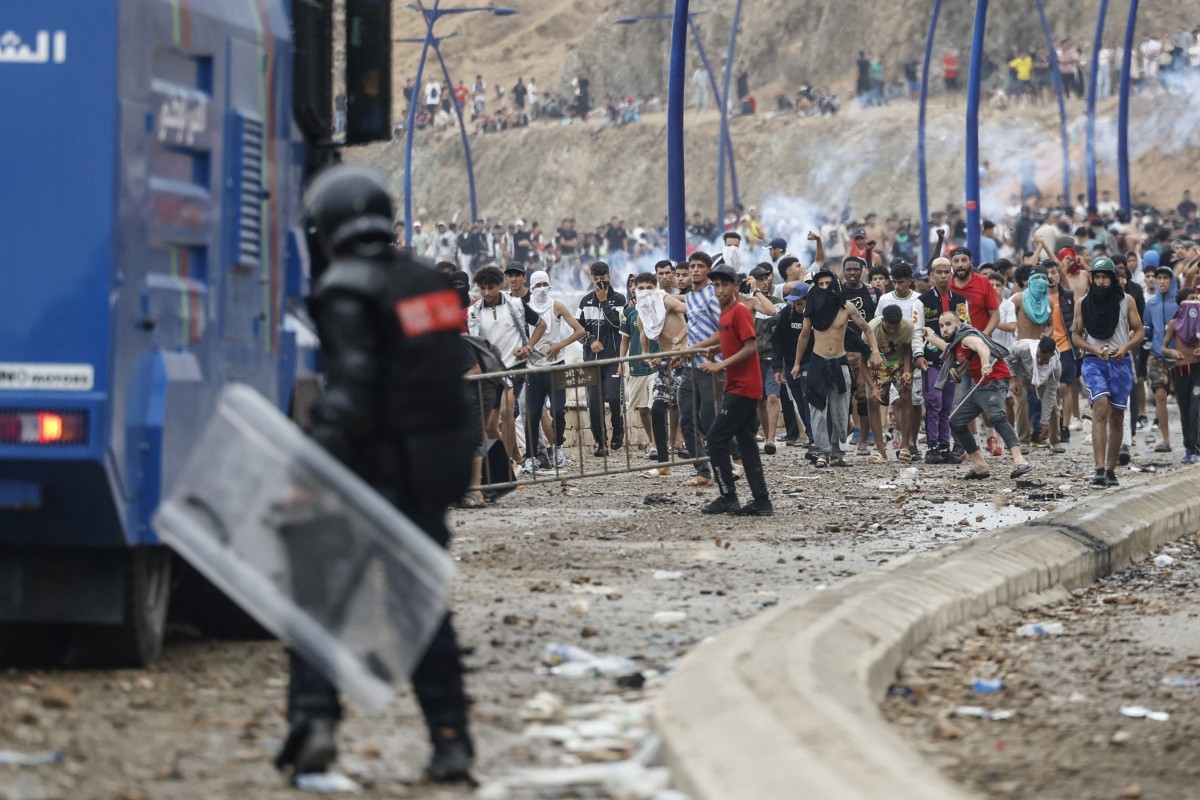
The arrival of around 60,000 migrants from Morocco to Spain’s Ceuta enclave triggered a major European Union crisis on Friday, after Madrid described the situation as an “attack” on its territorial integrity.
At least 34 people died while attempting to reach the Spanish territory, according to local authorities.
Hundreds of migrants had begun arriving in Ceuta earlier in the week, either by swimming across the border or climbing security fences. Most of those who entered were young men and teenagers.
However, the situation escalated dramatically early Thursday morning, when the number of arrivals surged within a few hours, reaching nearly 60,000 people. According to the Spanish government, the vast majority of them — around 48,000 migrants — had returned to Morocco by Friday evening.
The episode represents one of the most serious migration crises faced by the autonomous city of Ceuta, which has a population of around 84,000 residents, in recent years.
Several European countries responded strongly to the crisis, with Italy announcing the temporary suspension of the Schengen free movement agreement with Spain, a measure supported by Finland and Denmark.
“The temporary suspension of Schengen with Spain is a necessary decision to protect the security of our citizens and defend Europe’s borders,” Italian Foreign Minister Antonio Tajani said in a post on X.
Italy’s Interior Ministry confirmed that the country had tightened controls on maritime and air entry points from Spain, but clarified that the measure would not affect Spanish or European citizens traveling to Italy.
The additional checks will specifically target non-European citizens arriving from Spain, according to the ministry.
The measure will remain in effect for one month starting Saturday, authorities said.
Spain’s Foreign Minister José Manuel Albares responded to the Italian announcement through a statement on X, as European governments continued discussions over the consequences of the migration crisis.
International
Chuck Schumer Unveils Proposal to Strengthen Oversight of the U.S. Presidency
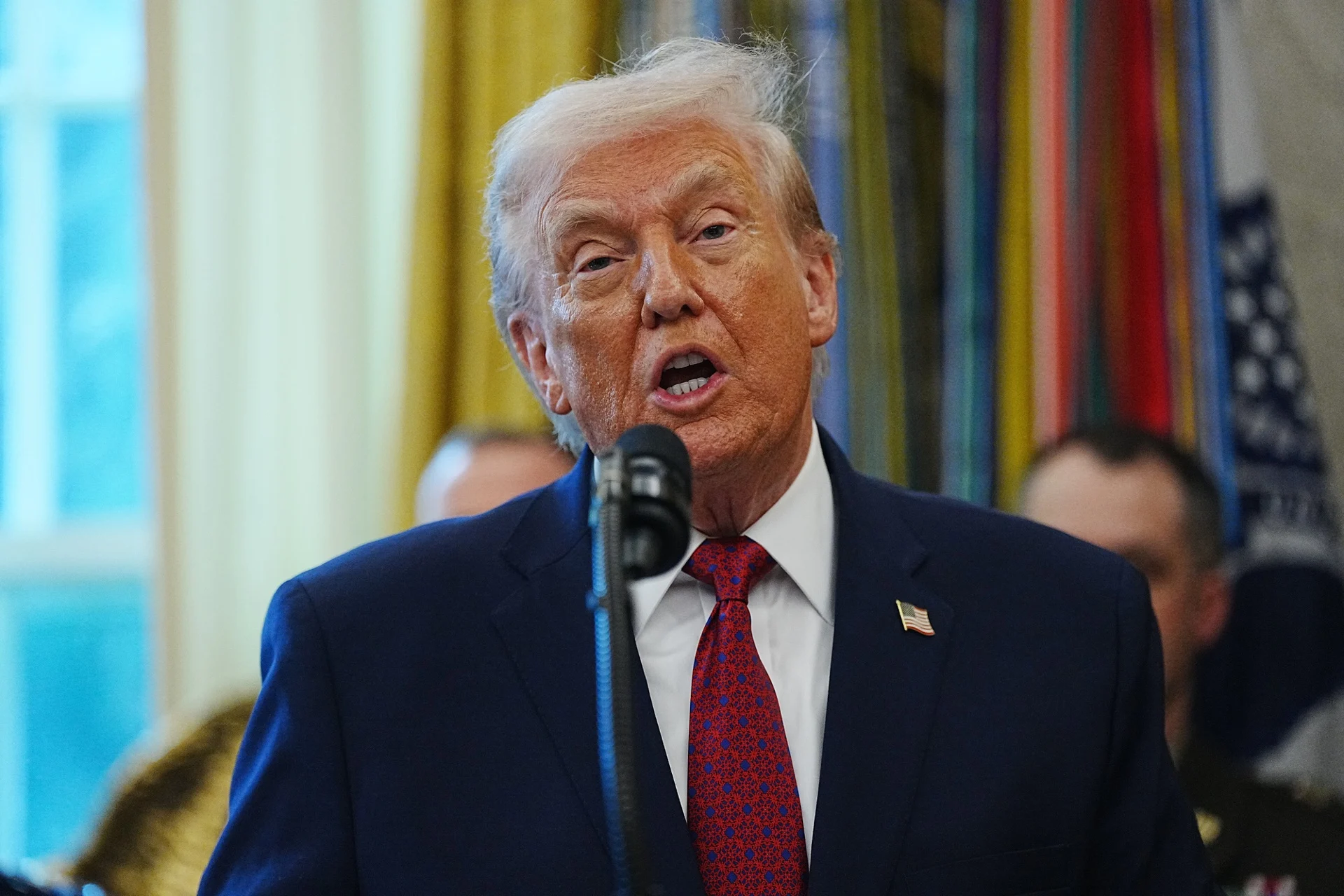
U.S. Senate Democratic Leader Chuck Schumer on Thursday announced legislation to establish a federal anti-corruption office aimed at strengthening oversight of the executive branch and preventing future presidents from using the White House for personal financial gain.
Schumer said the proposal was prompted by what he described as President Donald Trump’s misuse of the presidencyto benefit his family’s business interests.
“In just 18 months, the Trump family has made more than $4 billion by exploiting the influence of the presidency,” Schumer alleged.
The New York senator also argued that the alleged corruption has had direct economic consequences for American households.
“The same corrupt practices Trump is using to pocket billions of dollars are also forcing Americans to pay, on average, $3,100 more each year because of the rising cost of living,” he said.
The legislation was introduced alongside Democratic Senators Alex Padilla, Jeff Merkley, and Andy Kim.
According to Schumer, the bill has two primary objectives: “First, to return money to the American people. Second, to ensure that no one can ever steal from them again.”
He added that the proposal would create legal mechanisms allowing citizens to seek the recovery of funds allegedly obtained through government corruption.
“The fact that Trump stole money from the American people does not make it his. Americans deserve to get that money back,” Schumer said.
Under the proposed legislation, any U.S. citizen—as well as state attorneys general acting on behalf of their residents—would be authorized to file civil lawsuits to recover funds allegedly acquired through corrupt practices by public officials.
“Our bill would empower any individual, including a state attorney general acting on behalf of the people of that state, to bring legal action to recover money stolen from the public through government corruption,” Schumer said.
The measure is expected to face debate in Congress, where Republicans and Democrats remain deeply divided over executive accountability and the scope of presidential powers.
International
Trump Administration Urges Latin America to Increase Defense Spending Against Organized Crime
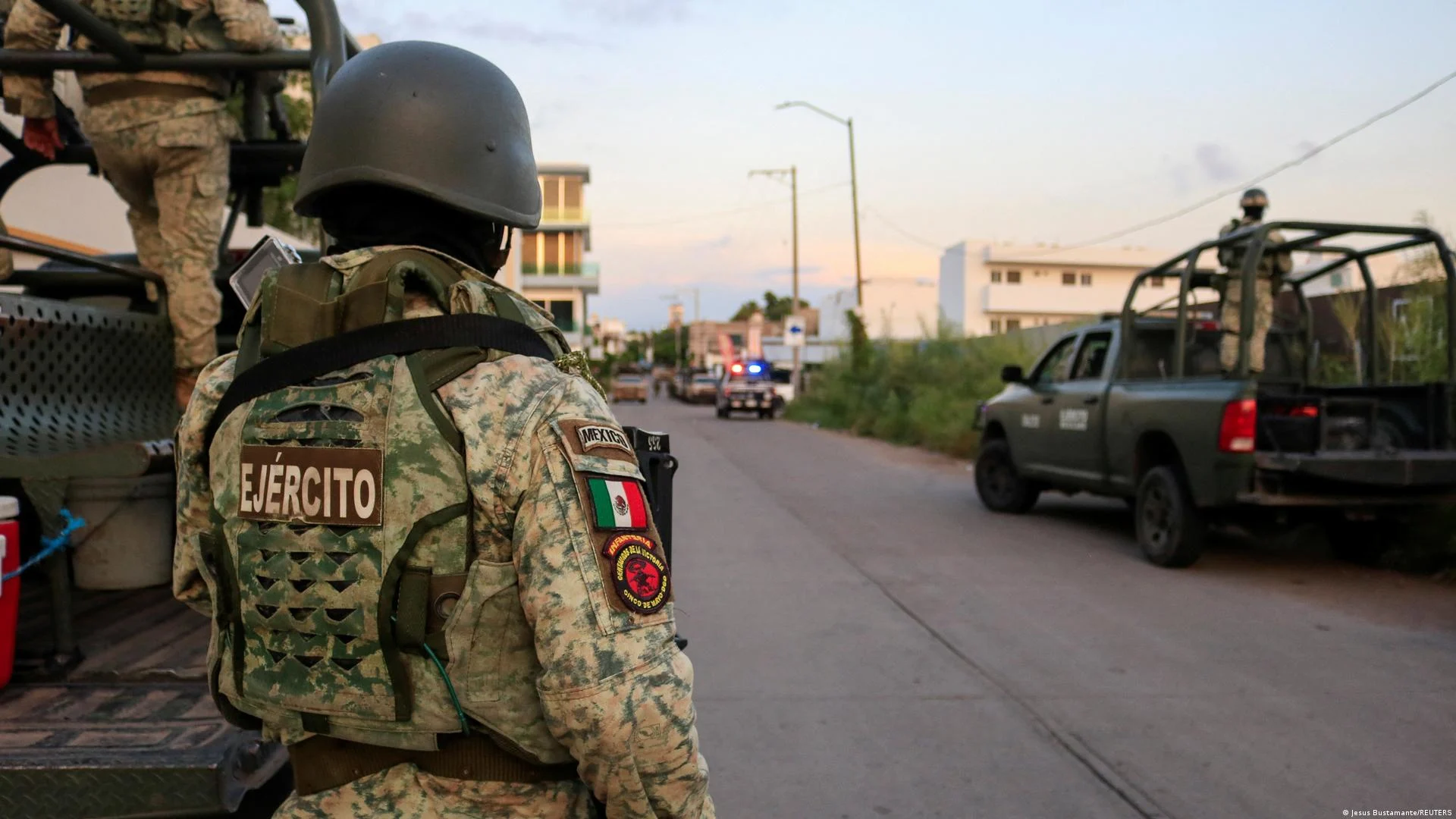
The administration of U.S. President Donald Trump on Wednesday urged Latin American countries to increase investment in defense and security to strengthen the fight against organized crime and drug trafficking networks.
The appeal was made by Elbridge Colby, the U.S. Under Secretary of Defense for Policy, in an article published by Americas Quarterly. Colby argued that governments across the region should assume greater responsibility for protecting their territories from transnational criminal organizations.
“It is essential that our neighbors in the region invest more in their own defense and security. There is no reason why any country, especially those facing significant narco-terrorist threats, should spend so little on defense,” Colby wrote.
The Pentagon official described it as “absurd” that some Latin American nations allocate less than 1% of their Gross Domestic Product (GDP) to defense, although he did not identify the countries. He contrasted that with NATO members in Europe, many of which are increasing defense expenditures to 3.5% of GDP, with an additional 1.5% devoted to security-related investments.
Colby, who participated earlier this month in the Conference of Defense Ministers of the Americas in Cusco, Peru, said there is “a historic opportunity” for the United States and its regional partners to strengthen cooperation against drug trafficking and other transnational threats.
He also defended the proposed Shield of the Americas, a military partnership promoted by the Trump administration to combat organized crime and supported by several conservative governments in the region. The initiative does not include Brazil or Mexico.
In addition, Colby said the administration’s security strategy includes an updated interpretation of the Monroe Doctrine, the long-standing U.S. foreign policy principle that historically viewed Latin America as part of Washington’s sphere of influence.
“Of course, we recognize that the Monroe Doctrine is controversial in many circles. But it is also frequently misunderstood,” he said.
According to Colby, the United States is not seeking “exploitation, subordination or dependence,” but rather a region characterized by greater prosperity, stability and security.
He also stated that Washington is prepared to use “all available resources,” including the U.S. Armed Forces, to combat drug trafficking and irregular migration. Colby highlighted ongoing counternarcotics operations in the Caribbean, despite criticism from human rights organizations that have questioned some missions over allegations of extrajudicial killings in international waters.


EU Faces Migration Crisis After 60,000 Migrants Arrive in Spain’s Ceuta Enclave

Chuck Schumer Unveils Proposal to Strengthen Oversight of the U.S. Presidency

Trump Administration Urges Latin America to Increase Defense Spending Against Organized Crime
Tec de Monterrey honors one of its students for his contribution to nanotechnology in medicine

Defense Minister commends salvadoran soldier for Central American Cross Country victory

Extension of the state of emergency approved in southern Chile
-
 International24 hours ago
EU Faces Migration Crisis After 60,000 Migrants Arrive in Spain’s Ceuta Enclave
-
 International4 days ago
U.S. and Iran Maintain Ceasefire as Trump Expresses Optimism Over New Talks
-
 International4 days ago
Portuguese Authorities Seize 2.6 Tons of Cocaine Worth More Than $550 Million in Drug Bust
-

 International3 days ago
Five Bodies Found in Ecuador as Police Probe Suspected Gang Turf War
-
International2 days ago
Chuck Schumer Unveils Proposal to Strengthen Oversight of the U.S. Presidency
-

 International4 days ago
Police Investigate After Remains of Five Newborns Found in French Apartment
-

 International3 days ago
Georgia Teen Sentenced to Life Without Parole for Deadly School Shooting
-
 Central America3 days ago
Prosecutors Accuse Ex-Defense Minister of Undermining Press Freedom in Honduras
-

 International2 days ago
FAO and WFP Seek $42 Million to Prepare Southern Africa for Unprecedented El Niño
-
 International2 days ago
Trump Administration Urges Latin America to Increase Defense Spending Against Organized Crime