
International
Ali Khamenei calls for participation in Iran elections to “make our friends happy and disappoint our enemies”
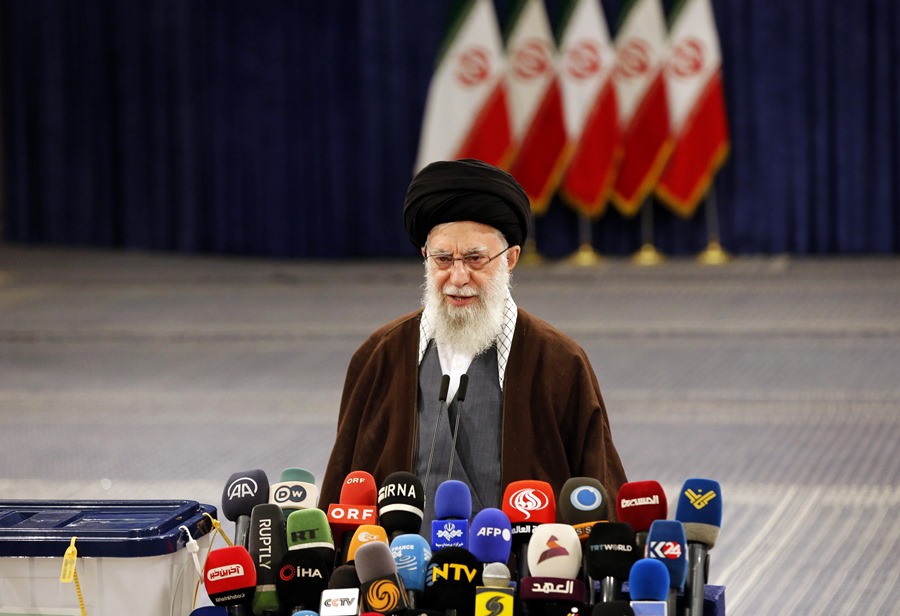
Iran’s Supreme Leader, Ali Khamenei, called for participation in parliamentary elections on Friday to “disappoint the enemies,” marking the country’s first elections since the protests sparked by the death of Mahsa Amini in 2022.
“Many people around the world, whether ordinary individuals or politicians and authorities, have their eyes on Iran, on you, to see what you will do in these elections,” said Khamenei in a message to Iranians after casting his vote shortly after the opening of polling stations, in an event televised by Persian channels.
“Make our friends happy and disappoint our enemies. Please vote,” urged the religious leader, who in recent days has appealed to Iranians to vote given the popular indifference. Iranian authorities often use the term “enemies” to generally refer to the United States, Israel, and opposition groups.
Some 60,000 polling stations opened at 08:00 local time (4:30 GMT) and will remain open for 10 hours nationwide, with over 61 million people called to the polls, as reported by the official IRNA news agency.
Around 15,200 candidates – 1,713 of whom are women – are competing for the 290 seats in Parliament, while 144 clerics are running for the 88 seats in the Assembly of Experts, which selects Iran’s Supreme Leader in case of vacancy. This body is elected every eight years and the outcome of these elections could be crucial for the future of the Islamic Republic, given the advanced age of Khamenei, 84 years old.









Electoral Process in Iran
The elections are dominated by the conservative bloc, which now holds a parliamentary majority, following the disqualification of numerous reformist candidates, raising doubts about the freedom of elections and, in some cases, calling for a boycott.
The electoral process is marked by some indifference and apathy among voters due to the country’s poor economic situation, the disqualification of many reformist candidates, and political detachment, which was exacerbated by the protests sparked by Amini’s death after being arrested for not wearing the veil properly.
For months, young Iranians protested in the streets of the country chanting “woman, life, freedom,” demanding freedoms and an end to the Islamic Republic, in protests that subsided after the death of about 500 protesters at the hands of security forces.
Polls estimate participation between 30% and 41%, compared to the 42% turnout in the 2020 legislative elections, the lowest level in the history of the Islamic Republic.
Hundreds of activists, politicians, student associations, teachers, as well as Nobel Peace Prize laureate Narges Mohammadi, consider boycotting as “a moral obligation for Iranians who love freedom and seek justice.”






International
Venezuela Earthquakes Spark Diplomatic Thaw With Former Critics
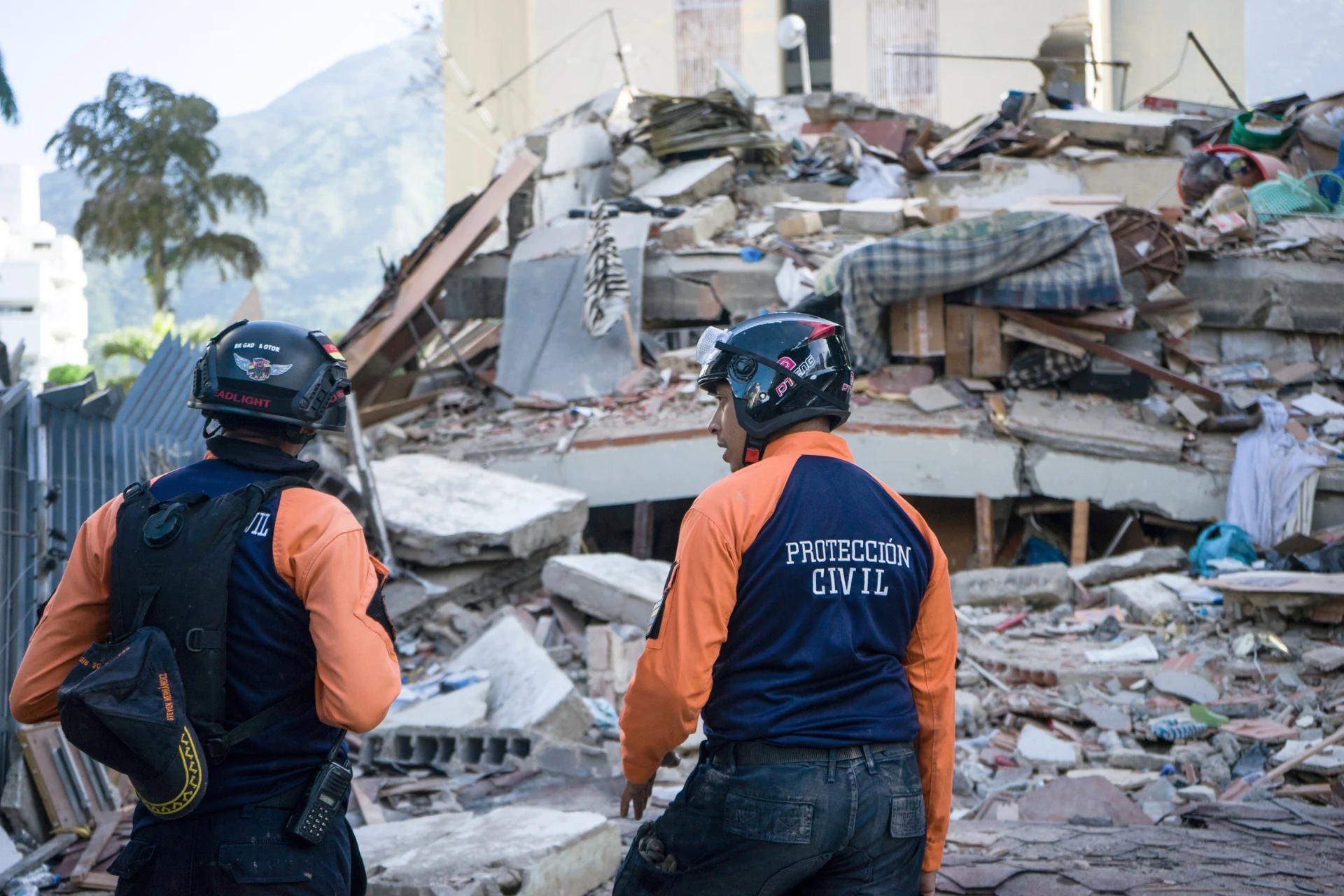
The devastating earthquakes that struck Venezuela have triggered an unprecedented diplomatic thaw between Caracas and several governments that had maintained strained relations with the country, raising hopes that the humanitarian response could pave the way for broader international engagement under the administration of U.S. President Donald Trump.
The United States, Chile, Argentina, El Salvador and Israel were among the first countries to announce humanitarian assistance, deploy search-and-rescue teams or establish direct contact with acting President Delcy Rodríguez to coordinate relief efforts in the hardest-hit areas.
Canada also joined the international response by announcing humanitarian aid while opening a domestic debate over the importance of maintaining diplomatic representation in countries such as Venezuela to better respond to emergencies and assist its citizens abroad.
The wave of international cooperation marks a sharp contrast to the diplomatic tensions that followed Venezuela’s disputed presidential election on July 28, 2024, in which Nicolás Maduro was declared the winner.
In the aftermath of that vote, the governments of Argentina, Chile, Costa Rica, Panama, Peru, the Dominican Republic and Uruguay publicly questioned the official election results, triggering one of the region’s most significant diplomatic crises in recent years.
The Venezuelan government responded by withdrawing its diplomatic personnel from several of those countries and demanding the departure of their representatives, further deepening the country’s international isolation.
The humanitarian emergency created by the twin earthquakes has now prompted renewed communication between Caracas and governments that had previously suspended or significantly reduced diplomatic engagement, underscoring how major natural disasters can temporarily reshape international relations despite longstanding political disagreements.
International
Venezuela Earthquake Death Toll Surpasses 1,700 as Search for Survivors Continues
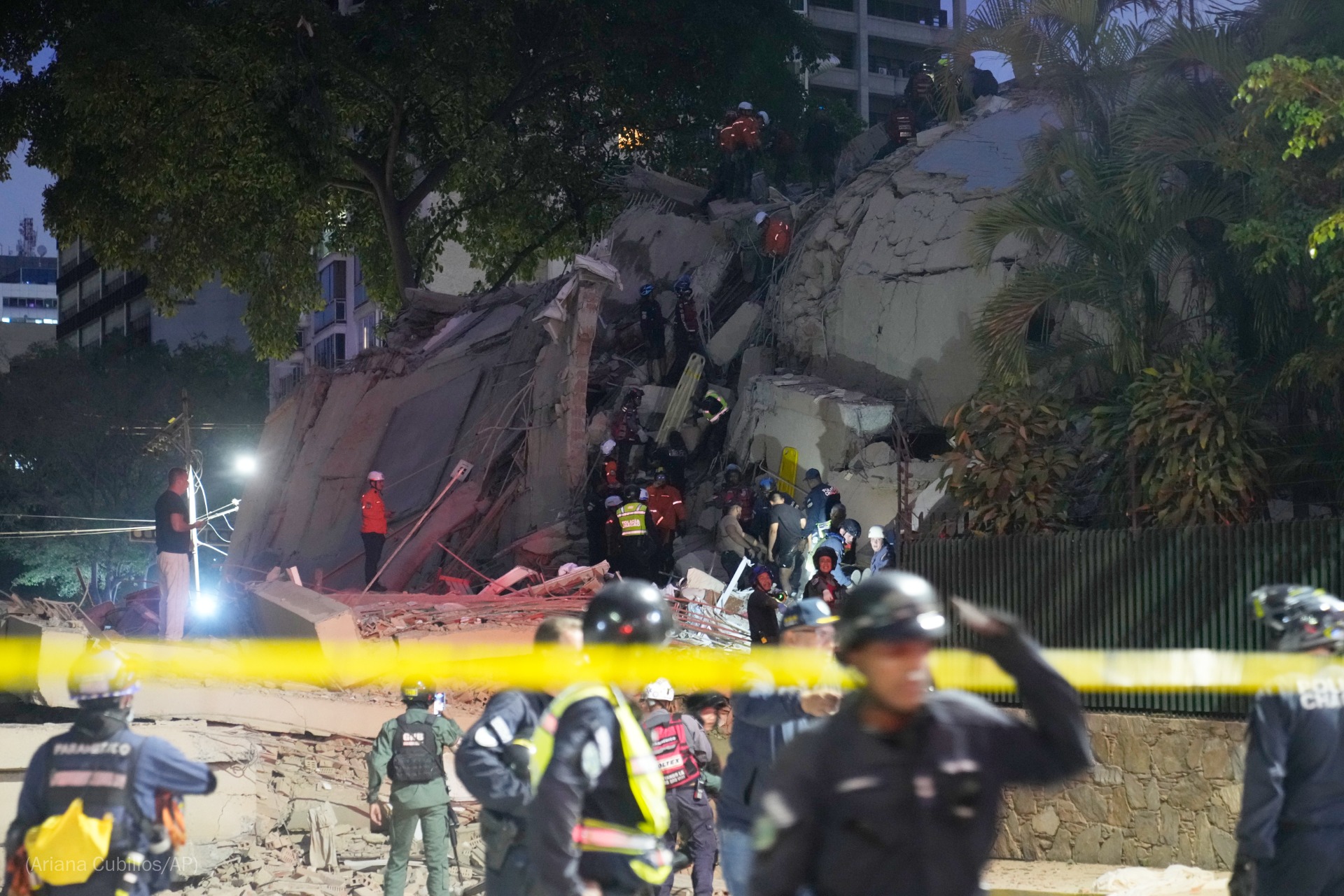
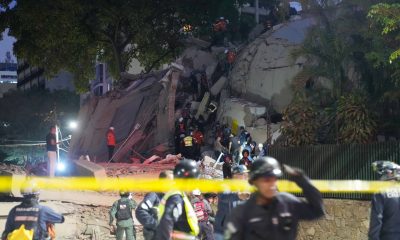
Venezuelan authorities have raised the death toll from last week’s twin earthquakes to more than 1,700, as rescue teams continue searching for survivors in the country’s hardest-hit coastal region.
According to the latest official report released on Sunday, the powerful earthquakes, measuring magnitudes 7.2 and 7.5, have claimed at least 1,719 lives. National Assembly President Jorge Rodríguez also reported that 5,034 people were injured, while 15,866 have been displaced and another 22,619 are receiving medical care.
The United Nations has expressed growing concern over the scale of the disaster, estimating that as many as 68,000 people could still be missing.
La Guaira bears the brunt of the disaster
The coastal state of La Guaira has suffered the greatest loss of life and the most extensive damage. The Venezuelan government has declared the area a disaster zone and placed it under military control as emergency operations continue.
Five days after the earthquakes struck, search-and-rescue teams remain on the ground, supported by additional heavy equipment and international rescue crews. However, hopes of finding more survivors beneath the rubble continue to diminish with each passing day.
One of the most dramatic rescue operations unfolded Monday in Catia La Mar, where emergency teams from El Salvador, Mexico, and Venezuela worked together to reach a 21-year-old man who has remained trapped inside a collapsed building since the earthquakes struck.
The twin earthquakes hit Venezuela on June 24, with the epicenter located between San Felipe and Yumare in the country’s northern region. The first quake, measuring magnitude 7.2, struck at 6:04 p.m. local time. Just 39 seconds later, a second and stronger magnitude 7.5 earthquake occurred farther to the southeast. Combined, the seismic activity lasted nearly three minutes, causing widespread devastation across several regions of the country.
International
Looting Spreads in Venezuela’s Hardest-Hit Areas After Deadly Earthquakes
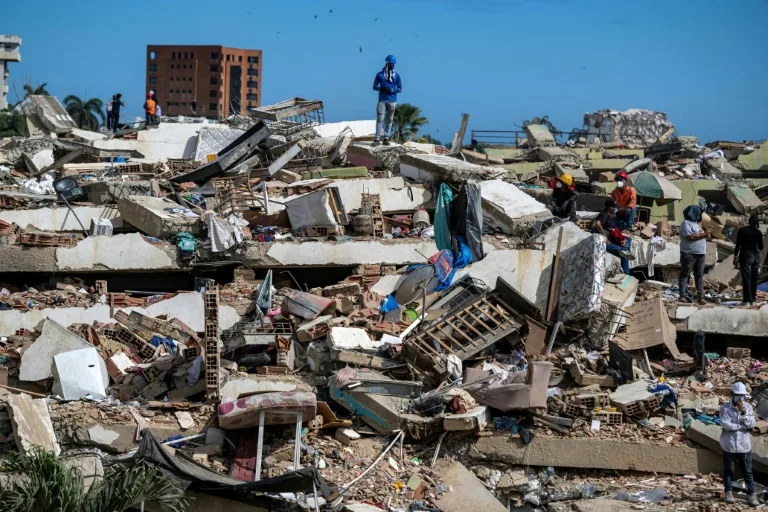
Not even the wires were left behind at a small grocery store. Before the ground had even stopped shaking, looting and theft began in the areas hardest hit by the double earthquake that struck Venezuela.
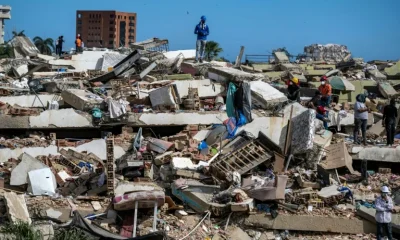
Reports of robberies have multiplied in the coastal state of La Guaira, located near Caracas and now transformed into a landscape of collapsed buildings and debris.
Videos circulating on social media show groups of people removing boxes of household appliances from a damaged store. Other images show similar boxes being carried on top of vehicles and motorcycles.
Social media platforms have also been filled with accusations against police officers and military personnel who allegedly stole from homes and even from victims who died during the disaster.
A branch of a major pharmacy chain was looted, along with supermarkets and other businesses. Some residents have described the situation as “disaster tourism,” while others say the looting reflects hunger and desperation among people who lost everything in a country already facing a prolonged economic crisis.
“Is it fair that our own people turn against our own people?” said María Esther Bernal, 71, who rented commercial spaces to Chinese merchants, all of which were looted. “They left nothing behind, not even the wallpaper. They even took the cables,” she said.
“Next door, a man died. He was Chinese. People walked over his body while they looted the place. It was a supermarket,” she added.
An AFP journalist witnessed looting in La Guaira since Thursday, following the earthquakes.
Jenifer Mayora, 34, defended some of the actions, saying that “the things people took were because the owners of the stores allowed us to take them.”
However, she criticized the limited response from authorities. “I have been waiting for a mattress so my children can sleep,” she said.
Residents have expressed anger over what they describe as a slow and insufficient response from authorities after the double earthquake, which has left around 1,450 people dead and tens of thousands missing.
Communities are demanding not only faster rescue operations in La Guaira, but also stronger security measures and urgent assistance with food, water, and medicine.

Venezuela Earthquakes Spark Diplomatic Thaw With Former Critics

Venezuela Earthquake Death Toll Surpasses 1,700 as Search for Survivors Continues

Looting Spreads in Venezuela’s Hardest-Hit Areas After Deadly Earthquakes
Tec de Monterrey honors one of its students for his contribution to nanotechnology in medicine

Defense Minister commends salvadoran soldier for Central American Cross Country victory

Extension of the state of emergency approved in southern Chile
-
 International2 days ago
Looting Spreads in Venezuela’s Hardest-Hit Areas After Deadly Earthquakes
-
 International22 hours ago
Venezuela Earthquake Death Toll Surpasses 1,700 as Search for Survivors Continues
-
 International3 days ago
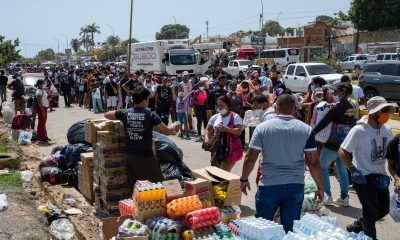
UN warns Venezuela earthquakes could affect up to 6.76 million people
-
 International22 hours ago
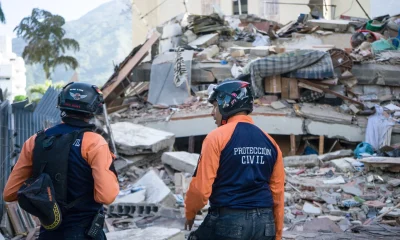
Venezuela Earthquakes Spark Diplomatic Thaw With Former Critics