
International
Ethiopia’s return to conflict: what we know
AFP
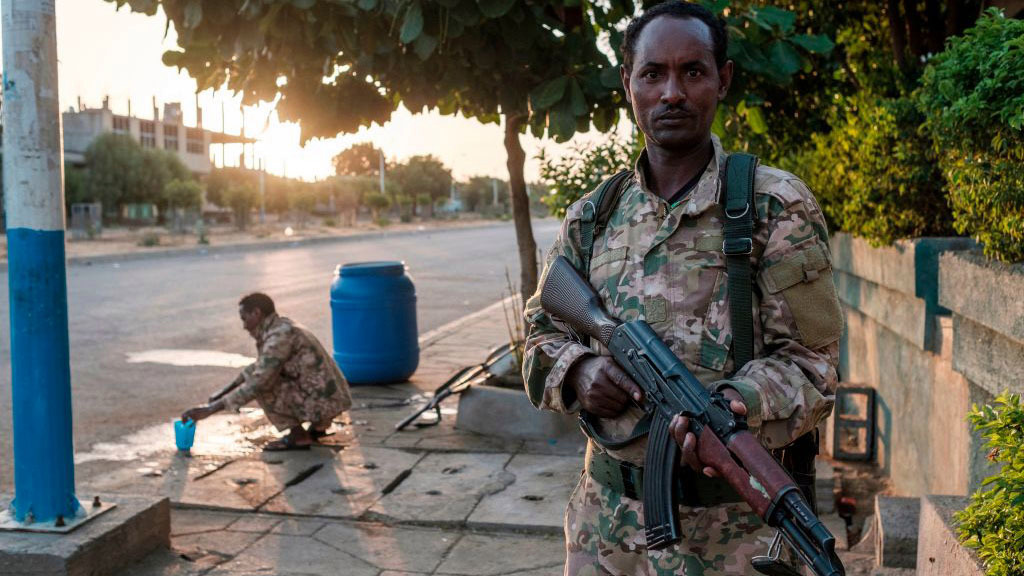
Fresh fighting between Ethiopian forces and Tigrayan rebels has broken a five-month truce that had paved the way for the resumption of humanitarian aid and tentative peace efforts.
The facts behind the sudden return to conflict in northern Ethiopia remain sparse. Here’s what we know so far and the questions that still linger:
– How did it happen? –
As has been the case throughout the 21-month conflict, both sides have accused each other of starting the fight and violating the truce that had been in place since late March.
The Tigray People’s Liberation Front (TPLF) said government forces and their allies launched a “large-scale” offensive towards southern Tigray at 5 am (0200 GMT) on Wednesday.











But Prime Minister Abiy Ahmed’s government said it was the rebels who struck first.
The tit-for-tat claims could not be independently verified as access to northern Ethiopia is severely restricted.
Later in the day, Ethiopia’s air force announced it had downed a plane carrying weapons for the TPLF that had entered its airspace via Sudan, a claim the rebels dismissed as a “blatant lie”.
– What does this mean for peace efforts? –
Regardless of who initiated Wednesday’s clashes, the prospects for peace in Africa’s second most populous nation appear grim, analysts say.
Even before the latest eruption of violence, the two sides were already at odds over the question of who should mediate potential negotiations.
The Abiy government wants the African Union’s Horn of Africa envoy Olusegun Obasanjo to lead peace talks while the TPLF has been pushing for Kenya’s outgoing President Uhuru Kenyatta to broker dialogue.
They have also sparred over the restoration of basic services such as electricity, communications and banking to Tigray — a key precondition for dialogue according to the TPLF.
The government on the other hand says federal service providers cannot work inside Tigray without a “secure environment”.
The Eurasia Group political risk consultancy flagged “the pre-emptive recruitment and training of troops by both camps” — an indication that neither side had put much stock in peace negotiations.
“Amid a resurgence in fighting, neither party will be willing to reduce their leverage for future talks by compromising on key issues,” said Eurasia’s Africa analyst Connor Vasey.
“Rather, they will likely aim to use the next phase of fighting to bolster their negotiating positions,” he said, setting the stage for an escalation in violence.
– How will humanitarian aid be affected? –
Prior to the truce, no aid had reached Tigray by road for three months, leaving the region of six million in desperate need of food.
Even after convoys resumed, fuel shortages have made it difficult for aid workers to distribute supplies.
Last week, the UN’s World Food Programme warned that nearly half the population in Tigray was suffering from a severe lack of food and rates of malnutrition had “skyrocketed”.
The return to conflict will worsen an already dire situation.
On Wednesday, the UN said the rebels had “forcibly entered” a WFP warehouse in Tigray’s capital Mekele that morning and taken a dozen tankers carrying 570,000 litres of fuel intended for emergency relief operations.
“Millions will starve if we do not have fuel to deliver food. This is OUTRAGEOUS and DISGRACEFUL,” WFP chief David Beasley said on Twitter.
– Is this a full-blown return to war? –
In recent weeks, both warring parties appear to have simultaneously broached the possibility of peace while also making preparations for a potential return to conflict.
Whether the latest conflagration leads to all-out war will depend on which view prevails, with analysts urging the international community to play a more active role in bringing both players to the negotiating table.
In a statement dated August 23, TPLF leader Debretsion Gebremichael said the rebels had participated in “two rounds of confidential face-to-face” meetings with top Ethiopian officials, the first acknowledgement by either side of direct talks.
The government has not confirmed the existence of such talks, but last week an official committee tasked with looking into negotiations called for a formal ceasefire in a proposal it planned to submit to the AU.
The eruption of hostilities is “a deafening warning to the key international and regional actors that they must immediately ensure peace talks actually occur”, said William Davison, senior Ethiopia analyst for the International Crisis Group think tank.
“They should accordingly instruct the belligerents to issue all of their demands when at the negotiating table, rather than making them preconditions for talks.”
Diplomatic efforts in the past have run into trouble.
The TPLF has accused Obasanjo of being biased in favour of the government, and Addis Ababa in turn has chastised US and EU envoys for urging a resumption of basic services to Tigray, reflecting the scale of the challenge ahead.










International
Truck bomb attack near police station in Colombia leaves 14 injured ahead of presidential inauguration
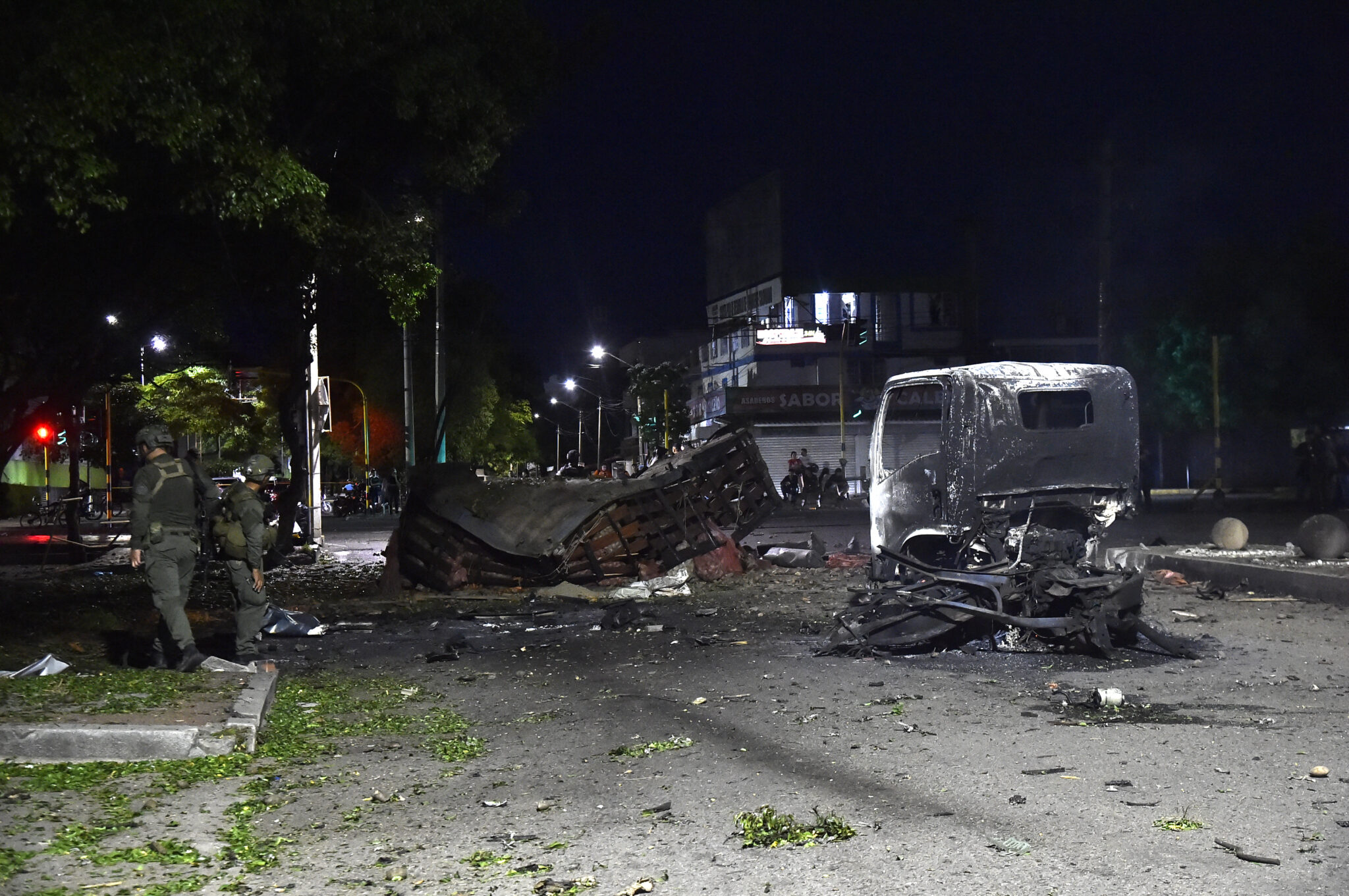
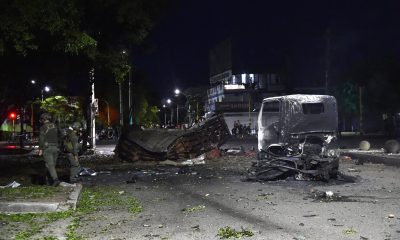
A truck loaded with explosives exploded on Saturday near a police station in the Colombian city of Cúcuta, close to the Venezuelan border, leaving 14 people injured in an attack that occurred six days before president-elect Abelardo de la Espriella’s inauguration.
The blast took place in the early hours of the morning and was allegedly carried out by members of the National Liberation Army (ELN), who detonated a vehicle packed with explosives. According to the latest report from the Colombian Army, the attack injured 11 police officers and three civilians.
The explosion involved around 15 explosive devices, and two of the wounded officers are in critical condition and “fighting for their lives,” said William Villamizar, governor of Norte de Santander, the region where the attack occurred.
The incident comes amid Colombia’s worst wave of violence in the past decade, with armed groups expanding their presence in several areas of the country.
“I strongly condemn the cowardly terrorist attack carried out in Cúcuta against our National Police. Terrorism will not intimidate Colombia or break the determination of Colombians to live in peace and security,” De la Espriella said in a post on X.
The conservative lawyer, who has been described as a far-right figure, will take office on August 7, replacing Gustavo Petro, Colombia’s first left-wing president. The inauguration ceremony will be held in Cali, the country’s third-largest city and a frequent target of attacks by armed groups.
The United Nations condemned what it described as an “indiscriminate attack” that caused not only injuries but also “fear and distress among the population.”
De la Espriella has repeatedly warned about an alleged plot against his life. Meanwhile, President Gustavo Petro, who is currently visiting Cuba, has not commented on the attack. During his visit, Petro met with Cuban President Miguel Díaz-Canel to discuss what Havana describes as the United States’ “policy of suffocation” toward the island.
International
EU Faces Migration Crisis After 60,000 Migrants Arrive in Spain’s Ceuta Enclave
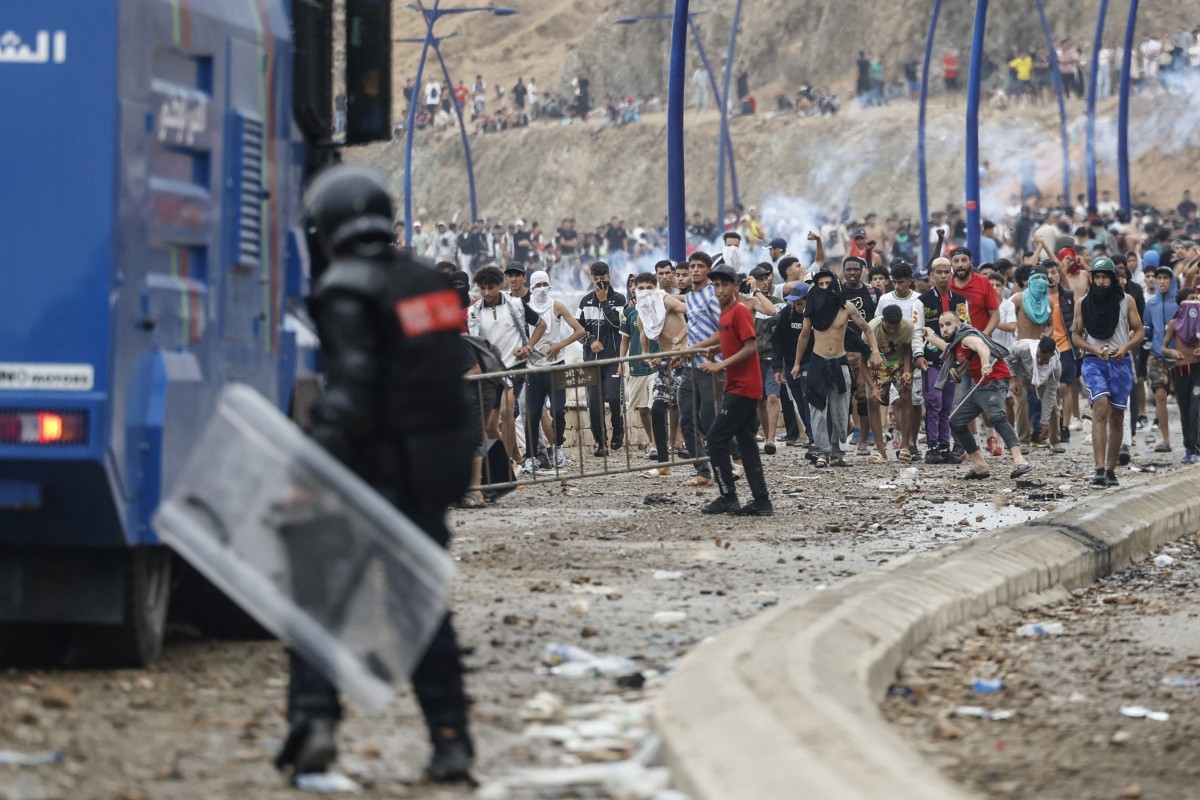
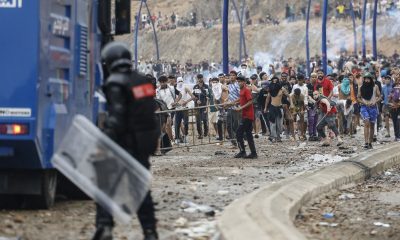
The arrival of around 60,000 migrants from Morocco to Spain’s Ceuta enclave triggered a major European Union crisis on Friday, after Madrid described the situation as an “attack” on its territorial integrity.
At least 34 people died while attempting to reach the Spanish territory, according to local authorities.
Hundreds of migrants had begun arriving in Ceuta earlier in the week, either by swimming across the border or climbing security fences. Most of those who entered were young men and teenagers.
However, the situation escalated dramatically early Thursday morning, when the number of arrivals surged within a few hours, reaching nearly 60,000 people. According to the Spanish government, the vast majority of them — around 48,000 migrants — had returned to Morocco by Friday evening.
The episode represents one of the most serious migration crises faced by the autonomous city of Ceuta, which has a population of around 84,000 residents, in recent years.
Several European countries responded strongly to the crisis, with Italy announcing the temporary suspension of the Schengen free movement agreement with Spain, a measure supported by Finland and Denmark.
“The temporary suspension of Schengen with Spain is a necessary decision to protect the security of our citizens and defend Europe’s borders,” Italian Foreign Minister Antonio Tajani said in a post on X.
Italy’s Interior Ministry confirmed that the country had tightened controls on maritime and air entry points from Spain, but clarified that the measure would not affect Spanish or European citizens traveling to Italy.
The additional checks will specifically target non-European citizens arriving from Spain, according to the ministry.
The measure will remain in effect for one month starting Saturday, authorities said.
Spain’s Foreign Minister José Manuel Albares responded to the Italian announcement through a statement on X, as European governments continued discussions over the consequences of the migration crisis.
International
Chuck Schumer Unveils Proposal to Strengthen Oversight of the U.S. Presidency
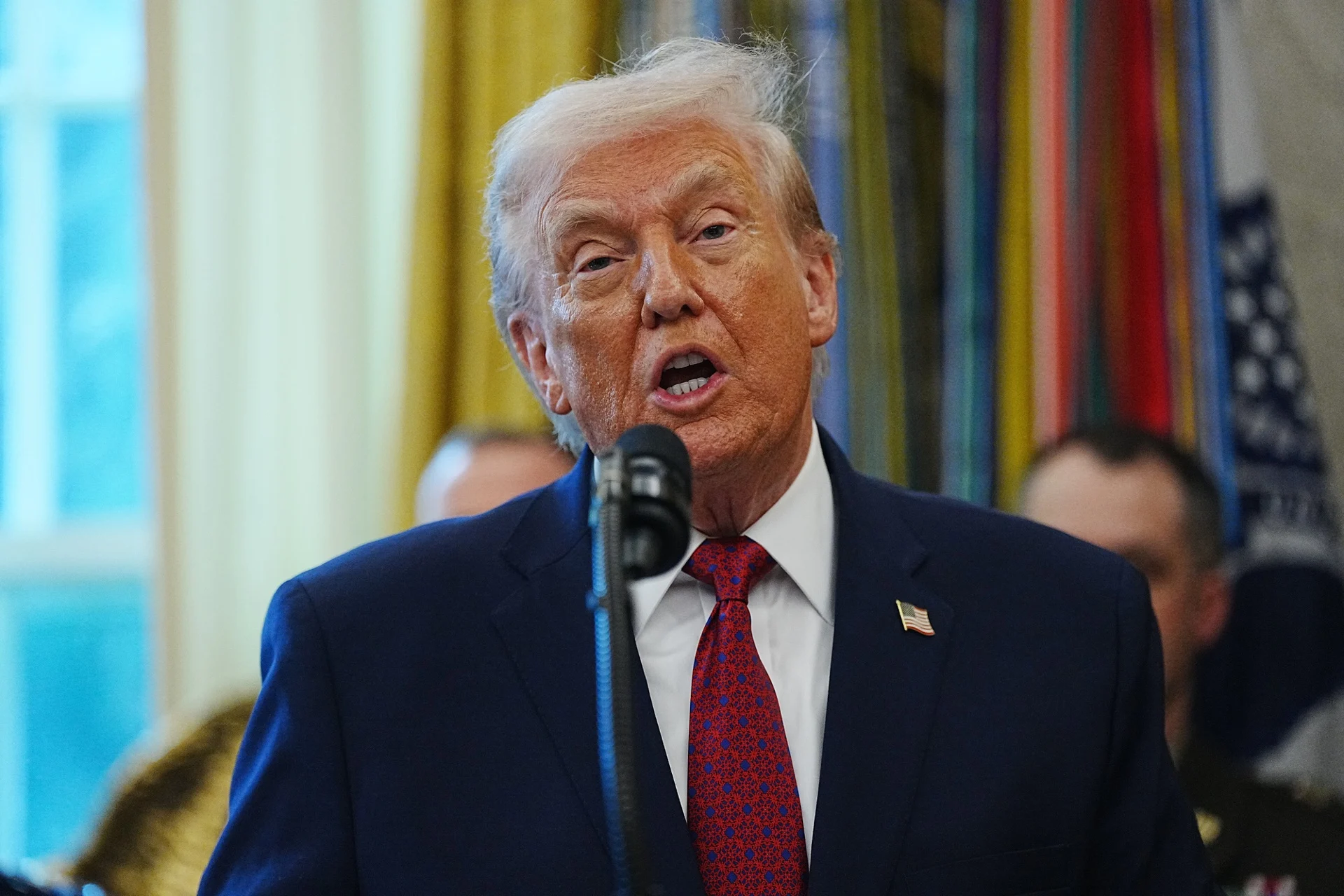
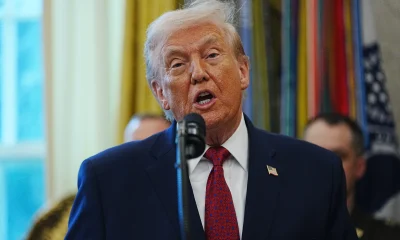
U.S. Senate Democratic Leader Chuck Schumer on Thursday announced legislation to establish a federal anti-corruption office aimed at strengthening oversight of the executive branch and preventing future presidents from using the White House for personal financial gain.
Schumer said the proposal was prompted by what he described as President Donald Trump’s misuse of the presidencyto benefit his family’s business interests.
“In just 18 months, the Trump family has made more than $4 billion by exploiting the influence of the presidency,” Schumer alleged.
The New York senator also argued that the alleged corruption has had direct economic consequences for American households.
“The same corrupt practices Trump is using to pocket billions of dollars are also forcing Americans to pay, on average, $3,100 more each year because of the rising cost of living,” he said.
The legislation was introduced alongside Democratic Senators Alex Padilla, Jeff Merkley, and Andy Kim.
According to Schumer, the bill has two primary objectives: “First, to return money to the American people. Second, to ensure that no one can ever steal from them again.”
He added that the proposal would create legal mechanisms allowing citizens to seek the recovery of funds allegedly obtained through government corruption.
“The fact that Trump stole money from the American people does not make it his. Americans deserve to get that money back,” Schumer said.
Under the proposed legislation, any U.S. citizen—as well as state attorneys general acting on behalf of their residents—would be authorized to file civil lawsuits to recover funds allegedly acquired through corrupt practices by public officials.
“Our bill would empower any individual, including a state attorney general acting on behalf of the people of that state, to bring legal action to recover money stolen from the public through government corruption,” Schumer said.
The measure is expected to face debate in Congress, where Republicans and Democrats remain deeply divided over executive accountability and the scope of presidential powers.

Truck bomb attack near police station in Colombia leaves 14 injured ahead of presidential inauguration

EU Faces Migration Crisis After 60,000 Migrants Arrive in Spain’s Ceuta Enclave

Chuck Schumer Unveils Proposal to Strengthen Oversight of the U.S. Presidency
Tec de Monterrey honors one of its students for his contribution to nanotechnology in medicine

Defense Minister commends salvadoran soldier for Central American Cross Country victory

Extension of the state of emergency approved in southern Chile
-
 International2 days ago
EU Faces Migration Crisis After 60,000 Migrants Arrive in Spain’s Ceuta Enclave
-
 International3 days ago
Chuck Schumer Unveils Proposal to Strengthen Oversight of the U.S. Presidency
-
 International4 days ago
Five Bodies Found in Ecuador as Police Probe Suspected Gang Turf War
-

 International4 days ago
Georgia Teen Sentenced to Life Without Parole for Deadly School Shooting
-
 Central America4 days ago
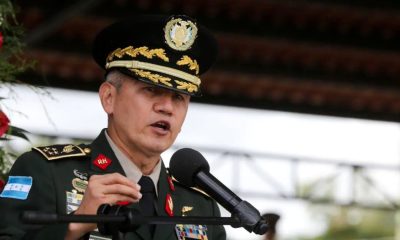
Prosecutors Accuse Ex-Defense Minister of Undermining Press Freedom in Honduras
-
 International3 days ago
FAO and WFP Seek $42 Million to Prepare Southern Africa for Unprecedented El Niño
-
 International3 days ago
Trump Administration Urges Latin America to Increase Defense Spending Against Organized Crime
-
 International6 hours ago
Truck bomb attack near police station in Colombia leaves 14 injured ahead of presidential inauguration