
International
Rescued condors spread wings in Chilean Andes

AFP
Pumalin and Liquine, two juvenile condors rescued from certain death, have been released back into the wild in a much-needed boost for a dwindling species emblematic of the Chilean Andes.
After 14 months of rehabilitation, the pair of scavengers were freed last week in the Patagonian National Park in Chile’s extreme south, where every individual counts for a species listed by the International Union for Conservation of Nature (IUCN) as “vulnerable” to extinction.
From a vast cage perched on the edge of a cliff overlooking the Patagonian valley, the pair spread their massive wings, waddled to the ledge, and took the leap of freedom, soaring away graciously.
“Today we have witnessed a milestone,” Christian Saucedo of the Rewilding Chile Foundation told AFP.











“It is a very complex process… but it means returning individuals who would otherwise be condemned to live in captivity,” he said.
According to the IUCN, the Andean condor — a type of scavenging vulture — is a declining species, with fewer than 7,000 left in the wild.
– Human ‘persecution’ –
The main threat is “direct and indirect persecution by humans,” it states.
Dominic Duran, the executive director of the Manku Project for condor conservation, told AFP “the biggest threat is toxic baits set by humans to poison… pumas or wild dogs eating their livestock.”
When the condors feed on these carcasses, up to 30 at a time, they get poisoned in turn.
The first to eat, he added, are usually the breeding males and females, and “when condors are killed by toxic bait, all the reproductive individuals at the top of the chain die.”
Other threats are hunting by humans, intoxication from poorly-managed landfills and dwindling numbers of the wild animals that make up their diet.
The foundation that rescued Pumalin and Liquine is a legacy of US philanthropist Douglas Tompkins, who in 1990 donated 8,000 square kilometers (3,088 square miles) of land to Chile and Argentina for conservation.
The Patagonia National Park now housed there holds an estimated 70 percent of Chile’s Andean condors — the largest population in South America.
Pumalin, a male, was found over a year ago unable to fly after getting caught in a heavy storm, and Liquine, a female, was rescued struggling to make it in the wild after an earlier attempt to rehabilitate her.
They will now go back to “learning the codes of condor society,” said Saucedo.
The pair’s progress will be monitored with radio transmitters implanted in their wings.










International
Three U.S. Executions Set for Same Day as Trump Pushes to Expand Death Penalty

The death penalty has been abolished in 23 of the 50 U.S. states, while three others —California, Oregon and Pennsylvania— currently have moratoriums in place.
The United States is set to carry out three executions on the same day, a rare occurrence that has not happened since 2010, according to the nonprofit Death Penalty Information Center.
President Donald Trump has sought to expand the use of capital punishment for what he describes as “the most heinous crimes.” In April, the Department of Justice proposed expanding execution methods to include firing squads, lethal gas and electrocution.
Tennessee is scheduled to execute Anthony Darrell Dugard Hines, 66, on Thursday. He was sentenced to death for the 1985 murder of a woman, according to local media.
In Oklahoma, Carlos Cuesta-Rodríguez, 70, is scheduled to be executed for a 2003 murder.
Meanwhile, Alabama plans to execute Jeremy Williams, 42, who was sentenced to death for the rape and murder of a five-year-old girl.
The United States carried out 47 executions in 2025, the highest number since 2009, when 52 executions were recorded.
Florida conducted the largest number of executions last year, with 19, followed by Alabama, South Carolina and Texas, with five each.
Of the executions carried out in 2025, 39 were conducted by lethal injection. Three were carried out by firing squad and five through nitrogen hypoxia, a method that involves forcing nitrogen gas into a face mask, depriving the prisoner of oxygen.
The United Nations has condemned nitrogen gas as a cruel and inhumane method of capital punishment.
International
Colombia Earthquake Death Toll Reaches 265 as Rescue Teams Race Against Time
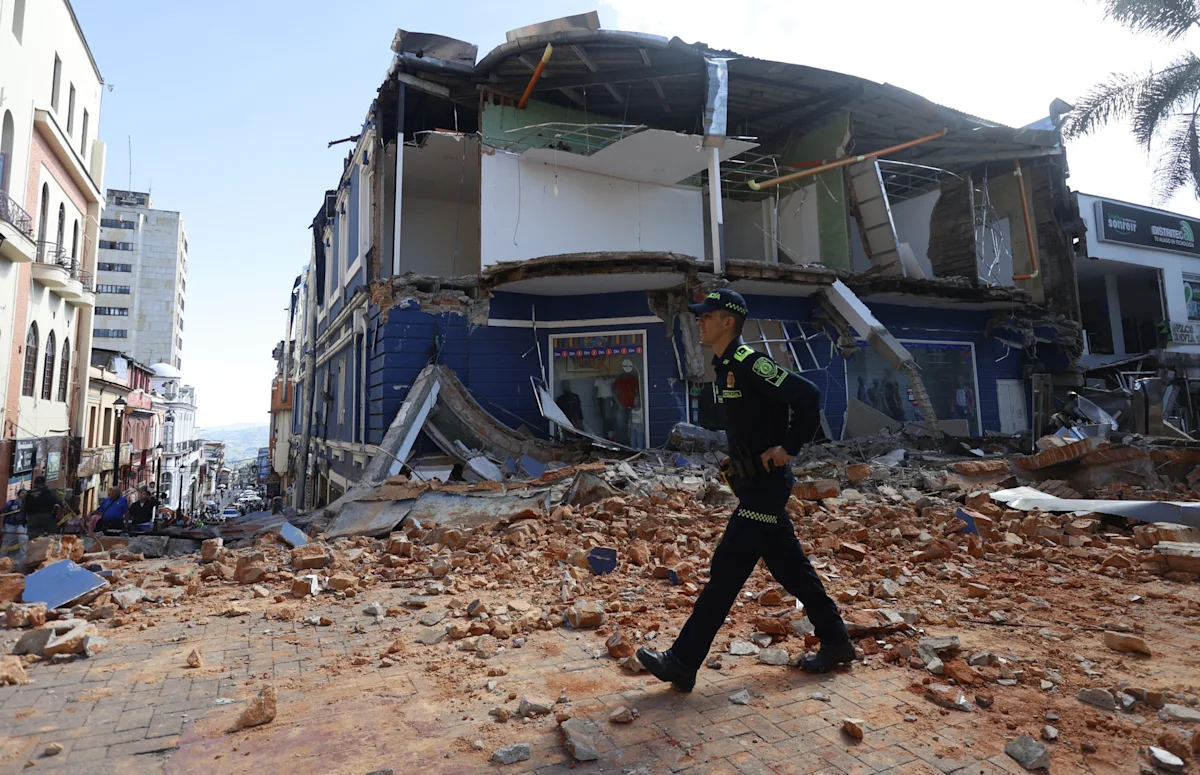
The 7.4-magnitude earthquake that struck Colombia on Monday, the strongest to hit the country this century, has so far left 265 people dead and around 3,500 injured.
In Cali, Pereira and other cities in western Colombia, rescue teams are working around the clock as they search for survivors. The first 72 hours following the earthquake will be reached at 7:34 a.m. local time (12:34 GMT), a critical window for rescue efforts as the chances of finding survivors generally decline significantly after that point.
Among those anxiously awaiting news is Valeria Cardona, a 26-year-old student searching for two of her cousins in Cali.
“We have some suspicions about their location, but there are no signs of life,” she said. “Hope is the last thing you lose, but we are anxious about receiving news we don’t want to hear.”
A team of members from the Topos Aztecas, the renowned Mexican volunteer rescue group, has also arrived in Cali to join the search. The rescuers had been working in neighboring Venezuela, where a double earthquake on June 24 left more than 6,000 people dead.
“We all came from Venezuela, from La Guaira. The 41 days we spent working there made us stronger because we overcame hunger, pain and sleepless nights,” said Héctor Méndez, 80, president of Topos Aztecas.
Méndez encouraged those affected by the disaster not to lose hope and emphasized the commitment required from rescue teams during an emergency.
“Do not feel like victims. This is not an office or workshop schedule. This is real life, where the best part of the human spirit emerges. These are things of nature that happen,” he said.
International
German Authorities Investigate More Than 100 New Cases Against Convicted Nurse

German authorities announced Monday that they are investigating more than 100 additional cases involving a nurse who was sentenced to life in prison in November for the murder of 10 patients.
The man, who was 44 at the time of his conviction, worked in palliative care at a hospital in Würselen, near Aachen. He was also found guilty of 27 attempted murders.
Aachen prosecutors are now examining 121 new cases, a spokesperson for the office said.
Prosecutors leading the investigation are preparing a new indictment that could be filed next year. Nearly 40 bodies have so far been exhumed as part of the investigation, which covers alleged incidents dating back to September 2022.
Meanwhile, prosecutors in the city of Cologne are investigating 18 additional cases. According to a spokesperson, the oldest case dates back to 2010.
Before working at the Würselen hospital, the nurse is believed to have worked at a clinic in eastern Cologne, according to local media reports.
At the time of his November conviction, the court ruled that the severity of his crimes was particularly serious, a finding that would make it difficult for him to obtain early release after 15 years in prison.
Between December 2023 and May 2024, the nurse administered overdoses of sedatives or painkillers to terminally ill patients, most of them elderly, according to the indictment in the original case.
His alleged motive was to sedate patients who required care so that he could minimize his workload during night shifts, prosecutors said.
According to the indictment, the nurse worked «without enthusiasm» and «without motivation». When faced with patients requiring extensive care, he allegedly became «irritated» and showed a lack of empathy.
The case has revived painful memories in Germany of Niels Högel, a former nurse and serial killer who was sentenced to life imprisonment in June 2019 for the murders of at least 85 patients.

Three U.S. Executions Set for Same Day as Trump Pushes to Expand Death Penalty

Colombia Earthquake Death Toll Reaches 265 as Rescue Teams Race Against Time

German Authorities Investigate More Than 100 New Cases Against Convicted Nurse
Tec de Monterrey honors one of its students for his contribution to nanotechnology in medicine

Defense Minister commends salvadoran soldier for Central American Cross Country victory

Extension of the state of emergency approved in southern Chile
-
 International4 days ago
Colombia Earthquake Leaves at Least 22 Dead as Rescue Efforts Continue
-

 International5 days ago
Joe Biden’s Prostate Cancer Has Spread to His Bones, Son Hunter Reveals
-
 International3 days ago
Venezuela Raises Earthquake Death Toll to 6,301
-

 International4 days ago
Record 230 Migrants Cross English Channel to UK in Single Boat
-

 International3 days ago
CEAPI Backs Colombia’s New Government and Calls for Greater Public-Private Cooperation
-
 International3 days ago
German Authorities Investigate More Than 100 New Cases Against Convicted Nurse
-
 International15 hours ago
Three U.S. Executions Set for Same Day as Trump Pushes to Expand Death Penalty
-
International15 hours ago
Colombia Earthquake Death Toll Reaches 265 as Rescue Teams Race Against Time