
International
Pope urges governments to stop sending migrants back to Libya
AFP
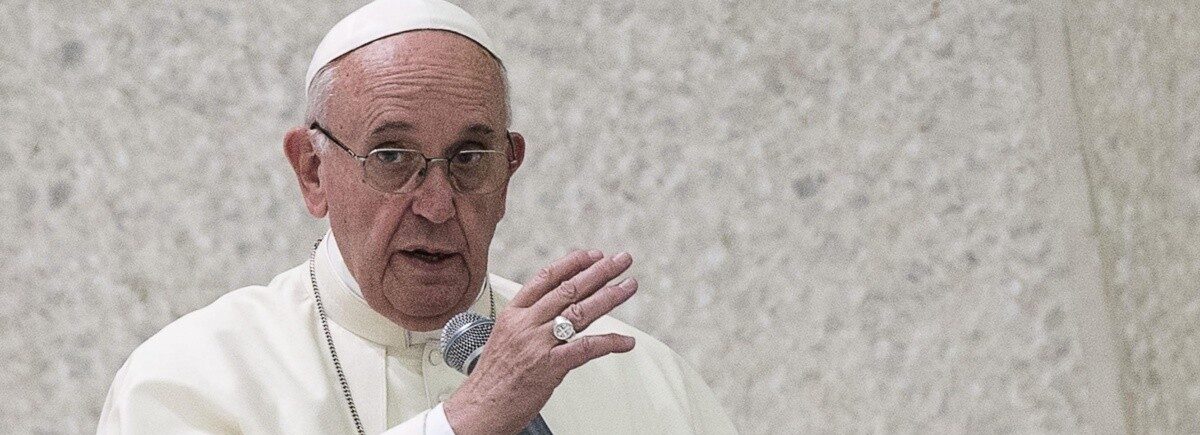
Pope Francis on Sunday urged governments to stop returning migrants to countries like Libya where they are sent to detention centres rife with abuse, and prioritise saving lives of those crossing the Mediterranean.
The pontiff’s message comes as Italy sees an increase in migrant arrivals from Libya, and the debate within a divided EU shifts to migrants entering the bloc’s eastern borders with Belarus.
“I express my closeness to the thousands of migrants, refugees and also others in need of protection in Libya,” Francis said in a heartfelt message following his Sunday Angelus prayer on Saint Peter’s Square in the Vatican.
“I don’t forget you ever. I hear your cry and pray for you,” he said.









“So many of these men, women and children are subject to an inhumane violence,” the pope said. “Yet again I exhort the international community to keep their promises and find common, concrete and lasting solutions, to manage the migrant flows in Libya and all the Mediterranean.”
Governments must stop returning migrants to “non-secure countries” like Libya, the 84-year-old pontiff said.
He urged them to prioritise saving lives in the Mediterranean, offer safe disembarkations at ports and guarantee migrants “alternatives to detention” and access to asylum.
– Arrivals increase –
Italy and the European Union have for years financed, trained and equipped the Libyan coastguard to intercept migrants heading for Europe on makeshift boats.
Those intercepted at sea and returned to Libya are placed in detention centres in deplorable conditions.
Italian Prime Minister Mario Draghi told Parliament Wednesday that arrivals to Italy from the Mediterranean had doubled thus far this year to 50,500 versus 26,000 in the same year-ago period.
About 1,106 people died this year attempting the crossing, he said.
On Sunday, migrant rescue hotline Alarm Phone said two inflatable boats in the Mediterranean carrying 60 and 68 people, respectively, needed urgent intervention.
Doctors Without Borders, meanwhile, said its Geo Barents charity vessel had rescued another 95 people Saturday night, bringing the total of rescued migrants onboard to 296.
The Aita Mari rescue vessel operated by Spanish search and rescue agency Salvamento Maritimo and carrying more than 100 migrants is also seeking a safe port to disembark, Italian news agency AGI reported Sunday.
On Saturday, the 406 migrants rescued in various operations by German rescue charity Sea-Watch began disembarking after Italy allowed it to dock at the Sicilian port of Pozzallo.
A two-day summit of EU leaders that ended Friday revealed continued rifts between countries on migrant issues. A number of EU member states, including Poland and Lithuania, called for the bloc to finance barriers to stem the thousands of migrants seeking access to Europe via Belarus.






Central America
U.S. and Regional Allies Back Panama Amid Dispute With China

The United States, Bolivia, Costa Rica, Guyana, Paraguay and Trinidad and Tobago issued a joint statement in support of Panama’s sovereignty, arguing that China’s recent actions represent an attempt to politicize maritime trade and undermine the sovereignty of nations in the hemisphere.
“We are closely monitoring China’s selective economic pressure and recent actions affecting vessels flying the Panamanian flag,” the statement released Tuesday said. “Panama is a pillar of our maritime trading system and, as such, must remain free from undue external pressure.”
The statement comes amid growing tensions surrounding the Panama Canal and the operation of key ports linked to global trade.
At the end of January, Panama’s Supreme Court invalidated the legal framework supporting the 1997 concession that granted Panama Ports Company, a subsidiary of CK Hutchison, the right to operate the Balboa and Cristóbal terminals located on the Pacific and Atlantic entrances of the Panama Canal.
The ruling followed mounting pressure from the United States to curb Chinese influence around the strategic waterway, through which roughly 5% of global maritime trade passes.
CK Hutchison, which managed the ports for nearly three decades, rejected the court’s decision and accused Panamanian authorities of illegally confiscating its assets. The company has launched international arbitration proceedings against Panama, seeking more than $2 billion in damages.
Following the court ruling, reports emerged of increased detentions and inspections of Panamanian-flagged vessels in China, actions widely viewed as retaliatory measures.
On Wednesday, China’s Foreign Ministry dismissed the joint statement as “completely unfounded and misleading,” accusing the United States of politicizing port operations and warning that Beijing would take steps to protect its interests in Panama.
International
King Charles III Says U.S.-UK Alliance Is “Irreplaceable and Unbreakable”
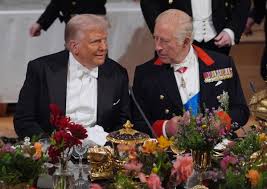
King Charles III of the United Kingdom reaffirmed the strength of the British-American relationship on Tuesday during a speech before the United States Congress, describing the alliance between the two nations as “irreplaceable and unbreakable.”
The address, delivered at the Capitol, marked the first speech by a British monarch before Congress since Queen Elizabeth II in 1991 and comes at a time of political tensions between Donald Trump’s administration and the Labour government of Prime Minister Keir Starmer.
“As President Trump himself observed during his state visit to Britain last autumn, the bond of kinship and identity between the United States and the United Kingdom is invaluable and eternal. It is irreplaceable and unbreakable,” the king said.
While reflecting on the upcoming 250th anniversary of U.S. independence, which will be commemorated this year, Charles III stated that the partnership between the two countries “was born out of disagreement, but is no less strong because of it.”
The monarch emphasized the democratic values shared by both nations and noted that major global changes have occurred whenever the two allies found common ground.
“When we have found that way to agree, great changes have taken place not only for the benefit of our peoples, but for all peoples,” he said.
King Charles also quoted British Prime Minister Keir Starmer, who recently described the relationship as “an indispensable alliance.”
Concluding his speech, the monarch described the shared history of the United States and the United Kingdom as “a story of reconciliation, renewal, and an extraordinary partnership.”
He added that Washington and London have forged “one of the most consequential alliances in human history.”
“I pray with all my heart that our alliance continues to defend our shared values, together with our partners in Europe, the Commonwealth, and around the world, and that we ignore calls urging us to become increasingly isolationist,” Charles III stated.
The king ended by urging both nations to “recommit to one another in selfless service to our peoples and to all peoples of the world.”
International
Trump Administration Considers Denying Green Cards Over Political Views
The administration of President Donald Trump is evaluating new immigration guidelines that could deny permanent residency to immigrants based on their political views, according to a report published by The New York Times.
The proposed measures, outlined in internal Department of Homeland Security documents, would instruct immigration officials to take applicants’ public expressions and ideological positions into account when reviewing green card applications.
According to the report, cases involving “possible anti-American and/or antisemitic conduct or ideologies” would need to be referred to higher authorities for additional review.
Even if applicants have not violated any laws, authorities could still reject residency requests if they determine that individuals have “endorsed, promoted, or supported anti-American views.”
Among the factors listed in the guidelines are participation in pro-Palestinian activities, actions considered antisemitic, and the burning of the U.S. flag.
The documents reportedly describe such actions as “heavily negative” factors in immigration evaluations, potentially blocking applicants from obtaining permanent residency and, eventually, U.S. citizenship.
The directives also place particular attention on demonstrations held on university campuses following the 2023 Hamas attacks against Israel.
However, flag burning has previously been recognized by the U.S. Supreme Court as a form of protected free speech under the Constitution.
The proposal has sparked criticism from immigrant advocacy organizations, including the New York Immigration Coalition.
Its president, Murad Awawdeh, warned that the policies could pose a threat to fundamental rights and freedoms.

U.S. and Regional Allies Back Panama Amid Dispute With China

International Project Tackles Gender Violence in Indigenous Communities in Panama

King Charles III Says U.S.-UK Alliance Is “Irreplaceable and Unbreakable”
Tec de Monterrey honors one of its students for his contribution to nanotechnology in medicine

Defense Minister commends salvadoran soldier for Central American Cross Country victory

Extension of the state of emergency approved in southern Chile
-
International1 day ago
King Charles III Says U.S.-UK Alliance Is “Irreplaceable and Unbreakable”
-

 International4 days ago
U.S. allows Venezuela to fund Maduro and Cilia Flores’ legal defense
-

 International2 days ago
Mexico Arrests CJNG Leader “El Jardinero” in Nayarit
-

 International3 days ago
Suspect Armed With Shotgun and Knives Detained at White House Correspondents Dinner
-
 International1 day ago
Trump Administration Considers Denying Green Cards Over Political Views
-
 Central America7 hours ago
U.S. and Regional Allies Back Panama Amid Dispute With China
-
 Central America7 hours ago
International Project Tackles Gender Violence in Indigenous Communities in Panama
-
 Central America2 days ago
Guatemala’s President to Hold Private Interviews for Attorney General Candidates