
International
Chilean scientist plans to clean up mining with ‘metal eating’ bacteria
AFP
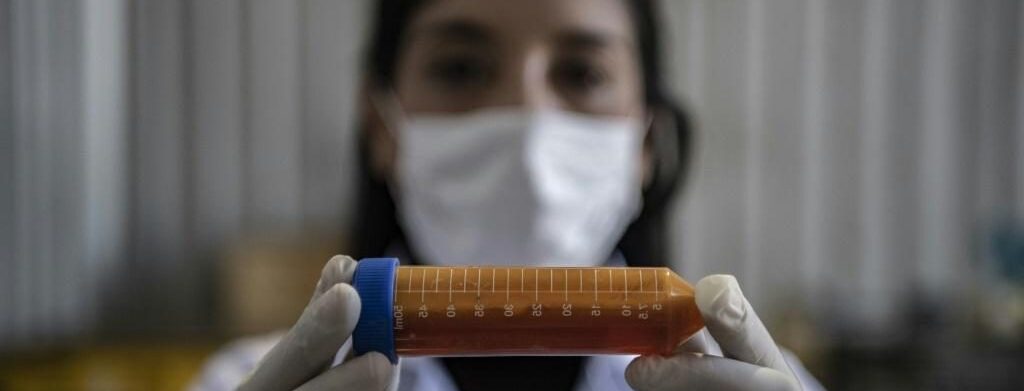
Starving microorganisms capable of surviving in extreme conditions have already managed to “eat” a nail in just three days.
In Chile, a scientist is testing “metal-eating” bacteria she hopes could help clean up the country’s highly-polluting mining industry.
In her laboratory in Antofagasta, an industrial town 1,100-kilometers north of Santiago, 33-year-old biotechnologist Nadac Reales has been carrying out tests with extremophiles — organisms that live in extreme environments.
Reales came up with her idea while still at university as she was conducting tests at a mining plant using microorganisms to improve the extraction of copper.









“I realized there were various needs in the mining industry, for example what happened with the metallic waste,” she told AFP.
Some metals can be recycled in smelting plants but others, such as HGV truck hoppers that can hold 50 tons of rock, cannot and are often discarded in Chile’s Atacama desert, home to the majority of the country’s mining industry.
Chile is the world’s largest producer of copper, which accounts for up to 15 percent of the country’s GDP, resulting in a lot of mining waste that pollutes the environment.
In her research, Reales, who now runs her own company Rudanac Biotec, concentrated on iron-oxidizing bacteria called Leptospirillum.
She extracted the bacteria from the Tatio geysers located 4,200 meters above sea level, some 350 kilometers from Antofagasta.
The bacteria “live in an acidic environment that is practically unaffected by relatively high concentrations of most metals,” she said.
“At first the bacteria took two months to disintegrate a nail.”
But when starved, they had to adapt and find a way of feeding themselves.
After two years of trials, the result was a marked increase in the speed at which the bacteria “ate,” devouring a nail in just three days.
– Surprising benefit –
Reales says “chemical and microbiological tests” have proved the bacteria are not harmful to humans or the environment.
“We’ve always seen a lot of potential in this project that has already passed an important test in the laboratory,” said Drina Vejar, a microbiologist who is part of a four-person team working with Reales.
“It’s really necessary at this time when we have to plan for a more sustainable development, especially in all these cities with so many polluting industries.”
Mining companies have shown interest in the research but while Rudanac Biotec previously benefitted from a state fund for start-ups, the company needs investment to move on to its next stage of trials.
Reales says she needs money to see if her method will “eat a medium sized beam or a hopper.”
When the disintegration process is complete, what remains is a reddish liquid residue, a solution known as a lixiviant that itself possesses a surprising quality.
“After biodisintegration the product generated (the liquid) can improve the recovery of copper in a process called hydrometallurgy,” said Reales.
Essentially, the liquid residue can be used to extract copper from rock in a more sustainable manner than the current use of chemicals in leaching.
Reales says it means green mining is “totally feasible.”
That is of great interest to mining companies that could use it to improve their large scale extraction of copper or other minerals, while also reducing their pollution, something they are required to do by law.
Reales recently submitted a request for an international patent for her technology, but more importantly she hopes it will help reduce metal waste blotting the landscape in the mining regions of her country.






International
Looting Spreads in Venezuela’s Hardest-Hit Areas After Deadly Earthquakes
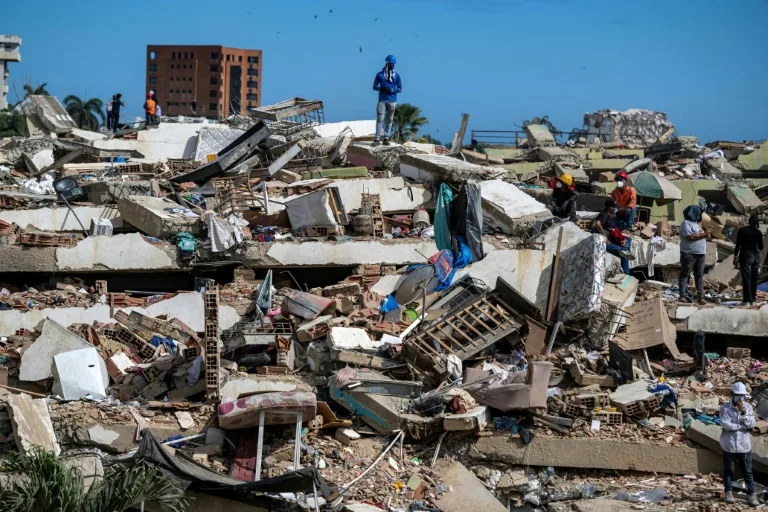
Not even the wires were left behind at a small grocery store. Before the ground had even stopped shaking, looting and theft began in the areas hardest hit by the double earthquake that struck Venezuela.
Reports of robberies have multiplied in the coastal state of La Guaira, located near Caracas and now transformed into a landscape of collapsed buildings and debris.
Videos circulating on social media show groups of people removing boxes of household appliances from a damaged store. Other images show similar boxes being carried on top of vehicles and motorcycles.
Social media platforms have also been filled with accusations against police officers and military personnel who allegedly stole from homes and even from victims who died during the disaster.
A branch of a major pharmacy chain was looted, along with supermarkets and other businesses. Some residents have described the situation as “disaster tourism,” while others say the looting reflects hunger and desperation among people who lost everything in a country already facing a prolonged economic crisis.
“Is it fair that our own people turn against our own people?” said María Esther Bernal, 71, who rented commercial spaces to Chinese merchants, all of which were looted. “They left nothing behind, not even the wallpaper. They even took the cables,” she said.
“Next door, a man died. He was Chinese. People walked over his body while they looted the place. It was a supermarket,” she added.
An AFP journalist witnessed looting in La Guaira since Thursday, following the earthquakes.
Jenifer Mayora, 34, defended some of the actions, saying that “the things people took were because the owners of the stores allowed us to take them.”
However, she criticized the limited response from authorities. “I have been waiting for a mattress so my children can sleep,” she said.
Residents have expressed anger over what they describe as a slow and insufficient response from authorities after the double earthquake, which has left around 1,450 people dead and tens of thousands missing.
Communities are demanding not only faster rescue operations in La Guaira, but also stronger security measures and urgent assistance with food, water, and medicine.
International
UN warns Venezuela earthquakes could affect up to 6.76 million people
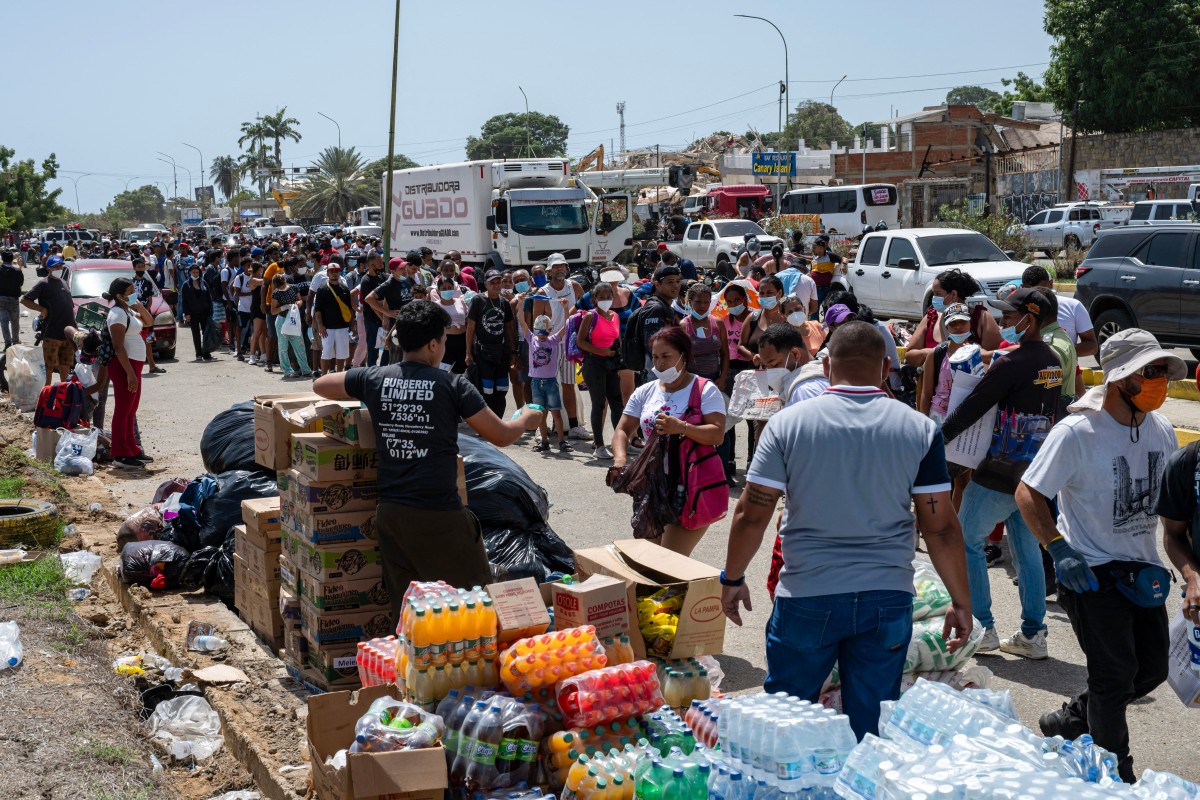
Up to 6.76 million people could be affected by the devastating earthquakes that struck Venezuela on June 24, according to an assessment released by the International Organization for Migration (IOM), a United Nations agency.
The organization said the projections are based on available population data and damage assessments, and include up to two million people living in Caracas, the country’s capital.
The estimates highlight the potentially massive humanitarian impact of the disaster, the IOM warned.
Entire buildings collapsed in La Guaira, a coastal area north of Caracas, following the powerful twin earthquakes that reached magnitudes of 7.2 and 7.5 on Wednesday.
The national death toll has risen to 920, while rescue teams continue searching for people trapped beneath the rubble in coastal regions and other affected areas.
UN humanitarian chief Tom Fletcher told AFP on Friday that more than 50,000 people were reported missing.
The IOM also revealed that it worked with Microsoft’s artificial intelligence laboratory on an initial satellite mapping analysis, which showed that 31.5% of buildings in the town of Catia La Mar had suffered damage.
Authorities and international rescue teams continue operations as Venezuela faces one of its largest humanitarian emergencies in recent years.
International
United Nations Coordinates Relief Efforts as Venezuela Death Toll Rises After Twin Quakes
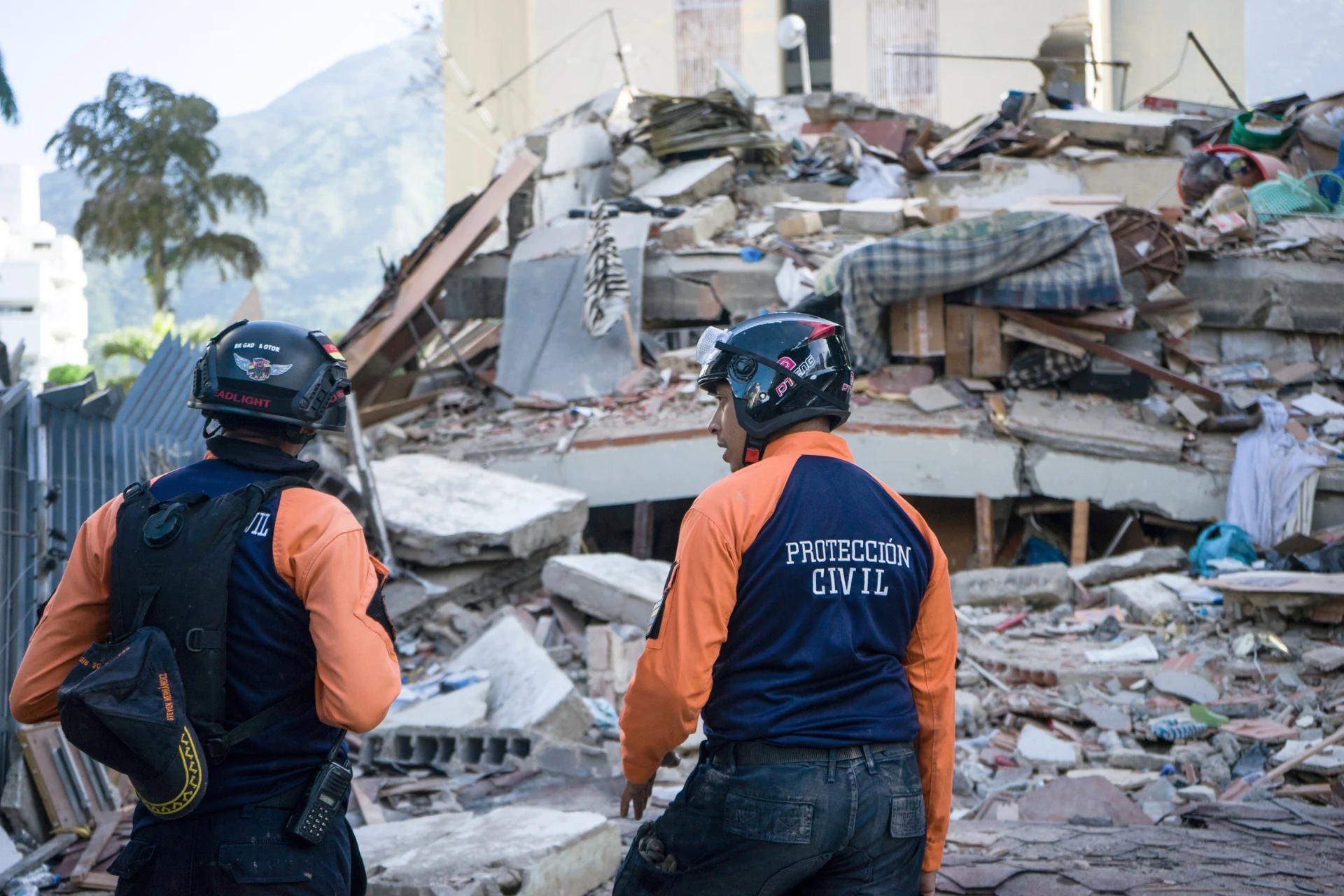
United Nations Secretary-General António Guterres on Thursday expressed his condolences to the people of Venezuela following the two devastating earthquakes that struck the country and highlighted the ongoing coordination between UN humanitarian teams and interim President Delcy Rodríguez.
Speaking during the UN’s daily press briefing, spokesperson Stéphane Dujarric said Guterres was deeply saddened by the loss of life and widespread destruction caused by the disaster.
“The Secretary-General is deeply distressed by the loss of life and the widespread devastation caused by the earthquakes that struck Venezuela yesterday. He extends his heartfelt condolences to the families of the victims and wishes a speedy recovery to those injured,” Dujarric stated.
Venezuela was struck on Wednesday by two powerful earthquakes measuring 7.2 and 7.5 in magnitude. According to official figures, the disaster has left at least 164 people dead and 971 others injured.
Dujarric noted that preliminary reports indicate significant damage across several states, including the capital, Caracas. Numerous casualties have been reported, while other individuals remain trapped beneath collapsed structures or are still missing.
“Critical infrastructure has been damaged and essential services have been disrupted,” the spokesperson said.
The United Nations confirmed that its humanitarian team remains in close contact with interim President Delcy Rodríguez and other relevant authorities as emergency operations continue.
To support relief efforts, the UN has established a coordination center in Caracas and is assisting local authorities to ensure that humanitarian aid reaches affected communities as quickly and efficiently as possible.
Guterres also welcomed the expressions of solidarity and offers of assistance from countries around the world that responded following news of the disaster, underscoring the importance of international cooperation in addressing the humanitarian emergency.

Looting Spreads in Venezuela’s Hardest-Hit Areas After Deadly Earthquakes

UN warns Venezuela earthquakes could affect up to 6.76 million people

United Nations Coordinates Relief Efforts as Venezuela Death Toll Rises After Twin Quakes
Tec de Monterrey honors one of its students for his contribution to nanotechnology in medicine

Defense Minister commends salvadoran soldier for Central American Cross Country victory

Extension of the state of emergency approved in southern Chile
-
 Central America4 days ago
El Salvador and Chile Mark 150 Years of Relations With Expanded Bilateral Cooperation
-
 International3 days ago
OAS Secretary General Pledges Regional Assistance Following Venezuela Quake Disaster
-
 International3 days ago
United Nations Coordinates Relief Efforts as Venezuela Death Toll Rises After Twin Quakes
-
 International4 days ago
WHO Expects Deadly Hantavirus Outbreak on Cruise Ship to End by July 2
-

 International4 days ago
Bill Gates Says Jeffrey Epstein Made “Veiled” Threats Over Extramarital Affairs
-
 International29 minutes ago
Looting Spreads in Venezuela’s Hardest-Hit Areas After Deadly Earthquakes
-
 International1 day ago
UN warns Venezuela earthquakes could affect up to 6.76 million people