
International
Afghan women call for respect in rare protest

AFP
Defiant Afghan women held a rare protest Thursday saying they were willing to accept the burqa if their daughters could still go to school under Taliban rule.
“It is our right to have education, work and security,” the group of around 50 female demonstrators chanted, waving placards on the streets of Afghanistan’s western city of Herat.
During the Taliban’s first stint in power, before being ousted by a US-led invasion in 2001, women and girls were mostly denied education and employment.
Burqas became mandatory in public, women could not leave home without a male companion, and street protests were unthinkable.











“We are here to ask for our rights,” Fereshta Taheri, one of the demonstrators, told AFP by phone.
“We are even ready to wear burqas if they tell us, but we want the women to go to school and work,” the photographer and artist added.
Herat, an ancient Silk Road city close to the Iranian border, has long been a cosmopolitan exception to more conservative centres, though some women already wear the burqa.
– ‘Fear and uncertainty’ –
The Taliban, who seized power last month after a lightning military campaign, are in discussions about the make-up of a new government.
They have pledged their leadership will be “inclusive”, but many doubt women will find a place in Afghanistan’s new administration.
“We follow the news, and we don’t see any women in Taliban meetings and gatherings,” said Herat protester Mariam Ebram.
The group have now promised a softer brand of rule, pledging that women will be allowed to work but within the limits of Sharia law.
The rebranding is being treated with scepticism, with experts questioning whether it will be a short-term bid to seek international recognition and a continuation of vital aid.
“The talks are ongoing to form a government, but they are not talking about women’s participation,” Basira Taheri, one of the rally’s organisers said.
“We want to be part of the government — no government can be formed without women. We want the Taliban to hold consultations with us.”
She described how “most of the working women in Herat are at home”, out of fear and uncertainty.
Ebram said that those who had returned faced resistance from the new Taliban forces in control.
“Some women, like doctors and nurses who dared to go back to work, complain that the Taliban mock them,” Ebram said.
“The Taliban don’t look at them, they don’t talk to them. They only show their angry faces to them.”
Primary school age children including girls have returned to school, but the Taliban says further education is on hold until after the formation of a government.
– ‘Different aspirations’ –
Protests against Taliban rule were inconceivable during their last reign.
Former government minister Nehan Nargis, speaking to the BBC late Wednesday from Norway where she fled to last month, said Afghanistan had changed from when the Taliban were last in power.
“People are much more aware, they have different aspirations for Afghanistan now, and expectations from government,” she said, noting social media now helped bring like-minded activists together.
“The Afghan people… have collectively raised their voice very strongly using the platform of social media for their issues and causes… and they will continue to use that,” Nargis said.
Basira Taheri said they would continue to protest until their demands were met.
“The women of this land are informed and educated,” she said. “We are not afraid, we are united.”
Herat’s demonstrators said they hoped their example would inspire others across the country.
“We will continue our protests,” Basira Taheri said. “We started it in Herat, it will soon expand to other provinces.”










International
Luigi Mangione Pleads Guilty to Killing UnitedHealthcare CEO Brian Thompson
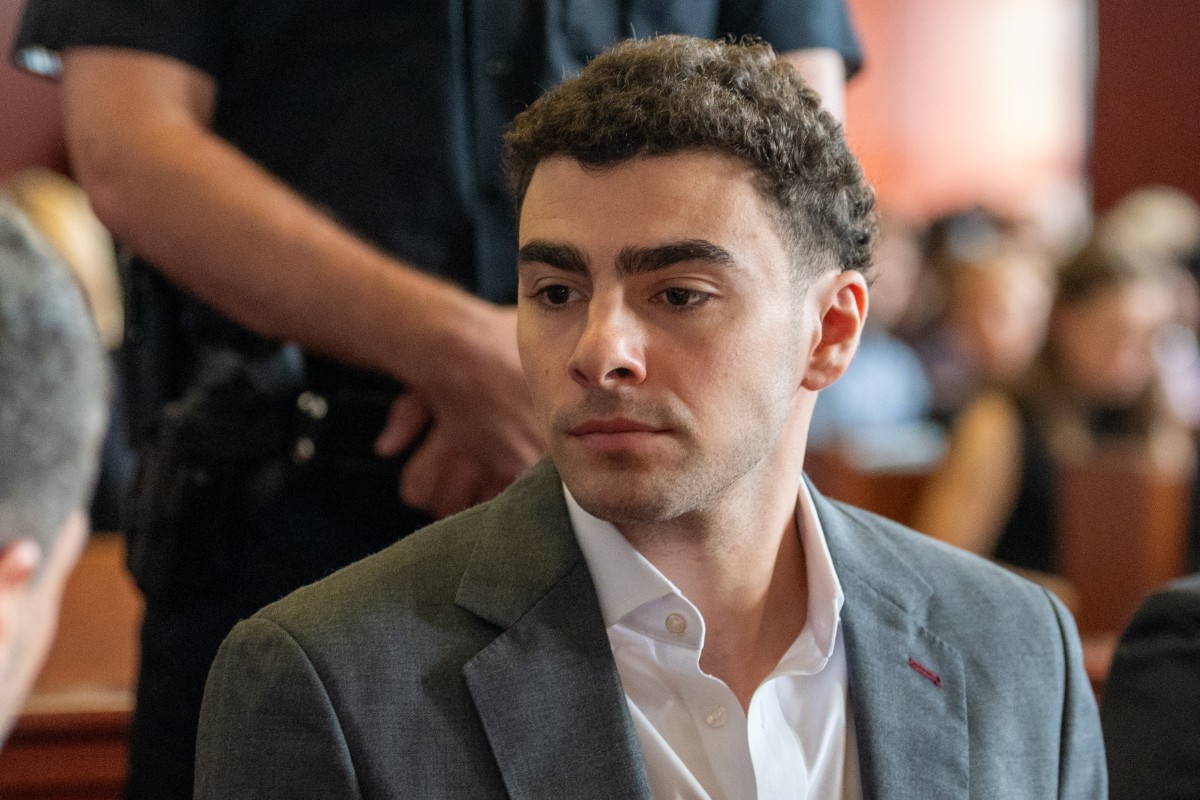
Luigi Mangione admitted Friday to fatally shooting Brian Thompson, the CEO of UnitedHealthcare, the largest health insurance group in the United States, during an appearance before a federal judge.
The case shocked the U.S. business community and dates back to December 2024, when Mangione opened fire on Thompson, 50, on a Manhattan street. Prosecutors have described the attack as being motivated by Mangione’s opposition to the U.S. health insurance system.
“On the morning of December 4, I shot Mr. Thompson in Manhattan and he died,” Mangione said as he pleaded guilty to a federal stalking charge related to his pursuit of the executive.
Mangione, 28, is scheduled to be sentenced on December 18, and prosecutors have indicated that they will seek a life sentence.
In addition to the federal charges related to stalking Thompson, Mangione also faces a murder case brought by the state of New York.
Following his guilty plea in federal court, Mangione’s defense asked a state court to dismiss the state charges, arguing that prosecuting him again for the same conduct would violate protections against double jeopardy.
“We have just filed our motion in state court to explain why the charges should be dismissed under New York’s protections against double jeopardy,” Mangione’s attorney, Karen Friedman Agnifilo, said Friday.
Both the federal and state cases could result in a life sentence. Two other federal charges that initially carried the possibility of the death penalty were dismissed by a judge earlier this year.
International
ICE Plan to Equip Agents With Electric Shock Gloves Raises Abuse Concerns
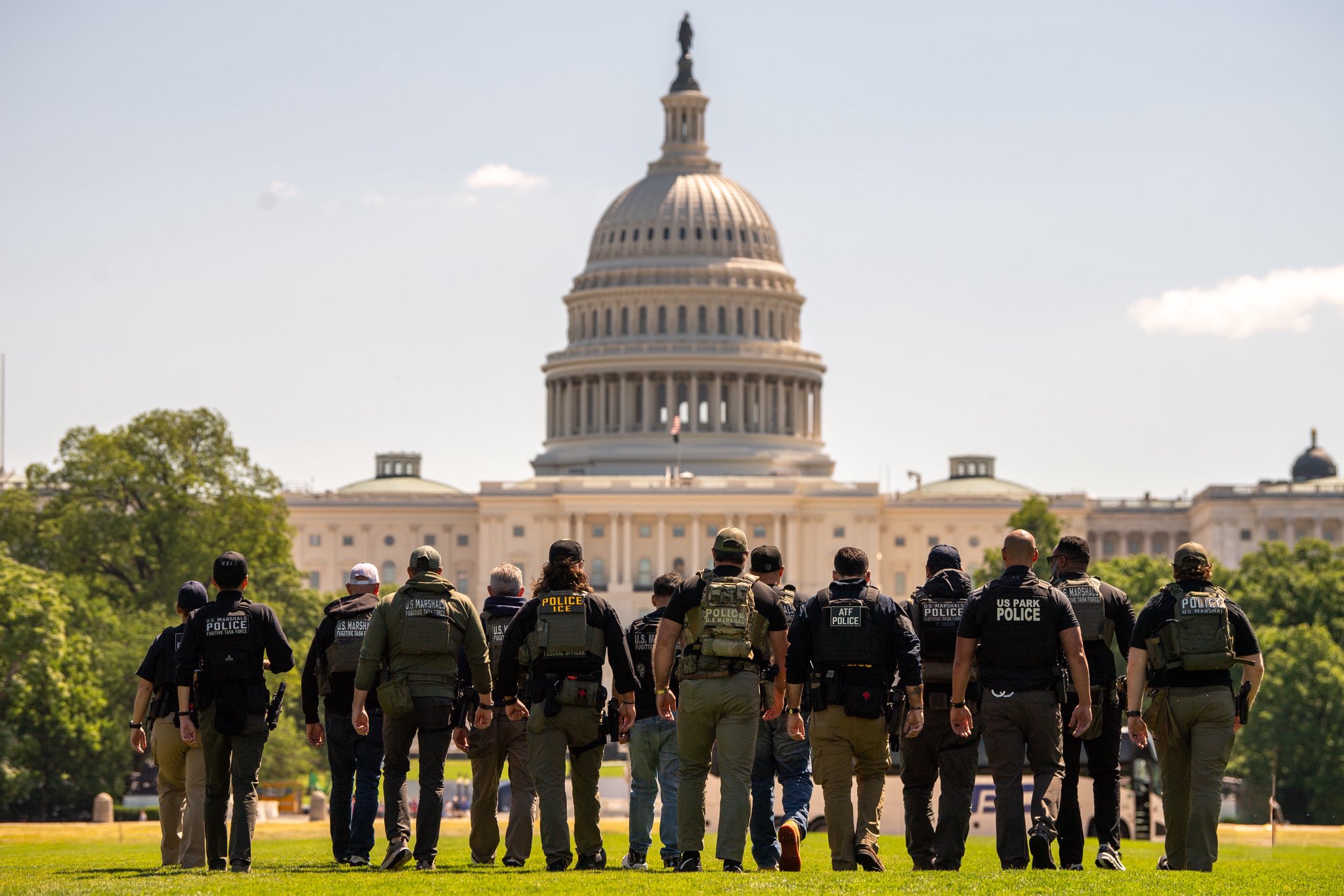
Plans to equip U.S. immigration agents with gloves capable of delivering electric shocks are raising concerns over potential abuses by a law enforcement agency that critics accuse of using excessive force and providing inadequate training to its personnel.
The plan involves the potential purchase of electric-shock gloves for agents with U.S. Immigration and Customs Enforcement (ICE), the agency primarily responsible for carrying out President Donald Trump’s campaign to deport millions of undocumented immigrants.
Democratic Representative Maxwell Frost criticized the proposal on X, arguing that the agency has already faced accusations of excessive force during immigration enforcement operations.
“As if assaulting and shooting people in the streets wasn’t enough,” Frost wrote. He also criticized the reported $20 million potential expenditure on the devices and called for greater restrictions on ICE.
The agency has faced growing scrutiny following a series of deadly shootings during immigration enforcement operations. Among the incidents were the deaths of two U.S. citizens in Minnesota in January who were participating in protests against the agency.
Critics have focused on the tactics used by ICE agents when detaining immigrants, as well as allegations that training standards for newly recruited personnel have been lowered.
According to a procurement plan first reported by the Associated Press, the Department of Homeland Security (DHS), which oversees ICE, could spend between $10 million and $20 million on the devices.
The gloves are described by the agency as tools intended for “distraction and de-escalation,” rather than lethal weapons. The system, known as GLOVE, stands for “Generated Low-Output Voltage Emitter.”
The device is manufactured by Compliant Technologies, a Kentucky-based company that describes its products as advanced non-lethal tools designed to protect and assist law enforcement and other personnel.
The proposal comes amid an intensifying national debate over ICE’s enforcement methods and the use of force during the Trump administration’s immigration crackdown.
International
Three U.S. Executions Set for Same Day as Trump Pushes to Expand Death Penalty

The death penalty has been abolished in 23 of the 50 U.S. states, while three others —California, Oregon and Pennsylvania— currently have moratoriums in place.
The United States is set to carry out three executions on the same day, a rare occurrence that has not happened since 2010, according to the nonprofit Death Penalty Information Center.
President Donald Trump has sought to expand the use of capital punishment for what he describes as “the most heinous crimes.” In April, the Department of Justice proposed expanding execution methods to include firing squads, lethal gas and electrocution.
Tennessee is scheduled to execute Anthony Darrell Dugard Hines, 66, on Thursday. He was sentenced to death for the 1985 murder of a woman, according to local media.
In Oklahoma, Carlos Cuesta-Rodríguez, 70, is scheduled to be executed for a 2003 murder.
Meanwhile, Alabama plans to execute Jeremy Williams, 42, who was sentenced to death for the rape and murder of a five-year-old girl.
The United States carried out 47 executions in 2025, the highest number since 2009, when 52 executions were recorded.
Florida conducted the largest number of executions last year, with 19, followed by Alabama, South Carolina and Texas, with five each.
Of the executions carried out in 2025, 39 were conducted by lethal injection. Three were carried out by firing squad and five through nitrogen hypoxia, a method that involves forcing nitrogen gas into a face mask, depriving the prisoner of oxygen.
The United Nations has condemned nitrogen gas as a cruel and inhumane method of capital punishment.

Luigi Mangione Pleads Guilty to Killing UnitedHealthcare CEO Brian Thompson

ICE Plan to Equip Agents With Electric Shock Gloves Raises Abuse Concerns

Three U.S. Executions Set for Same Day as Trump Pushes to Expand Death Penalty

Colombia Earthquake Death Toll Reaches 265 as Rescue Teams Race Against Time

German Authorities Investigate More Than 100 New Cases Against Convicted Nurse

Venezuela Raises Earthquake Death Toll to 6,301

CEAPI Backs Colombia’s New Government and Calls for Greater Public-Private Cooperation
Colombia Earthquake Leaves at Least 22 Dead as Rescue Efforts Continue
Three U.S. Executions Set for Same Day as Trump Pushes to Expand Death Penalty
Colombia Earthquake Death Toll Reaches 265 as Rescue Teams Race Against Time
Luigi Mangione Pleads Guilty to Killing UnitedHealthcare CEO Brian Thompson
ICE Plan to Equip Agents With Electric Shock Gloves Raises Abuse Concerns
-
 International3 days ago
Three U.S. Executions Set for Same Day as Trump Pushes to Expand Death Penalty
-
 International3 days ago
Colombia Earthquake Death Toll Reaches 265 as Rescue Teams Race Against Time
-
 International2 days ago
Luigi Mangione Pleads Guilty to Killing UnitedHealthcare CEO Brian Thompson
-
 International2 days ago
ICE Plan to Equip Agents With Electric Shock Gloves Raises Abuse Concerns