
Central America
Nicaragua detains four more opposition figures

AFP/Editor
Nicaraguan police said Sunday that they had detained four more opposition figures in a roundup ahead of November presidential elections in which four would-be challengers of long-serving leader Daniel Ortega have already been held.
Those arrested Sunday were top figures of the Unamos opposition party — its president Suyen Barahona Cuan, vice-president Hugo Torres, ex-guerilla Dora Maria Tellez and Ana Margarita Vigil Guardian, a police statement said.
It said the four were being investigated for “acts that undermine independence, sovereignty and self-determination, (and) inciting foreign interference in internal affairs,” among other crimes.
Unamos, formerly known as the Sandinista Renewal Movement (MRS), is made up largely of dissidents who split from Ortega’s Sandinista National Liberation Front (FSLN) because they disagreed with his leadership.











The charges stem from a law initiated by Ortega’s government and approved by parliament in December to defend Nicaragua’s “sovereignty,” which has been criticized by opponents and rights bodies as a means of freezing out challengers.
Julie Chung, the top US diplomat for Latin America, called the arrests “arbitrary” and denounced Ortega’s “campaign of terror” in a tweet.
“OAS (Organization of American States) members must send a clear signal this week: enough repression. The region cannot stand by and wait to see who is next,” she added.
Among the latest detainees, Tellez, 65, has in recent years been a vocal critic of Ortega, a former comrade-in-arms.
They fought together as guerillas against the dictatorship of Anastasio Somoza in the 1970s, and she later served as his health minister in the 1980s, before leaving in 1995 to co-found the MRS.
She was fiercely critical of the Ortega’s government clampdown on demonstrations that started in 2018 to demand his resignation, which according to rights groups claimed at least 328 lives.
Ortega governed Nicaragua from 1979 to 1990, returned to power in 2007 and has won two successive reelections since then.
Now 75, he is accused by the opposition and NGOs of increasing authoritarianism.
Ortega is widely expected to seek a fourth term in November elections, though he has not said so.
Since the beginning of the month, his forces have arrested about a dozen opposition figures, including four would-be presidential candidates, eliciting international condemnation and fresh US sanctions against Ortega allies.
Last month, Nicaragua’s legislature appointed a majority of governing party-aligned magistrates to the election body that will oversee the vote.
It has since disqualified two parties from participating.










Central America
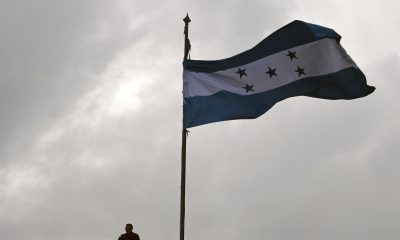
Violent Killings of Women in Honduras Remain High During First Half of 2026
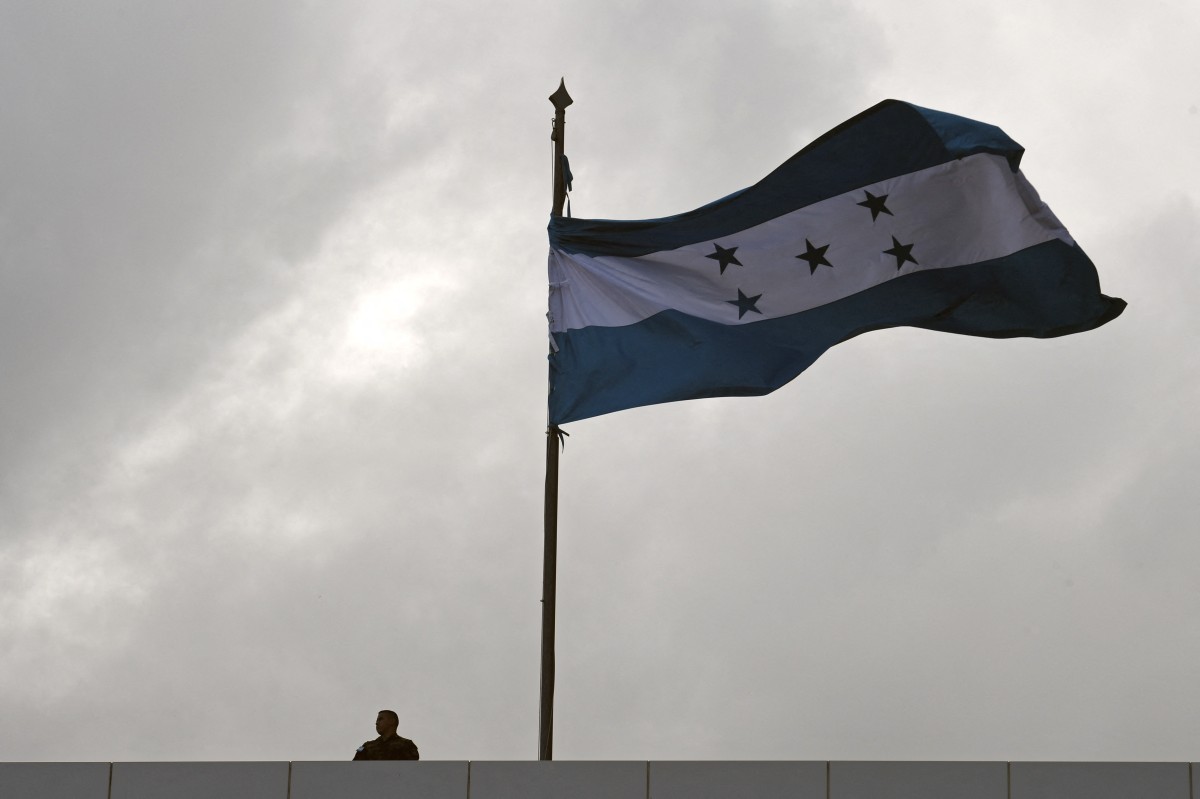
Violent deaths of women remain a major concern in Honduras, according to preliminary data released by the Violence Observatory of the National Autonomous University of Honduras.
Between January and June 2026, the country recorded 139 violent deaths of women, one more than the 138 reported during the same period in 2025.
The Observatory’s director, Migdonia Ayestas, said that although the increase is minimal, the figures confirm that violence against women remains a persistent problem.
“Violence against women is a serious issue. The ways in which they are being killed have become increasingly brutal and inhumane,” Ayestas said.
She explained that documented cases include dismemberment, beheadings, sexual assaults, and bodies abandoned in public places, acts that she said reflect the violence carried out by criminal organizations.
Ayestas stressed that the analysis should go beyond the number of victims and focus on the effectiveness of the justice system.
“We should not only count how many women are killed, but also how many cases are investigated, how many arrests are made, and how many reach the courts,” she said.
According to the Observatory, more than 8,000 women have died violent deaths in Honduras since 2005, leaving thousands of children orphaned.
Ayestas also called for stronger prevention efforts, improved education, and more effective criminal investigations to address the crisis. She argued that the current state of emergency alone has not been sufficient to dismantle criminal organizations or significantly reduce violence, emphasizing the need for comprehensive strategies to prevent these crimes and combat impunity.
The first-half figures for 2026 underscore that violence against women remains one of Honduras’ most pressing security and human rights challenges.
Sports
France edge Paraguay 1–0 as Mbappé penalty sends Les Bleus into World Cup quarterfinals
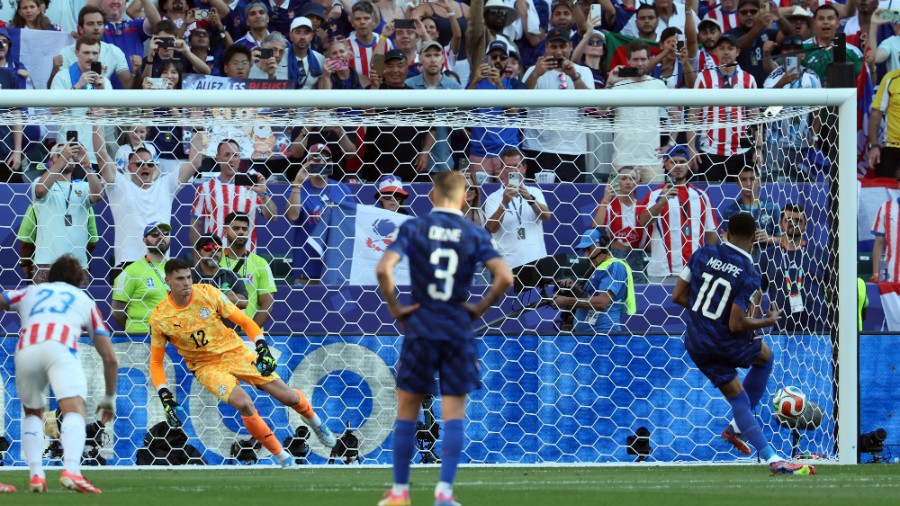
France secured a narrow 1–0 victory over Paraguay to advance to the quarterfinals of the FIFA World Cup 2026, thanks to a second-half penalty converted by Kylian Mbappé.
The match, played at the Lincoln Financial Field, was heavily affected by extreme heat, with temperatures reaching 37°C and a heat index of 40°C, forcing players and fans to remain constantly hydrated and contributing to a slower-paced encounter.
France dominated possession throughout the first half, holding 76% of the ball and registering six shots on target without managing to convert. Paraguay, meanwhile, maintained a compact defensive structure, often dropping as many as eight players behind the ball and relying on counterattacks.
Despite their control, the French side struggled to create clear chances, a situation that visibly frustrated coach Didier Deschamps. His team returned from halftime with the same approach, eventually forcing a save from Paraguay goalkeeper Orlando Gill after a shot from Manu Koné in the 55th minute.
The breakthrough arrived in the 70th minute when the referee, after a VAR review, awarded a penalty following a foul by Diego Gómez on Désiré Doué inside the box. Mbappé converted from the spot to give France the lead.
After the goal, France managed the game more calmly, while Paraguay pushed forward in search of an equalizer, opening up their defensive shape.
With his goal, Mbappé reached seven goals in the tournament, level with Argentina’s Lionel Messi in the scoring charts, and moved within one goal of the all-time World Cup scoring record.
Central America
El Salvador and Chile Mark 150 Years of Relations With Expanded Bilateral Cooperation
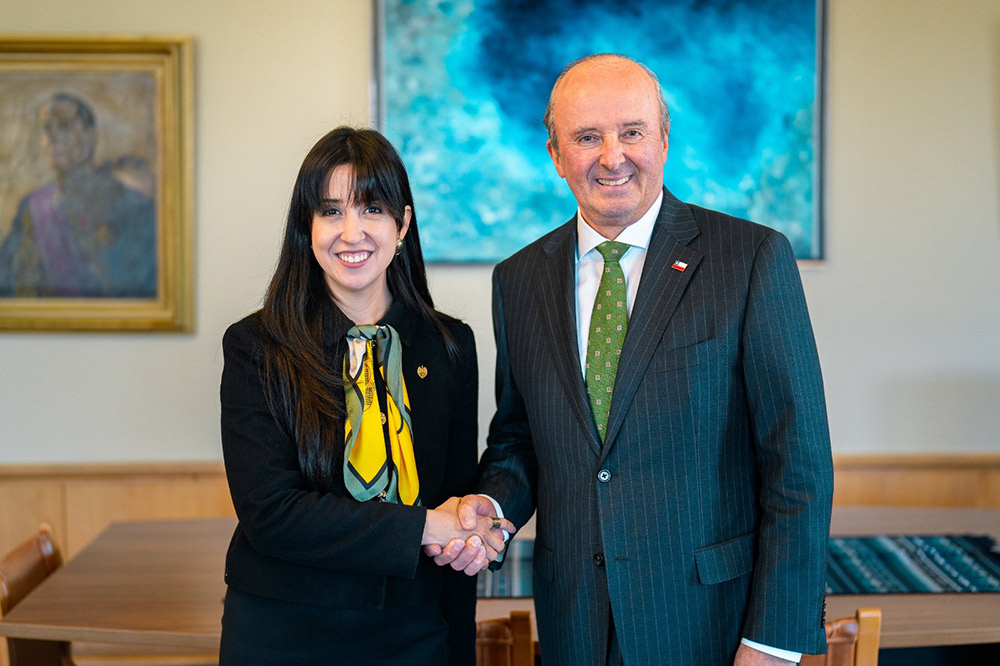
El Salvador and Chile are strengthening their diplomatic and cooperation ties through the official visit of Salvadoran Deputy Foreign Minister Adriana Mira to the South American country.
The purpose of the visit is to expand economic exchanges, promote new cooperation opportunities, and strengthen the bonds of friendship between both nations, according to El Salvador’s Foreign Ministry.
During her visit, Mira held a meeting with her Chilean counterpart, Patricio Torres, where they discussed issues of common interest and actions aimed at further advancing bilateral relations.
The agenda included initiatives to promote trade, encourage investment in strategic sectors, and strengthen joint efforts in different areas of cooperation.
As part of this process, both countries are preparing the 5th Meeting of the Joint Commission for Technical and Scientific Cooperation, where they are expected to establish a new framework for bilateral collaboration aimed at creating mutual benefits.
The meeting also carried a historic significance, as El Salvador and Chile are commemorating 150 years of diplomatic relations in 2026.
Representatives from both governments highlighted the importance of continuing to deepen their ties of friendship and cooperation to support shared development goals.
El Salvador’s Foreign Ministry emphasized that the relationship between both countries seeks to advance greater economic, commercial, and technical integration while taking advantage of new opportunities for collaboration.

Wildfires Burn Nearly 7,800 Hectares in France as Extreme Heat Fuels Fire Risk

USAR El Salvador Helps Rescue Dogs Trapped for 12 Days Beneath Earthquake Rubble

UN Appeals for $296 Million in Emergency Aid Following Venezuela Earthquakes
Tec de Monterrey honors one of its students for his contribution to nanotechnology in medicine

Defense Minister commends salvadoran soldier for Central American Cross Country victory

Extension of the state of emergency approved in southern Chile
-
 International9 hours ago
Wildfires Burn Nearly 7,800 Hectares in France as Extreme Heat Fuels Fire Risk
-

 Sports4 days ago
France edge Paraguay 1–0 as Mbappé penalty sends Les Bleus into World Cup quarterfinals
-
 International9 hours ago
UN Appeals for $296 Million in Emergency Aid Following Venezuela Earthquakes
-
 International9 hours ago
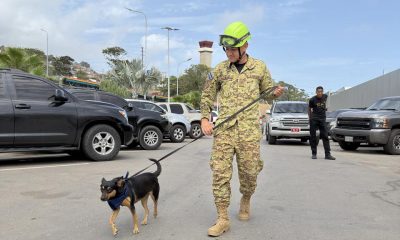
USAR El Salvador Helps Rescue Dogs Trapped for 12 Days Beneath Earthquake Rubble
-
 International2 days ago
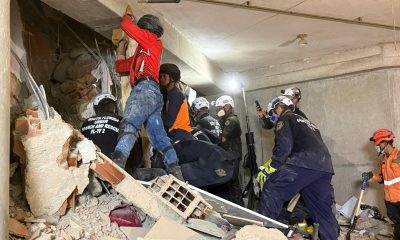
Venezuela Earthquake Death Toll Rises to 3,535 as Search for Victims Continues
-
 International9 hours ago
German Doctor Sentenced to Life for Murdering 15 Patients in Serial Killing Case
-
 Central America2 days ago
Violent Killings of Women in Honduras Remain High During First Half of 2026