
International
Mexico and the US launch an unprecedented joint border plan to stop arms trafficking
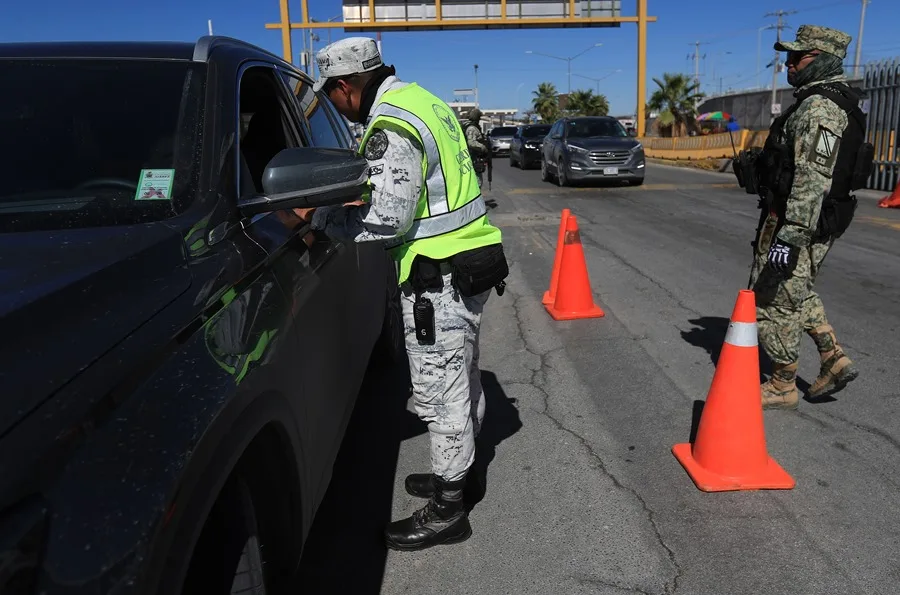
Mexico and the United States launched a new joint initiative to stop arms trafficking to Mexican territory, in an attempt to attack one of the main sources of violence in the country: the illegal entry of weapons from the north to the south, something that EFE was able to verify this Monday on the Ciudad Juárez border.
The plan contemplates bilateral operations and stricter controls at international crossings, such as the one recently installed on the Córdoba-Americas Bridge, one of the busiest on the binational border and that connects Ciudad Juárez with the American El Paso, where elements of the Mexican Army check vehicles for weapons and ammunition.
Mexican authorities stressed that the objective is to “safeguard national security on both sides of the border.”
The urgency of the agreement was evident after the murder of Héctor René Rocha González, lawyer and former employee of the Municipality of Juárez, which recently occurred in the San Antonio neighborhood of the border town.
The man was chased by hitmen while driving a Jeep Wrangler and died while trying to escape running away; the aggressors shot him with an AK-47 rifle, a weapon that, according to authorities, smuggled from the United States.
For research professor Ricardo Melgoza Ramos, from the Autonomous University of Ciudad Juárez, the agreement opens a window of opportunity after failed experiences in the past.











“There was already talk of an arms trafficking agreement, we will remember the failed process of ‘Fast and Furious’. However, we believe that this new attempt may be positive,” Melgoza told EFE about the weapons tracking initiative agreed between Washington and Mexico City between 2006 and 2011.
“It must be remembered that 200,000 weapons cross from the United States to Mexico: 43% from Texas, 22% from Arizona and 9% from California. Now it will be possible to use the E-Trace platform to quickly detect the origin of the weapon. If this materializes, the flow of weapons will be reduced and criminal groups will be strangled with the financial part,” he said.
Likewise, Melgoza added that the change of security policy under the government of President Claudia Sheinbaum represents a break with the motto of ‘no bullet hugs’ by former Mexican President Andrés Manuel López Obrador (2018-2024).
“Now more is being fought, although there are still regions, such as the Chihuahua mountain range, where organized crime has control. To achieve peace, joint work and purification of police corporations are needed,” he said.
Border operations are part of a mission that arises after the visit of US Secretary of State, Marco Rubio, to Mexico City, in which he held meetings with President Sheinbaum to strengthen cooperation between both countries on security.
“We reached an agreement that the United States will reinforce the operations (…) to control the passage of weapons from the United States to Mexico, an agreement of this type had never been reached,” the president remarked after the meeting with Rubio last September.
For his part, the lawyer and former public security official Fernando Rubalcaba highlighted the positive aspects of binational cooperation.
“The benefit is more positive thanks to these agreements, because they allow a climate of collaboration and understanding of a common cause such as public security. How good that a way to avoid the introduction of weapons is being sought, given that almost all high-impact crimes are committed with firearms,” he said.
Rubalcaba stressed that tools such as the IBIS ballistic system in Mexico and Interpol’s international IBIN program can be strengthened with this type of agreement.
“It will allow us to make cross-checks of intelligence information and better track weapons. Military filters on bridges inhibit crime and generate security, although some may perceive the opposite,” he said.










International
Five Bodies Found in Ecuador as Police Probe Suspected Gang Turf War
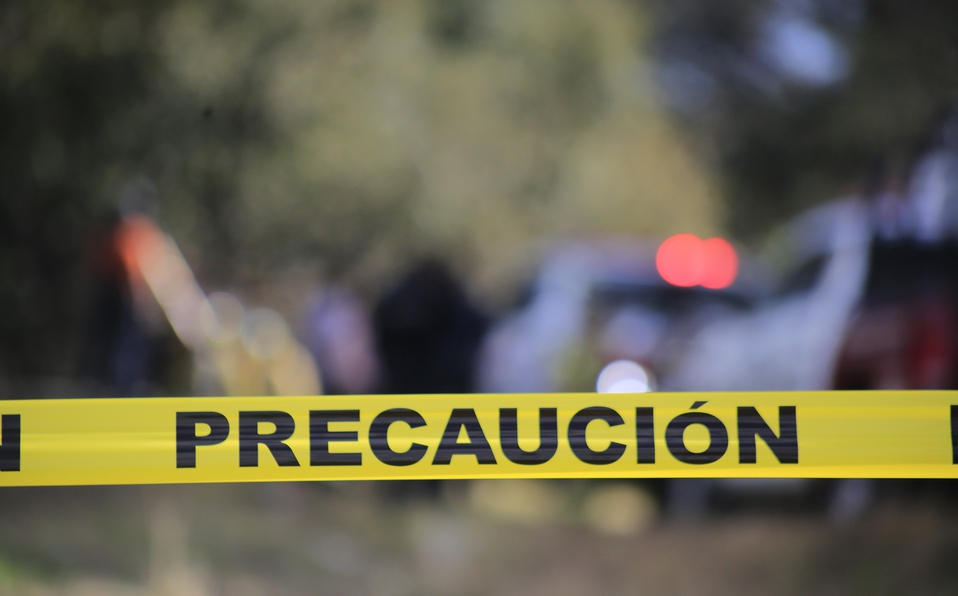
Ecuadorian authorities are investigating the deaths of five people whose bodies were found inside a rural home, in what police believe may be linked to a territorial dispute between organized criminal groups.
The victims, aged between 21 and 30, were discovered Tuesday in the town of La Troncal, in the Andean province of Cañar. Police reported that two of the bodies were bound with wire, while a burned-out vehicle was found outside the residence.
Investigators said graffiti on the walls of the house included messages such as “Lobos territory” and “Lobos active,” suggesting a possible connection to the criminal organization known as Los Lobos.
Police believe the killings were likely the result of a conflict over territorial control between rival gangs.
The discovery came on the same day authorities arrested a former mayor in the neighboring province of Azuay. Officials identified him as the alleged main financial backer of Los Lobos, one of Ecuador’s most powerful criminal organizations.
Ecuador has experienced an unprecedented surge in violence in recent years, driven by criminal groups involved in drug trafficking, illegal mining, kidnapping, and extortion.
According to Insight Crime, the country recorded 51 homicides per 100,000 inhabitants in 2025—equivalent to roughly one killing every hour—making it one of the most violent countries in Latin America.
International
Georgia Teen Sentenced to Life Without Parole for Deadly School Shooting

A Georgia teenager who killed four people in a 2024 school shooting was sentenced Tuesday to life in prison without the possibility of parole after pleading guilty to the attack.
Colt Gray, now 16, admitted to opening fire at Apalachee High School in Winder, about 70 kilometers (45 miles) northeast of Atlanta. He was 14 years old at the time of the shooting.
The attack claimed the lives of two students and two teachers, while nine other people were injured. Despite being a minor when the shooting occurred, Gray was prosecuted as an adult.
During the sentencing hearing, Judge Nicholas Trimm acknowledged the failures of the teenager’s family but said they did not excuse his actions.
“Your parents failed you. Your family failed you. But that does not absolve you,” the judge said.
Trimm also rejected any suggestion that the shooting was motivated by bullying or personal grievances.
“You were not bullied at Apalachee. This was not driven by hate. You didn’t know anyone at that school. It was simply the desire to commit a notorious act,” he told Gray.
The case also led to the prosecution of the shooter’s father, Colin Gray, who was convicted in March of voluntary manslaughter and involuntary manslaughter. The case marked one of the first instances in which a parent was held criminally responsible for a mass shooting carried out by their child.
Prosecutors said Colin Gray had given his son an AR-15-style rifle as a Christmas gift in 2023, despite being aware that the teenager had previously threatened to carry out a school shooting.
Authorities said the same rifle was used in the attack less than a year later. Months before the shooting, FBI investigators had alerted local law enforcement after receiving reports of online messages linked to the Gray family’s internet address that referenced plans for a school massacre.
The case reflects growing legal scrutiny in the United States over the responsibility of parents whose children commit acts of gun violence.
In a similar case, the parents of a Michigan teenager who killed four people at his high school in 2021 were convicted of involuntary manslaughter in 2024 and sentenced to prison terms ranging from 10 to 15 years.
According to U.S. health authorities, firearms have been the leading cause of death among children and teenagers in the United States for several years.
International
Portuguese Authorities Seize 2.6 Tons of Cocaine Worth More Than $550 Million in Drug Bust
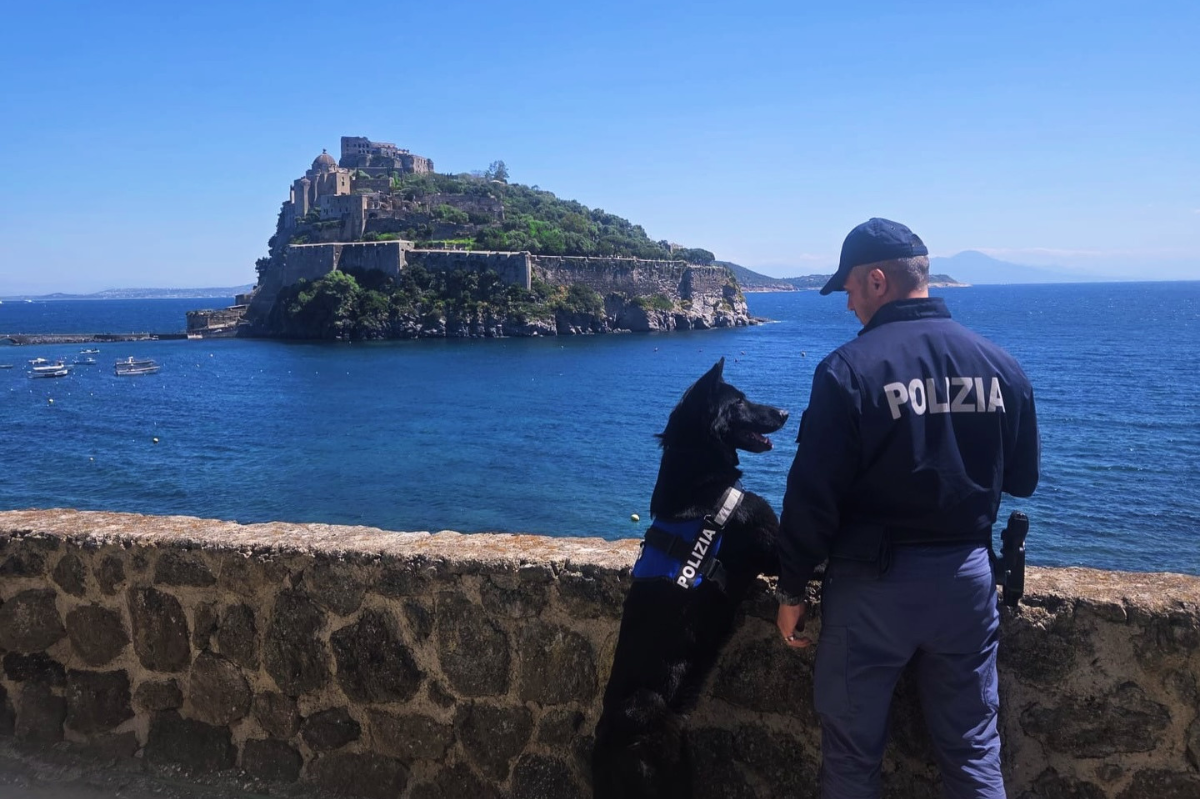
Italian financial police reported Monday that Portuguese authorities intercepted a speedboat carrying more than 2.6 tons of cocaine, with an estimated street value exceeding $550 million.
Four people — two Spanish nationals, one Albanian citizen, and a man from Gibraltar — were arrested in connection with the operation, according to Italian authorities.
The vessel was intercepted off the coast of Lisbon by Portugal’s maritime police following an investigation led by Italian authorities.
Italian financial police estimated that the seized shipment had a street value of approximately 500 million euros ($570 million), making it one of the largest drug seizures reported in the region in recent years.
Portuguese authorities said the interception took place on Thursday, about 90 kilometers (50 nautical miles) southwest of Cape Espichel, during an operation targeting international drug trafficking routes.

Prosecutors Accuse Ex-Defense Minister of Undermining Press Freedom in Honduras

Five Bodies Found in Ecuador as Police Probe Suspected Gang Turf War

Georgia Teen Sentenced to Life Without Parole for Deadly School Shooting
Tec de Monterrey honors one of its students for his contribution to nanotechnology in medicine

Defense Minister commends salvadoran soldier for Central American Cross Country victory

Extension of the state of emergency approved in southern Chile
-
 International1 day ago
U.S. and Iran Maintain Ceasefire as Trump Expresses Optimism Over New Talks
-

 International1 day ago
Police Investigate After Remains of Five Newborns Found in French Apartment
-
 International1 day ago
Portuguese Authorities Seize 2.6 Tons of Cocaine Worth More Than $550 Million in Drug Bust
-

 International2 days ago
China Accuses U.S. AI Firms of Using Chinese Models to Train Artificial Intelligence
-

 Central America3 days ago
EU Urges Nicaragua to Hold Free and Transparent Elections Amid Proposed Electoral Reforms
-

 International2 days ago
Costa Rica Seeks to Expand Extradition Law to Target Organized Crime
-

 International2 days ago
Three Killed, Four Injured in Shooting Near Seattle’s Space Needle
-
 International2 hours ago
Five Bodies Found in Ecuador as Police Probe Suspected Gang Turf War
-
 Central America2 hours ago
Prosecutors Accuse Ex-Defense Minister of Undermining Press Freedom in Honduras
-
 International2 hours ago
Georgia Teen Sentenced to Life Without Parole for Deadly School Shooting