
International
The Chief Builder: Trump and his remodeling of the White House
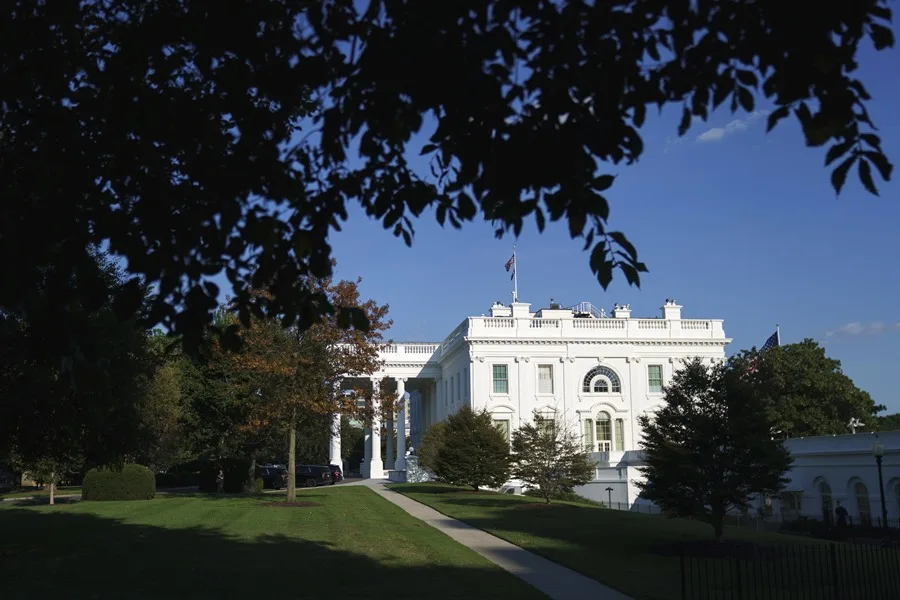
The President of the United States, Donald Trump, has become – during his current administration – the “chief builder” of a renovated White House, with multiple renovation plans ranging from replacing bathrooms that he does not like or planning an Arc de Triomphe in Washington to building a giant ballroom financed by tycoons who have contributed to his campaigns.
Since his return to power last January, Trump has dedicated himself to remodeling the headquarters of the US Executive. A parade of gold-plated objects on each ledge, on the chimneys, on the door handles and on the lamps – almost identical to those of his private club in Florida, in Mar-a-Lago – are visible at every public event.
“I have always been a builder and now I am building a nation that is respected again,” Trump said this week during a dinner he sponsored for two dozen tycoons who have decided to finance, with two hundred million dollars, a ballroom for nine hundred people that the president offered as part of the 250th anniversary of the country’s founding.
Trump said that “they had always wanted a ballroom” and joked that “they didn’t have a real estate agent,” referring to himself as a project manager.
Regarding the expensive construction, Trump said that “it is the price of having access to the president,” in front of donors he described as “legends,” including the oil company Harold Hamm, a prominent financier of the Republican’s campaigns.











At that dinner, Trump showed his guests three scale models of the new monument he plans to build, the “Trump Arc”, an arch inspired by that of Paris, located at the end of the Memorial Bridge that connects downtown Washington with Arlington.
In addition, the head of state suggested that the project could be financed with the surplus funds from the renovation of the ballroom.
However, this is a project that still needs to be approved by various state agencies and it is not clear whether the applications have been submitted.
In the quest to leave his mark on the residence of US presidents, last August, Trump premiered the new Rose Garden, a historic space on the west wing of the White House, built in 1913 and renovated by First Lady Jacqueline Kennedy in 1962.
The Republican removed the lawn from the garden and placed stone, turning it into a courtyard similar to the Mar-a Lago club, where Trump spends his breaks and holds his business events.
The new Garden has been used for dinners with allies and recently to deliver recognitions such as the Presidential Medal of Freedom, which Trump posthumously awarded to the ultra-conservative activist, Charlie Kirk, murdered in September.
But the renovations have not been limited to common areas, Trump described the design of the Kennedy bathroom of the presidential suite as “not adequate”, complained about the green tones of the space and changed the Art Deco style tile for statuary marble, which – according to the president – now “better reflects the aesthetics of the civil war era.”
The renovations headed by Trump have been the subject of public scrutiny and questions about the legality of his actions in the White House, as well as his method of raising private funds for his plans, although the president and his Administration have defended themselves with a 1964 law that allows him to make aesthetic and structural changes.
The American Institute of Architects published in August its concern about Trump’s renovations, especially for the ballroom, and urged the National Capital Planning Commission to carry out rigorous controls to ensure that the project does not deviate or alter the neoclassical design of the White House.










International
Five Bodies Found in Ecuador as Police Probe Suspected Gang Turf War
Ecuadorian authorities are investigating the deaths of five people whose bodies were found inside a rural home, in what police believe may be linked to a territorial dispute between organized criminal groups.
The victims, aged between 21 and 30, were discovered Tuesday in the town of La Troncal, in the Andean province of Cañar. Police reported that two of the bodies were bound with wire, while a burned-out vehicle was found outside the residence.
Investigators said graffiti on the walls of the house included messages such as “Lobos territory” and “Lobos active,” suggesting a possible connection to the criminal organization known as Los Lobos.
Police believe the killings were likely the result of a conflict over territorial control between rival gangs.
The discovery came on the same day authorities arrested a former mayor in the neighboring province of Azuay. Officials identified him as the alleged main financial backer of Los Lobos, one of Ecuador’s most powerful criminal organizations.
Ecuador has experienced an unprecedented surge in violence in recent years, driven by criminal groups involved in drug trafficking, illegal mining, kidnapping, and extortion.
According to Insight Crime, the country recorded 51 homicides per 100,000 inhabitants in 2025—equivalent to roughly one killing every hour—making it one of the most violent countries in Latin America.
International
Georgia Teen Sentenced to Life Without Parole for Deadly School Shooting

A Georgia teenager who killed four people in a 2024 school shooting was sentenced Tuesday to life in prison without the possibility of parole after pleading guilty to the attack.
Colt Gray, now 16, admitted to opening fire at Apalachee High School in Winder, about 70 kilometers (45 miles) northeast of Atlanta. He was 14 years old at the time of the shooting.
The attack claimed the lives of two students and two teachers, while nine other people were injured. Despite being a minor when the shooting occurred, Gray was prosecuted as an adult.
During the sentencing hearing, Judge Nicholas Trimm acknowledged the failures of the teenager’s family but said they did not excuse his actions.
“Your parents failed you. Your family failed you. But that does not absolve you,” the judge said.
Trimm also rejected any suggestion that the shooting was motivated by bullying or personal grievances.
“You were not bullied at Apalachee. This was not driven by hate. You didn’t know anyone at that school. It was simply the desire to commit a notorious act,” he told Gray.
The case also led to the prosecution of the shooter’s father, Colin Gray, who was convicted in March of voluntary manslaughter and involuntary manslaughter. The case marked one of the first instances in which a parent was held criminally responsible for a mass shooting carried out by their child.
Prosecutors said Colin Gray had given his son an AR-15-style rifle as a Christmas gift in 2023, despite being aware that the teenager had previously threatened to carry out a school shooting.
Authorities said the same rifle was used in the attack less than a year later. Months before the shooting, FBI investigators had alerted local law enforcement after receiving reports of online messages linked to the Gray family’s internet address that referenced plans for a school massacre.
The case reflects growing legal scrutiny in the United States over the responsibility of parents whose children commit acts of gun violence.
In a similar case, the parents of a Michigan teenager who killed four people at his high school in 2021 were convicted of involuntary manslaughter in 2024 and sentenced to prison terms ranging from 10 to 15 years.
According to U.S. health authorities, firearms have been the leading cause of death among children and teenagers in the United States for several years.
International
Portuguese Authorities Seize 2.6 Tons of Cocaine Worth More Than $550 Million in Drug Bust
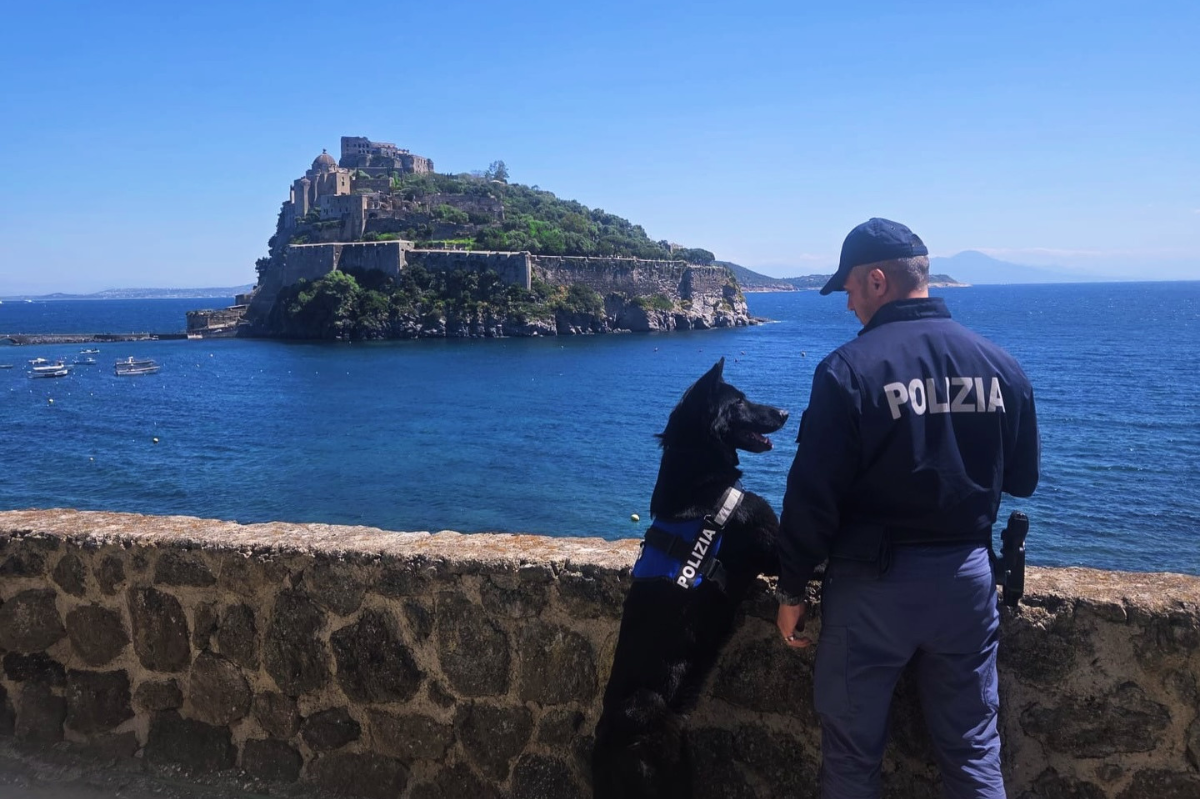
Italian financial police reported Monday that Portuguese authorities intercepted a speedboat carrying more than 2.6 tons of cocaine, with an estimated street value exceeding $550 million.
Four people — two Spanish nationals, one Albanian citizen, and a man from Gibraltar — were arrested in connection with the operation, according to Italian authorities.
The vessel was intercepted off the coast of Lisbon by Portugal’s maritime police following an investigation led by Italian authorities.
Italian financial police estimated that the seized shipment had a street value of approximately 500 million euros ($570 million), making it one of the largest drug seizures reported in the region in recent years.
Portuguese authorities said the interception took place on Thursday, about 90 kilometers (50 nautical miles) southwest of Cape Espichel, during an operation targeting international drug trafficking routes.

Prosecutors Accuse Ex-Defense Minister of Undermining Press Freedom in Honduras

Five Bodies Found in Ecuador as Police Probe Suspected Gang Turf War

Georgia Teen Sentenced to Life Without Parole for Deadly School Shooting
Tec de Monterrey honors one of its students for his contribution to nanotechnology in medicine

Defense Minister commends salvadoran soldier for Central American Cross Country victory

Extension of the state of emergency approved in southern Chile
-

 International1 day ago
U.S. and Iran Maintain Ceasefire as Trump Expresses Optimism Over New Talks
-
 International1 day ago
Police Investigate After Remains of Five Newborns Found in French Apartment
-
 International1 day ago
Portuguese Authorities Seize 2.6 Tons of Cocaine Worth More Than $550 Million in Drug Bust
-
 Central America3 days ago
EU Urges Nicaragua to Hold Free and Transparent Elections Amid Proposed Electoral Reforms
-

 International2 days ago
Costa Rica Seeks to Expand Extradition Law to Target Organized Crime
-

 International2 days ago
China Accuses U.S. AI Firms of Using Chinese Models to Train Artificial Intelligence
-

 International2 days ago
Three Killed, Four Injured in Shooting Near Seattle’s Space Needle
-
 International1 hour ago
Five Bodies Found in Ecuador as Police Probe Suspected Gang Turf War
-
 Central America1 hour ago
Prosecutors Accuse Ex-Defense Minister of Undermining Press Freedom in Honduras
-
 International1 hour ago
Georgia Teen Sentenced to Life Without Parole for Deadly School Shooting