
International
3 dead, 3 missing after avalanche on Ecuador volcano: officials
AFP
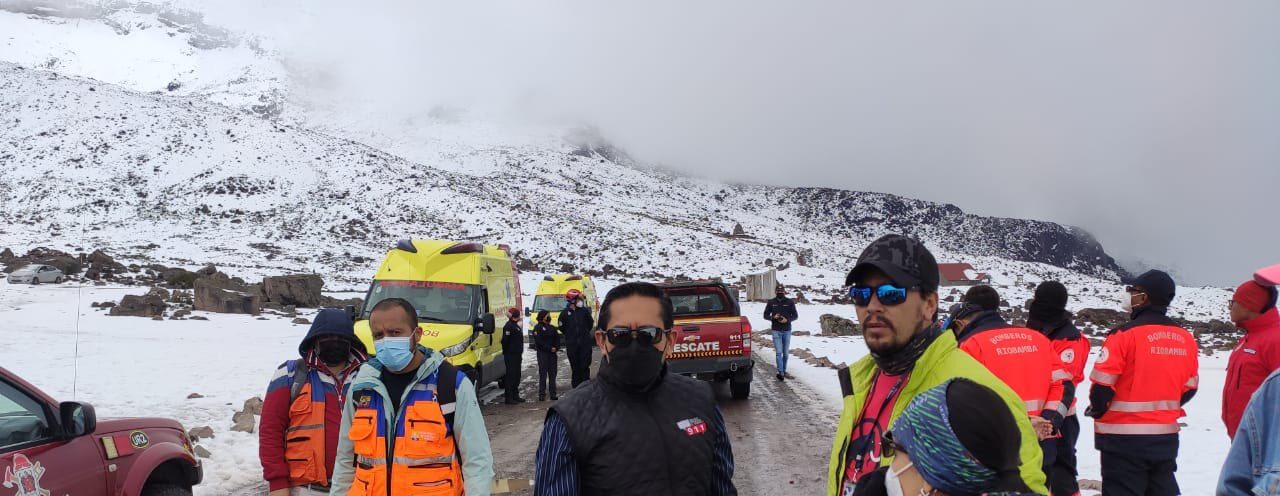
An avalanche Sunday on a snow-capped Ecuadoran volcano, the highest peak in the country, killed at least three climbers and left three others missing, officials reported.
The avalanche struck a group of 16 mountaineers while at an altitude of 6,100 meters (20,000 feet) on the dormant Chimborazo volcano, according to responders.
“There are three missing mountaineers, three dead, three injured and seven rescued, out of a total of 16 people,” Quito firefighters, who provided emergency support, said in a statement.
A previous report from the country’s ECU911 security service had said four climbers had died and one was injured.











Authorities did not identify the climbers or their nationalities, but the Quito newspaper El Comercio reported that all were Ecuadoran.
The avalanche was spurred by “weather conditions” and was not caused by any volcanic activity, according to the firefighters.
Rescuers as well as police and military personnel specialized in high-elevation operations set up a command center at Chimborazo to coordinate search-and-rescue operations.
The volcano, which rises more than 6,200 meters high, is covered in snow and glaciers year-round and is located about 130 kilometers (80 miles) south of Quito.
Chimborazo attracts both Ecuadoran and foreign climbers. The towns of Riobamba and Ambato lie at its base.
Ecuador’s Environment Ministry temporarily closed the surrounding Chimborazo nature reserve, which is popular with tourists. Despite the volcano’s constant snow, it is not frequented by skiers.
The volcano has seen a number of deadly accidents in recent decades.
In 2003, the remnants of an Ecuadoran plane that crashed in 1976 with 59 people on board were found by climbers about 700 meters from the summit.
The plane had collided into a stone wall on Chimborazo, and had been covered by an avalanche.
In 2015 the remains of three climbers, believed to have disappeared 20 to 30 years ago, were discovered at about 5,500 meters.
And in 1994 an avalanche left 10 people dead, including one Swiss and six French nationals.
Chimborazo last erupted sometime between the beginning of the 5th and end of the 7th century, according to the Geophysical Institute of Quito, which said the interval between eruptions is approximately 1,000 years.
The volcano’s ice-capped summit, steep slope and its location near populated areas including towns, make it a high-risk area, according to the institute.
Chimborazo’s summit is the farthest point from the center of the Earth, at 6.38 million meters.










International
Tensions Escalate in Middle East as U.S. Bombs Iran After Maritime Attacks
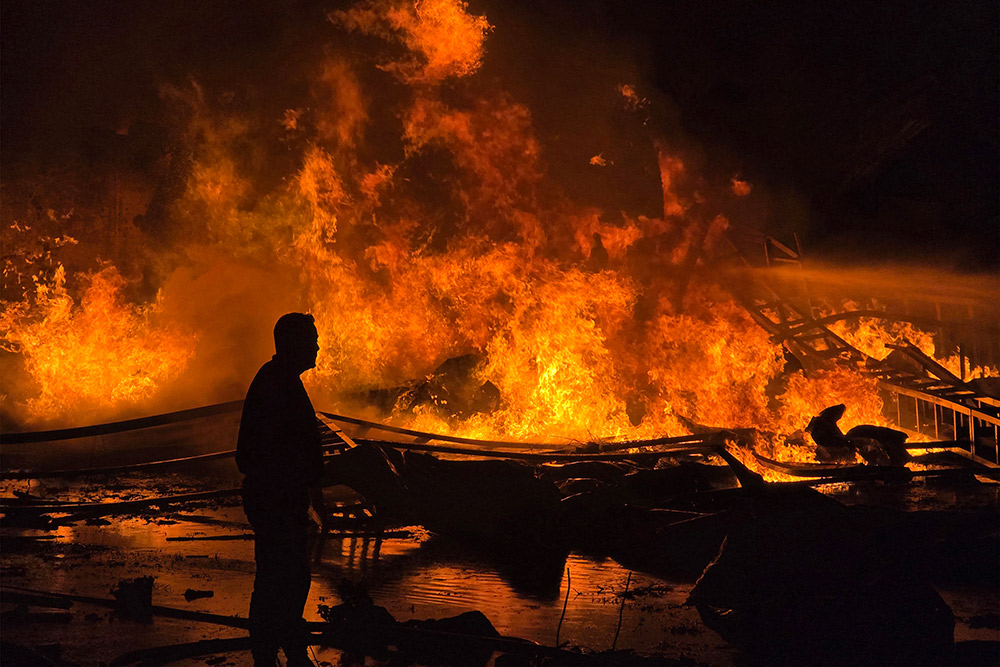
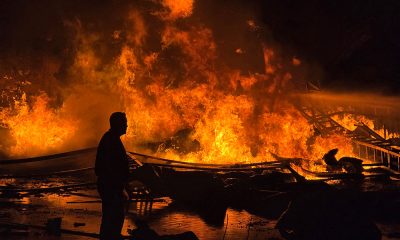
The United States launched new strikes against Iran on Wednesday, following President Donald Trump’s warning that Washington would “hit hard” against the Islamic Republic. While Trump ordered the retaliation after attacks on vessels in the Strait of Hormuz, he also said he hoped the latest wave of bombings would end soon and left the door open for renewed negotiations.
U.S. forces “have begun carrying out additional strikes against Iran to further reduce its ability to threaten freedom of navigation in the Strait of Hormuz,” the United States Central Command said in a post on X.
Washington blamed Iran for what it described as “recent unjustified aggression against commercial shipping.”
Iran’s state news agency IRNA reported that explosions were heard in the port cities of Bandar Abbas, Konarak, and Chabahar.
“This is in retaliation for yesterday’s bombing of ships by Iran. If it happens again, it will be much worse,” Trump wrote on social media alongside an image showing what appeared to be a bombing at an Iranian location.
Before ordering the strikes, the U.S. president said that the ceasefire with Iran had ended. Mediators Pakistan and Qatar called for de-escalation, while the United Nations also urged both sides to reduce tensions.
The Strait of Hormuz remains a critical flashpoint in the Middle East conflict, which began in late February after U.S. and Israeli strikes that killed Iran’s Supreme Leader Ali Khamenei.
Iran-linked attacks on at least three vessels in recent days triggered a U.S. offensive against Iranian targets on Tuesday. Tehran responded by launching attacks against Gulf countries that are allies of Washington.
International
Deadly Drug Trade Rivalry Suspected After Eight Bodies Discovered in Southern Mexico
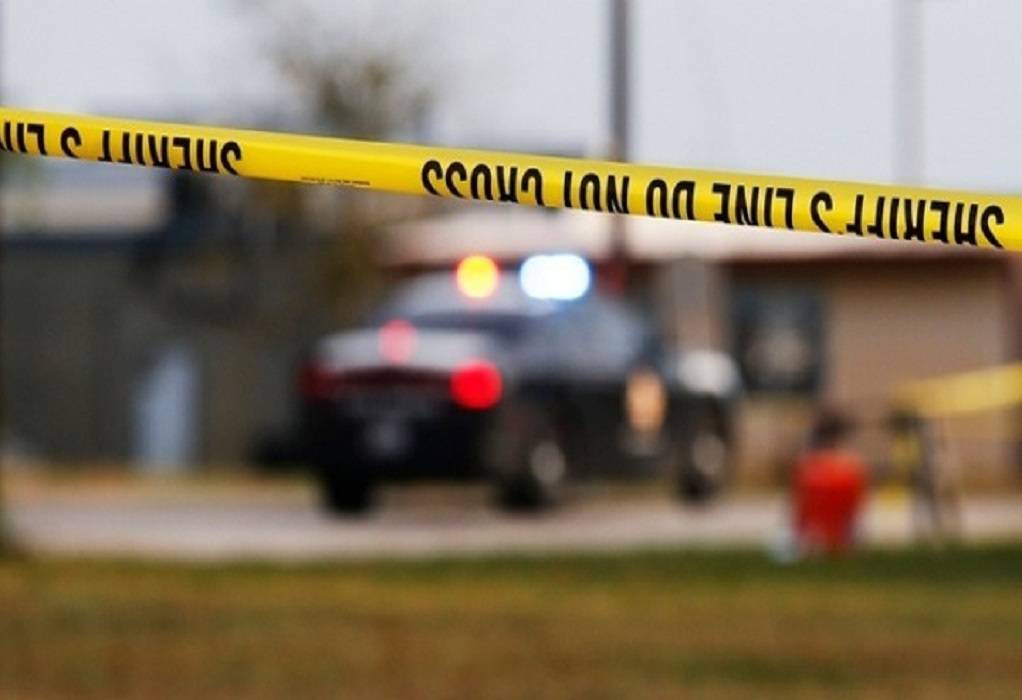
Eight bodies were found Wednesday along a highway in the southern Mexican state of Chiapas, near the border with Guatemala, in an incident authorities believe may be linked to a dispute over local drug sales.
The victims — six men and two women — were found abandoned on a road in a mountainous area of the municipality of El Bosque, according to the state prosecutor’s office in a statement published on Facebook.
Initial investigations indicate that the killings may be connected to “a dispute over retail drug sales between local criminal groups operating in the region,” the prosecutor’s office said.
Local media reports that several criminal incidents have increased in the area since the beginning of the year.
The road where the bodies were discovered is located in a mountainous region largely inhabited by Indigenous communities. Authorities have not released further details about the victims or possible suspects as the investigation continues.
Central America
Regional Naval Operations Strike Drug Cartels, Disrupting Cocaine and Weapons Trafficking Routes
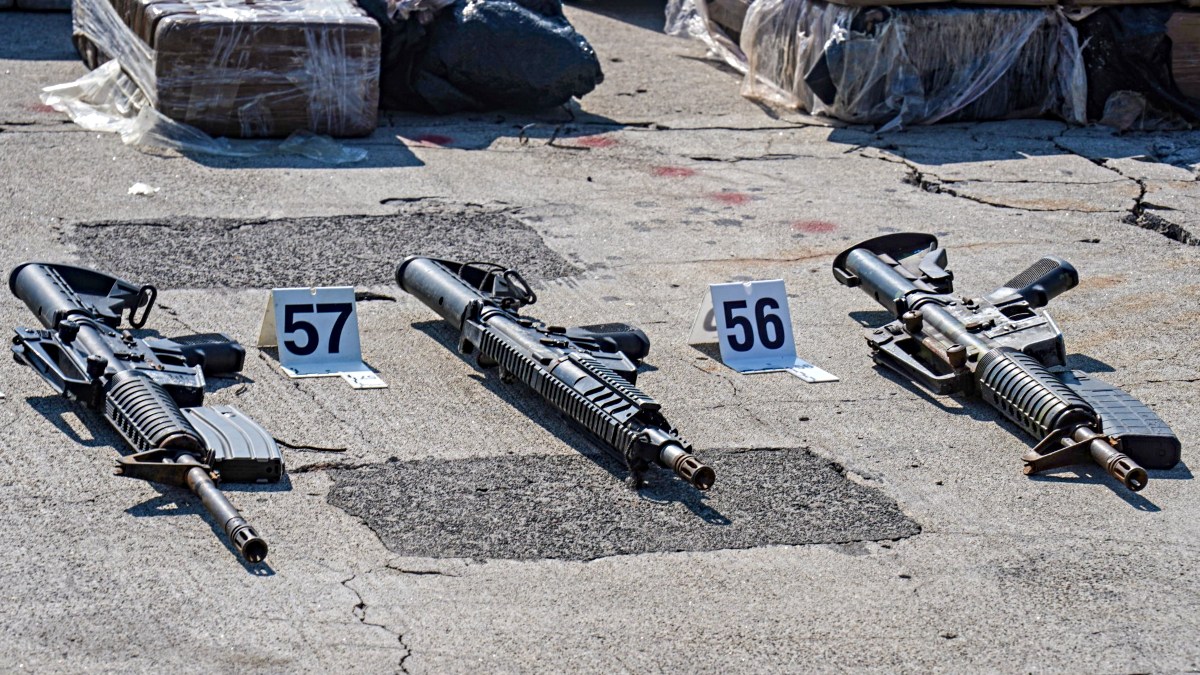
Transnational operations carried out by regional naval forces, including El Salvador’s National Navy, the United States Coast Guard, and Mexico’s Secretariat of the Navy (SEMAR), have dealt significant blows to international drug trafficking organizations.
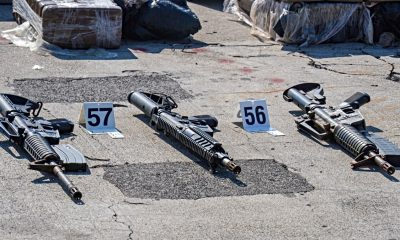
The operations have not only led to the seizure of massive cocaine shipments, such as the 6.68 metric tons of cocaine valued at approximately $167 million presented last Wednesday by El Salvador’s Security Cabinet, but have also resulted in the confiscation of high-powered weapons allegedly intended as payment to criminal organizations, according to Security Minister Gustavo Villatoro.
“Based on the strength of the data, not just the narratives, we can state that our National Navy has documented the only known operation in the Pacific Ocean in which a criminal organization from the south was transporting drugs and exchanging them with a group from the north for firearms,” Villatoro said.
The exchange of weapons for drugs between criminal groups in the Pacific Ocean represents a logistical method in which South American cartels from countries such as Colombia and Ecuador negotiate with Mexican and Central American organizations to trade military-grade weapons for cocaine shipments.
Regional naval authorities have identified that meeting points located farther from the coastline in international waters make it easier for armed groups to receive supplies and carry out exchanges undetected. As a result, El Salvador’s National Navy deploys teams from the Trident Naval Task Force (FTNT) aboard maritime patrol vessels to intercept these operations.
Initially, the patrol units are ordered to travel up to 200 nautical miles offshore, but later receive instructions from the Maritime Operations Center to extend their missions beyond 1,000 nautical miles, reaching coordinates used by drug trafficking vessels operating in the open sea.
“We cannot lose focus on the routes these criminal organizations use to move drugs,” Minister Villatoro said, emphasizing the importance of maintaining surveillance over the various maritime corridors used for narcotics trafficking.

Panama launches anti-drone measures as prison security crisis deepens

Tensions Escalate in Middle East as U.S. Bombs Iran After Maritime Attacks

Deadly Drug Trade Rivalry Suspected After Eight Bodies Discovered in Southern Mexico
Tec de Monterrey honors one of its students for his contribution to nanotechnology in medicine

Defense Minister commends salvadoran soldier for Central American Cross Country victory

Extension of the state of emergency approved in southern Chile
-
 International4 days ago
Wildfires Burn Nearly 7,800 Hectares in France as Extreme Heat Fuels Fire Risk
-
 Central America2 days ago
Panama launches anti-drone measures as prison security crisis deepens
-
 International4 days ago
UN Appeals for $296 Million in Emergency Aid Following Venezuela Earthquakes
-
 International3 days ago
Deadly Drug Trade Rivalry Suspected After Eight Bodies Discovered in Southern Mexico
-
 International4 days ago
USAR El Salvador Helps Rescue Dogs Trapped for 12 Days Beneath Earthquake Rubble
-
 Central America3 days ago
Regional Naval Operations Strike Drug Cartels, Disrupting Cocaine and Weapons Trafficking Routes
-

 International4 days ago
German Doctor Sentenced to Life for Murdering 15 Patients in Serial Killing Case
-
 International3 days ago
Tensions Escalate in Middle East as U.S. Bombs Iran After Maritime Attacks